 EN
EN


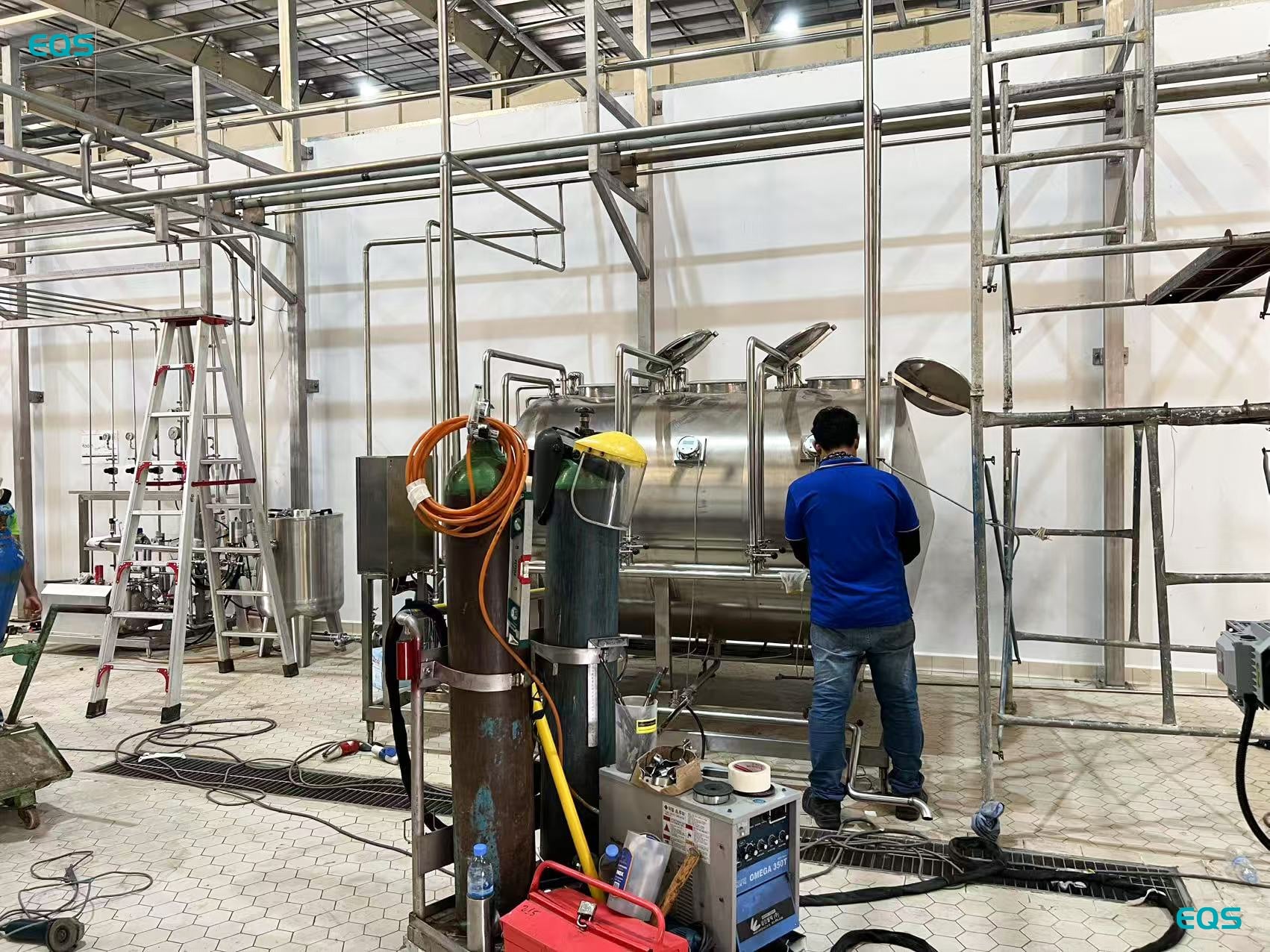
A new brewery in Cambodia put its first 330 ml glass bottles through an EQS BGF32-32-8 line in June 2025. Beer was a new category for this company, and the building around the line was also new. Nobody on the customer's side had bottled a single case of beer before EQS Machinery engineers arrived.
That starting point shaped the whole commissioning process. At a brewery with an experienced production team, engineers can concentrate mainly on tuning the equipment with operators who already understand how beer responds inside a filler. This site required machine adjustment and operator instruction to move forward together. The product made that especially important. Pressure, foaming, and fill level are closely connected during beer filling, so an adjustment that appears small can affect what the operator sees in the bottle.
The project therefore had two practical tracks from the beginning. The beer bottling line had to be prepared for production, while the people responsible for daily operation had to learn how machine settings and product behaviour relate. The BGF32-32-8 designation is only the project reference for this installation. In operating terms, the main machine is a three-in-one washing, filling and capping machine for glass bottles.
Bottles travel through the line in this order: depalletiser, BGF32-32-8 three-in-one filling machine, pasteurisation tunnel, bottle dryer, coder, labeller. Rated output for 330 ml glass bottles is 10,000 bottles per hour.
The filling section uses a semi-electronic mechanical valve. Filling accuracy depends on the behaviour of the complete valve set as well as the response of each individual filling valve. For operators, that means a stable line cannot be judged from one bottle alone. Fill levels need to be viewed across bottles and across operating time so that any variation can be connected with pressure, return gas, or valve timing.
A door-open shutdown interlock was built into the safety logic. Opening a guarded door stops the machine instead of leaving the filler running with an open access point. The operating rule is direct: guarded access and machine operation are treated as separate conditions.
Beer filling problems show up in the bottle rather than only on the HMI. Half-filled or overflowing bottles and uneven valve-to-valve levels point to the interaction between pressure and return-gas timing. The engineers handled these factors together because a change to counter-pressure shifts foam behaviour, while foam behaviour changes the apparent fill level.
Foam control was treated as part of level control. A foam collar above the intended liquid level can make a bottle appear full during a quick visual check. That makes it necessary to distinguish liquid level from foam position when evaluating the filled bottle. During commissioning, the team compared what appeared at the outlet with the settings inside the filling section. The same comparison formed part of the operator instruction delivered during the site visit.
Return gas mattered for a second reason. Air picked up during filling can reduce shelf life, and a brewery launching its first product needs to manage dissolved oxygen as an operating objective from the start. No measured dissolved-oxygen value was supplied for this project, so the point here is the purpose of return-gas control within the filling process. It should not be read as a reported test result.
Thirty-two filling valves also had to behave consistently across the valve set. Bringing them into line took most of the commissioning days, with filled bottles serving as the practical reference during adjustment. The project record supports that work and its duration, but it does not provide a separate tolerance for individual valves.
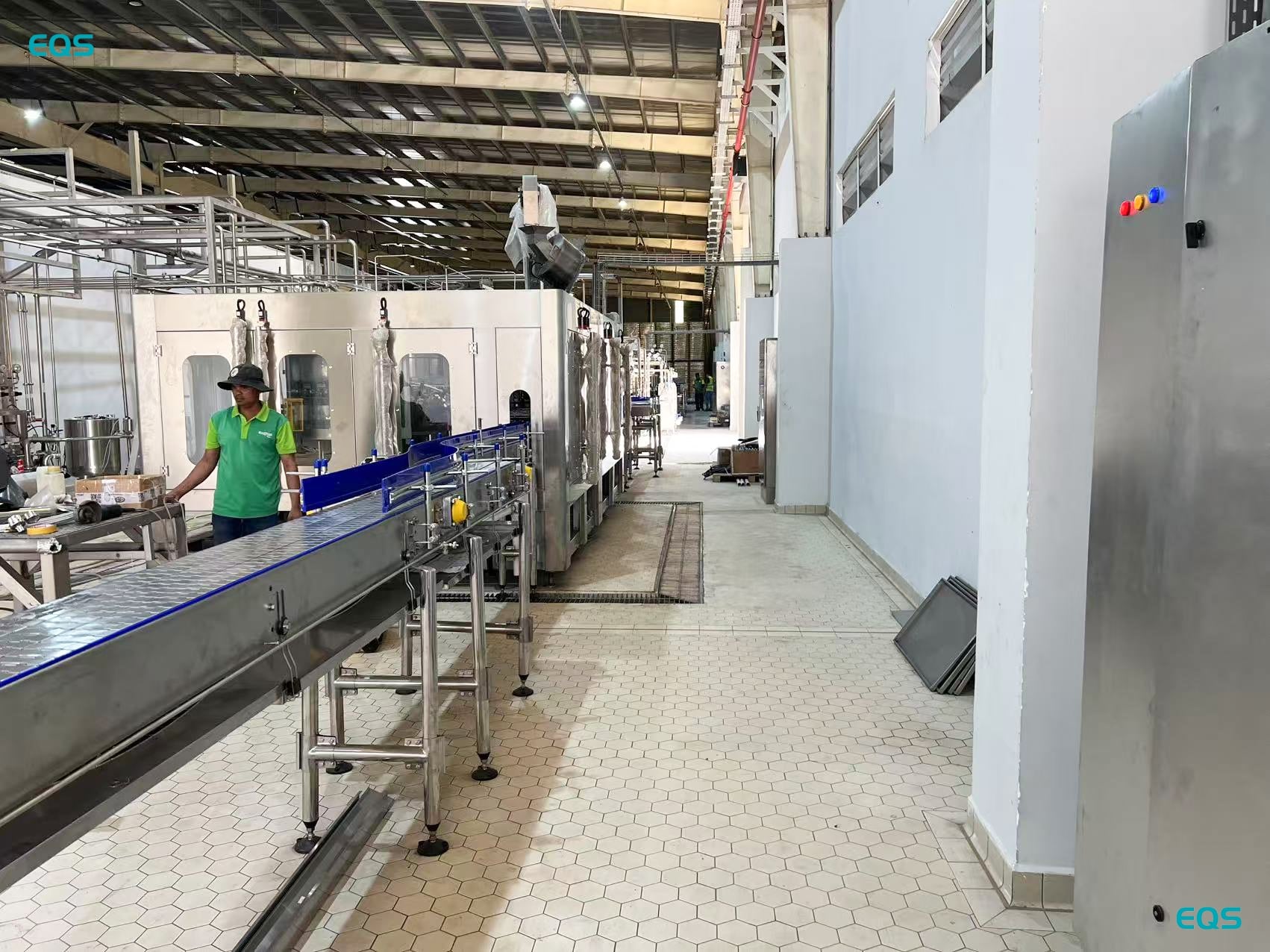
EQS Machinery sent five engineers for 20 days: 15 on installation and commissioning, 3 on training, then 2 alongside the customer's own crew during production. The sequence kept formal instruction connected to actual line operation. After the installation and adjustment work, the training period introduced the operating team to the equipment. The final two days placed the customer's crew in charge of running the line while the engineers stayed alongside them.
Production started five days after commissioning finished. The equipment was ready, while the brewery had run short of packaging material and had to wait for its own supply chain. The customer used a bottle, crown and label designed by EQS for this project. This detail matters for anyone planning a first beer project because line readiness and material readiness must meet at the same point. Glass bottles, crowns, and labels all need to arrive in the same week as the engineers if production is expected to follow commissioning without a separate wait.
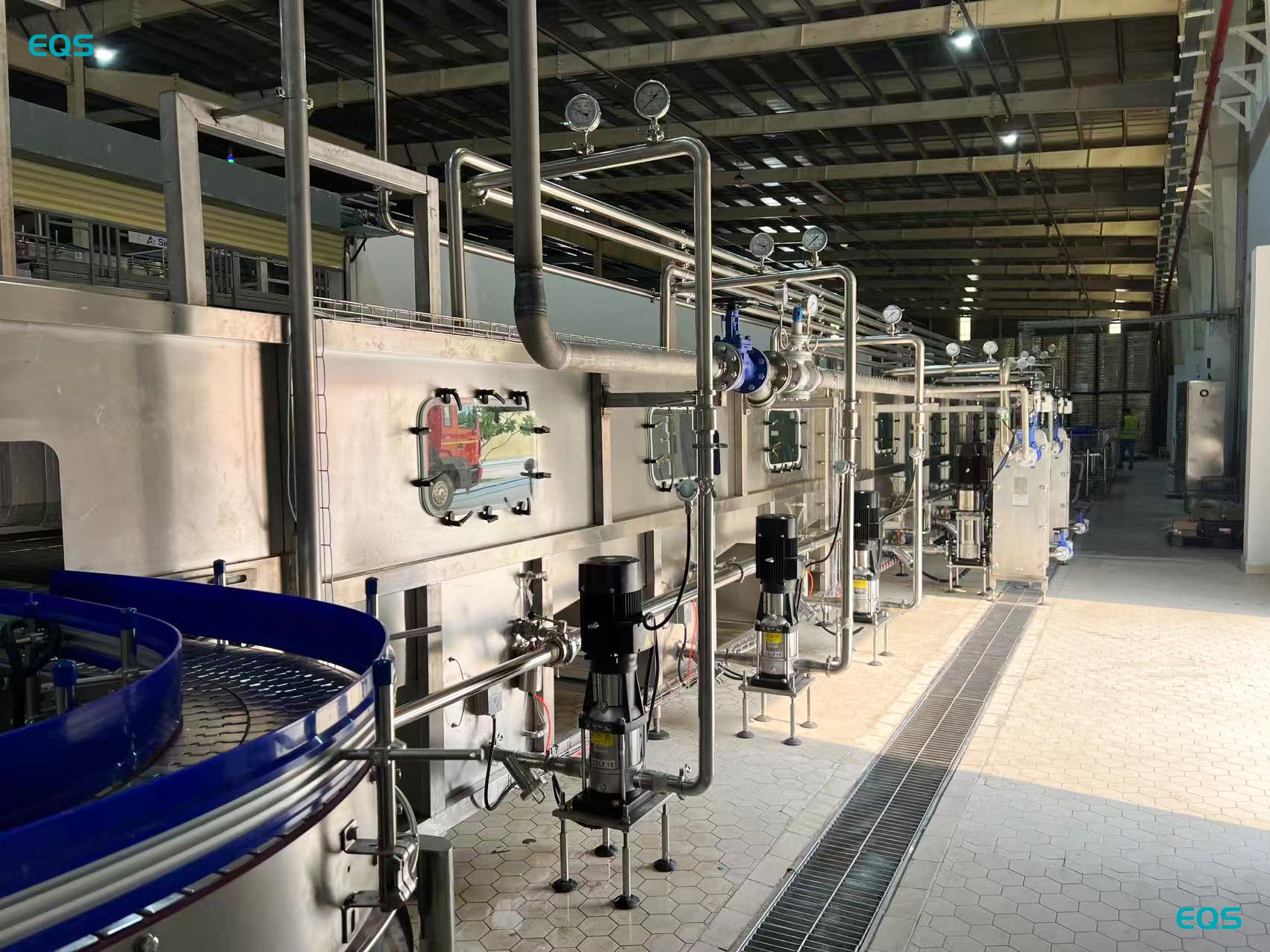
Output settled at about 10,000 BPH on 330 ml bottles, which is where it was specified. The word “about” is important because this figure describes the reported operating output and is not presented as a guarantee of continuous production at an exact number.
One fault came up in the fourteen months since production began: the crowns were not being applied tightly enough. The EQS Machinery service team worked through the issue with the plant remotely, and it was corrected without a site visit. Beyond that, the brewery reported no major failure in fourteen months of production. The loose-capping fault remains part of the project record because it shows the specific issue that occurred and the way it was closed.
"It performed much better than expected, and the filling accuracy is very stable."
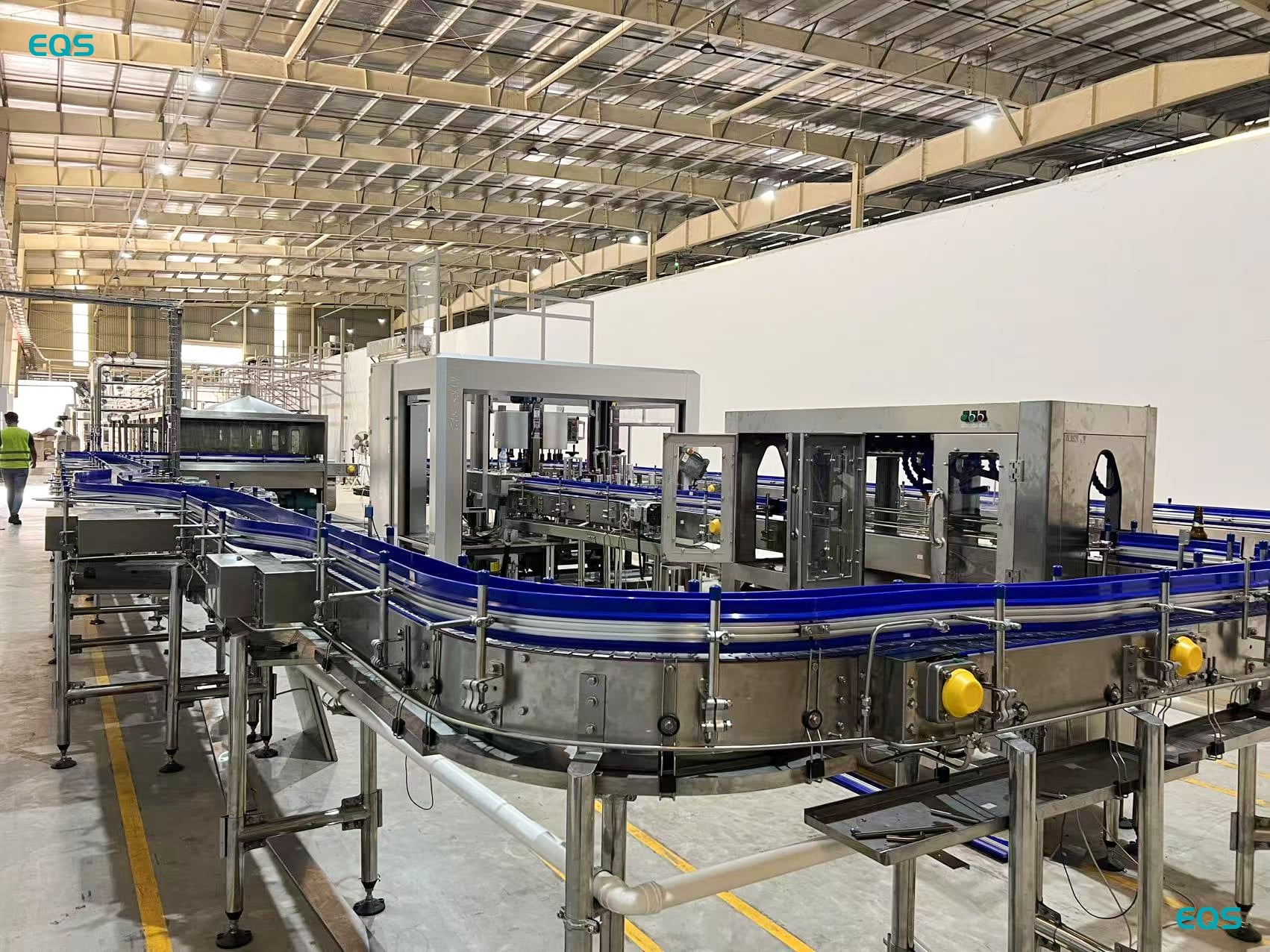
Two points from this project are worth carrying into another first-time brewery plan. The first is the split between training and supported operation. Three days were used for classroom and hands-on training, followed by two days when the engineers watched the customer's operators run the line instead of running it for them. This arrangement moved responsibility to the production crew while support was still present beside the equipment.
The second point is the material schedule. The only delay on this project came from packaging supply.
When specifying a beer line, send the bottle drawing, the crown specification, and the target dissolved-oxygen figure with the enquiry. Those items guide filler configuration long before the bottles-per-hour number does. Providing them gives the equipment discussion a defined container, closure, and filling objective. For a new brewery, that information also creates a clearer connection between packaging decisions and the way the filling process must be set up.
Copyright © JIANGSU EQS MACHINERY CO.,LTD