 EN
EN


In May 2026, a Greek plant dedicated to washing returnable glass bottles started operating one EQS BXP95/30 glass bottle washing machine at around 26,000 bottles per hour. Production began the day after two EQS engineers completed commissioning. The new washer replaced an ageing Krones machine that no longer had the capacity required for the volume the business wanted to handle.
Washing is the service this customer sells, rather than an intermediate step in its own filling line. Available washer capacity therefore affects how much glass the plant can process. The project centered on carrying the required output on one machine while handling two bottle formats and difficult incoming labels.
The plant specified 250 ml and 500 ml glass bottles for the same washer. Both formats were confirmed project requirements and included in the design scope. The plant can schedule either format on the BXP95/30, although changeover remains an operating task. No changeover time or claim of adjustment free operation is recorded.
The customer also described labels that were difficult to release. Partly detached material can continue through the process when it is not separated. EQS configured two soaking stages and two label removal stages in response to this project condition. The layout is tied to the labels described before the order and is not a general claim about every bottle washing application.
The requested cleaning result had to improve on the previous washer's output because the plant's customers inspect returned bottles. No cleaning percentage or laboratory measurement was supplied. This case therefore keeps the result as the customer's operating assessment.
The site also wanted more washed volume than its old equipment could support, carried on one washer. BXP95/30 is the project reference for this installation. It does not add a performance specification beyond the confirmed facts in this case.
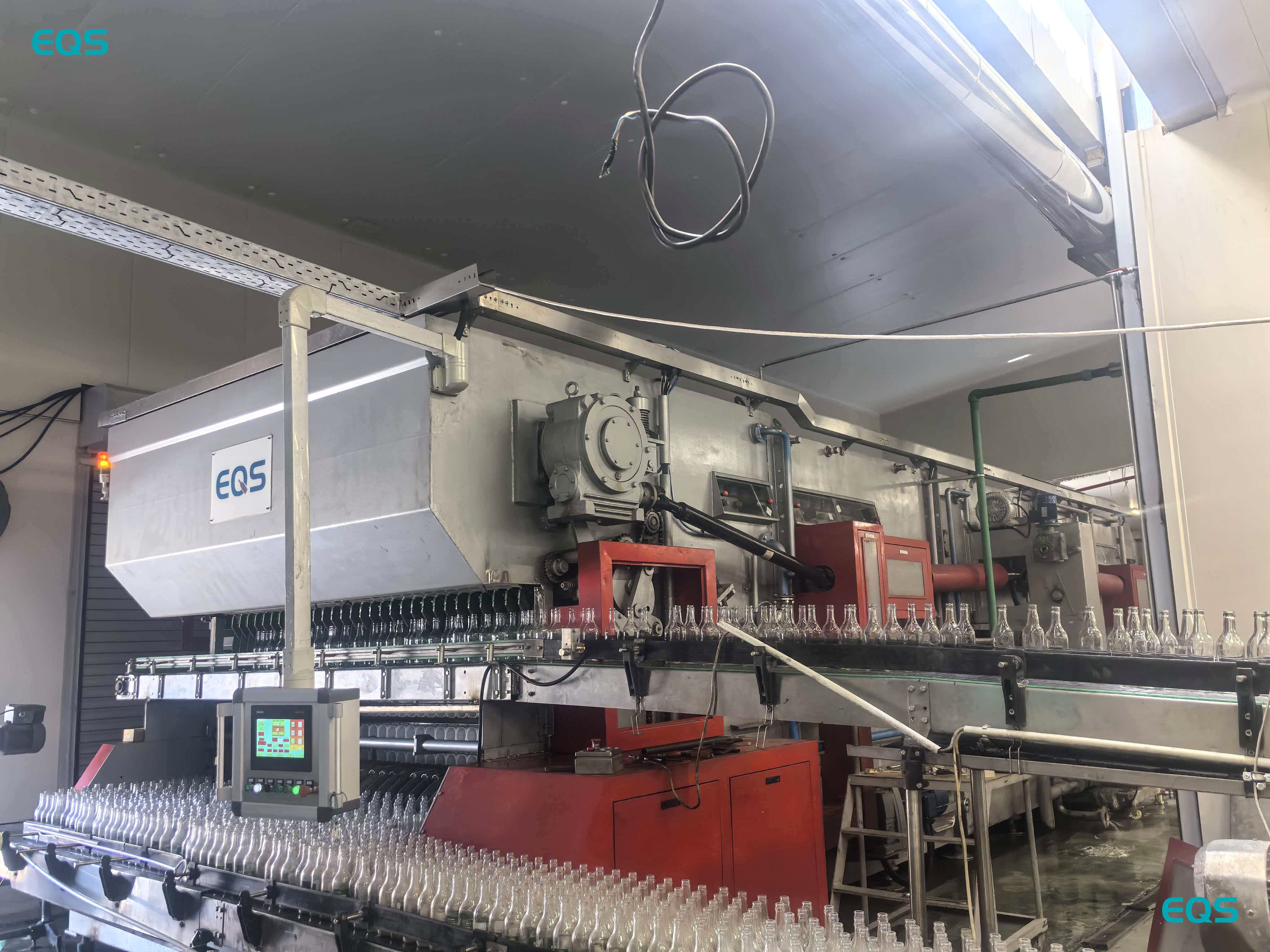
EQS supplied one BXP95/30 for the full duty. One machine gives the operating team a single main control point, with production planning and format changeover organized around the same washer. Splitting the duty across smaller machines would have required more utility connections and additional operator stations. It would also have expanded the spare-parts scope. The available information does not assign a measured labour or utility saving to the single-machine choice.
Bottle interiors are cleaned by high pressure water flow, a confirmed feature of the supplied machine. The visible machine path runs from the infeed table into carrier pockets and onward to the discharge conveyor. Internal flushing serves both specified bottle sizes as production changes between 250 ml and 500 ml glass. No pressure or flow measurement was supplied, and there is no format-specific cleaning value.
The two soaking stages divide label release into successive periods. The bottle moves through a staged arrangement designed around the incoming label condition. Two label removal stages give the machine another opportunity to separate material remaining after the first stage. This places difficult label handling within the planned machine sequence.
The confirmed layout is described without adding a tank temperature or chemical concentration. No cleaning recipe was cleared for publication. The two-part soaking design and two-part label removal design were project-specific responses to the label stock described by the customer. The project record also states that a standard single-stage arrangement would have cost the same while running more slowly on this glass.
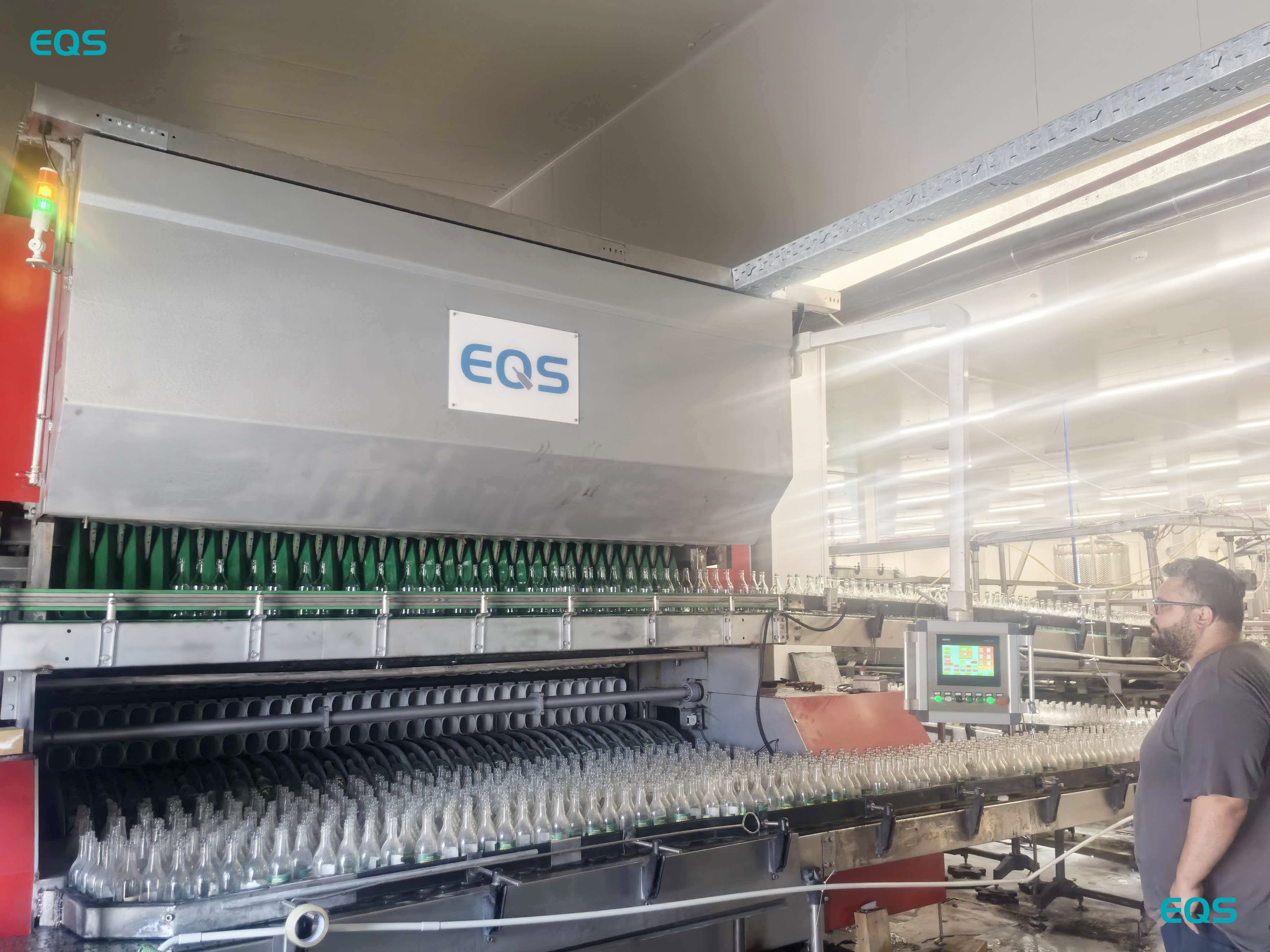
Before the site visit, EQS engineers reviewed water and electrical preparation remotely with the customer's maintenance team. This gave both sides a common check of the interfaces needed for installation before the engineers travelled to Greece. The project record confirms that preparation review, without assigning a separate result or time saving to it.
Two EQS engineers spent 25 days at the plant. Installation and commissioning took 20 days. Operator and maintenance training took the next 3 days, followed by 2 days of production support. Plant personnel received training first and then operated the washer while the EQS engineers remained beside the line. Questions about routine running could therefore be addressed during production instead of only in a classroom style session.
The machine entered production the following day. That timing is a project fact tied to this handover sequence. It should not be read as a standard commissioning duration or a promise for another site, since local preparation and project scope can differ.
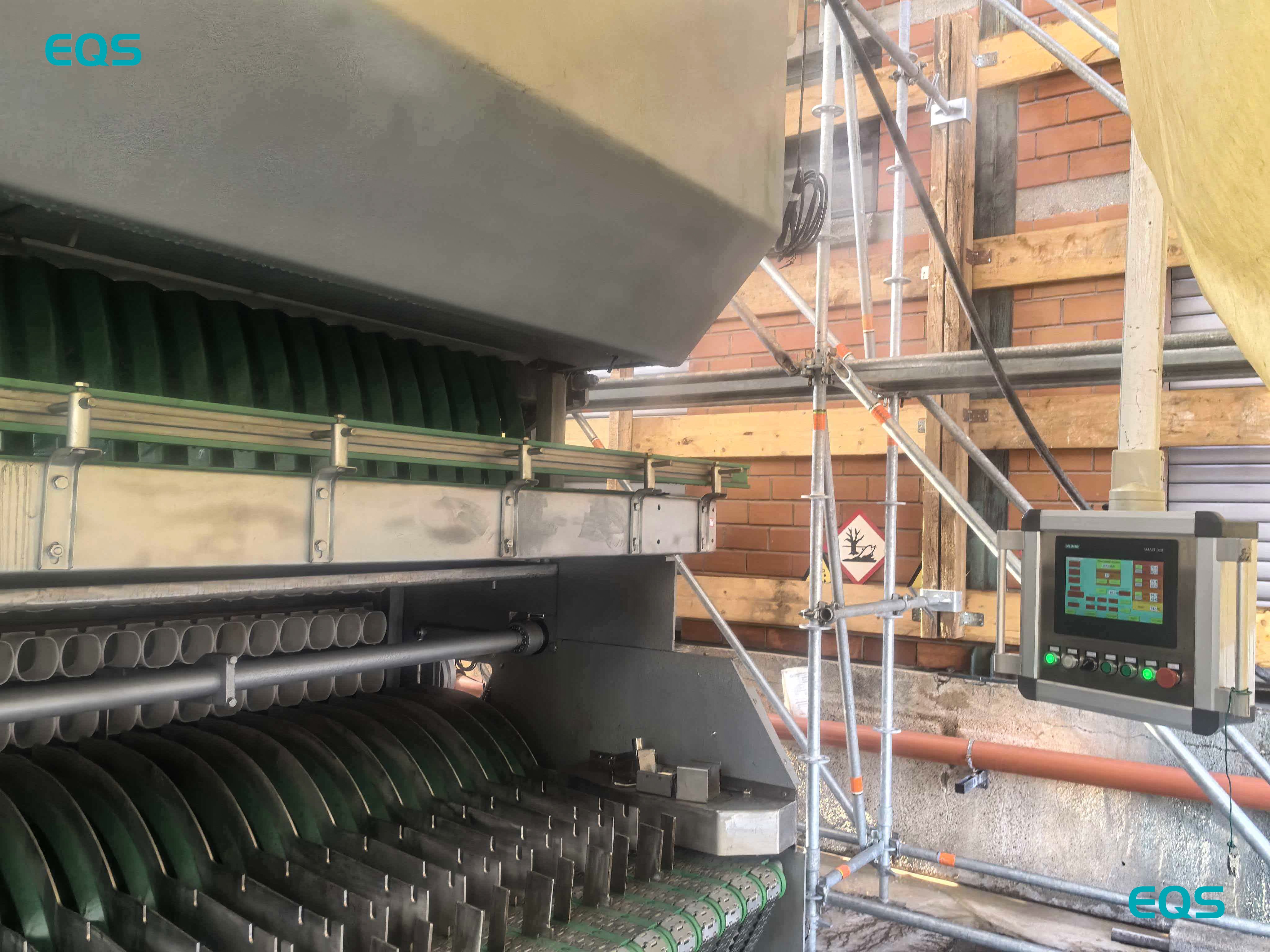
During the first three months, output settled at about 26,000 BPH and remained stable according to the project follow up. The washer completed that period without a major failure. This is an early operating record, limited to the first three months, rather than a lifetime reliability claim.
The plant reported two practical changes after replacing its previous equipment. Output held more steadily, and bottles left the washer cleaner. The case does not attach an efficiency percentage or test value to either observation. It keeps the result in the form provided by the customer.
The customer's own words, translated from the review call:
"The output is stable, and the bottles come out cleaner."
Three months is a short record for a returnable glass washer. A longer production history will show how the machine performs across a full cycle of label conditions. At the time of the review, the confirmed result was steady operation at about the rated output and the customer's assessment of cleaner bottles.
For this plant, the practical result after three months was a stable output close to 26,000 BPH and bottles that the customer described as cleaner. The two formats remained part of the same machine scope. Those statements stop at the evidence available from the follow-up; they do not add a cleaning percentage or a changeover claim.
A buyer assessing a glass bottle washing machine for mixed formats should send drawings for each bottle that will enter production. A sample of the difficult label stock belongs with that enquiry as well. The Greek project shows why both matter: bottle geometry defined the format requirement, while label behaviour led to the two soaking stages and two label-removal stages. Providing those materials before specification gives the machine builder the actual glass and label conditions to design around.
Copyright © JIANGSU EQS MACHINERY CO.,LTD