 EN
EN


An Ecuadorian manufacturer added household and industrial disinfectant to its product range in 2024. This was a new category and a new filling project for the plant, with no established in-house reference for the finished package. Commissioning finished in August 2024. The plant now runs 240 ml and 650 ml plastic bottles on an EQS GFF16-16-5-5 four-in-one machine. Stable output is 6,000 bottles per hour. The recorded 6,500 BPH figure is a peak, rather than the normal production rate.
The liquid foams during filling, and the plant had no previous experience of packing this category. Bottle condition therefore mattered alongside output throughout commissioning.
A disinfectant containing surfactant can aerate as it enters a narrow neck plastic bottle. The visible level may temporarily include foam while the contents settle. Excess foam can leave product on the neck or make a short fill appear full. This matters because the threaded screw cap needs a clean path onto the bottle finish.
The customer identified foaming as a central challenge before the machine drawings were issued. The red liquid uses standard filling on this block rather than a special filling valve family. The project had to achieve an acceptable result within that confirmed configuration. The records say the foam issue was solved, although they do not state which settings or adjustments produced the outcome.
After commissioning, the plant gave a direct assessment:
"We are very satisfied because the foaming problem during filling has been completely solved."
That statement applies to this liquid on this line. It is not a transferable parameter set for another disinfectant. Surfactant load and viscosity affect how readily a product traps air. Product temperature and available headspace can also change what operators see as the bottle leaves the filling station. Another product should be evaluated with its own liquid and packaging, since the Ecuador file confirms the result without recording the method.
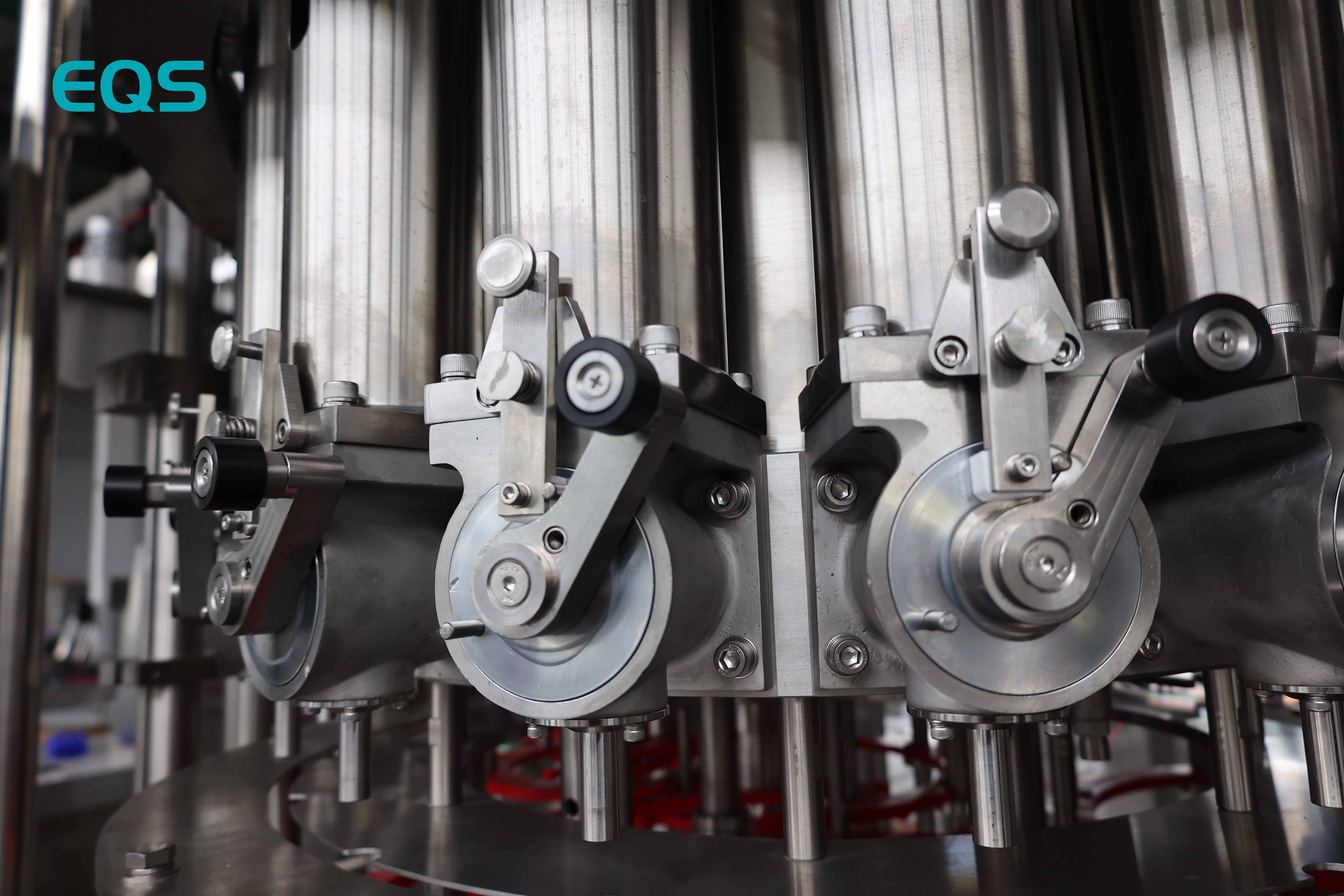
The project footage and photographs show 240 ml and 650 ml plastic bottles running at the plant. The specification also lists 500 ml, 1,000 ml and 2,000 ml plastic bottles as accepted formats. Those larger sizes represent specified capability. The available record does not say they were trialled during commissioning or assign the same output to every size.
Moving from 240 ml to 2,000 ml creates a broad mechanical envelope. Bottle geometry affects the guide rails and handling parts, while fill volume changes with the selected format. Conveyor and label settings then have to follow the bottle chosen for production.
Changeover was the other confirmed challenge. No measured time appears in the records, so no claim can be made for switching between the visible bottles or larger listed sizes. Each accepted bottle needs identified settings and the correct handling parts. This is engineering context rather than a measured Ecuador result.
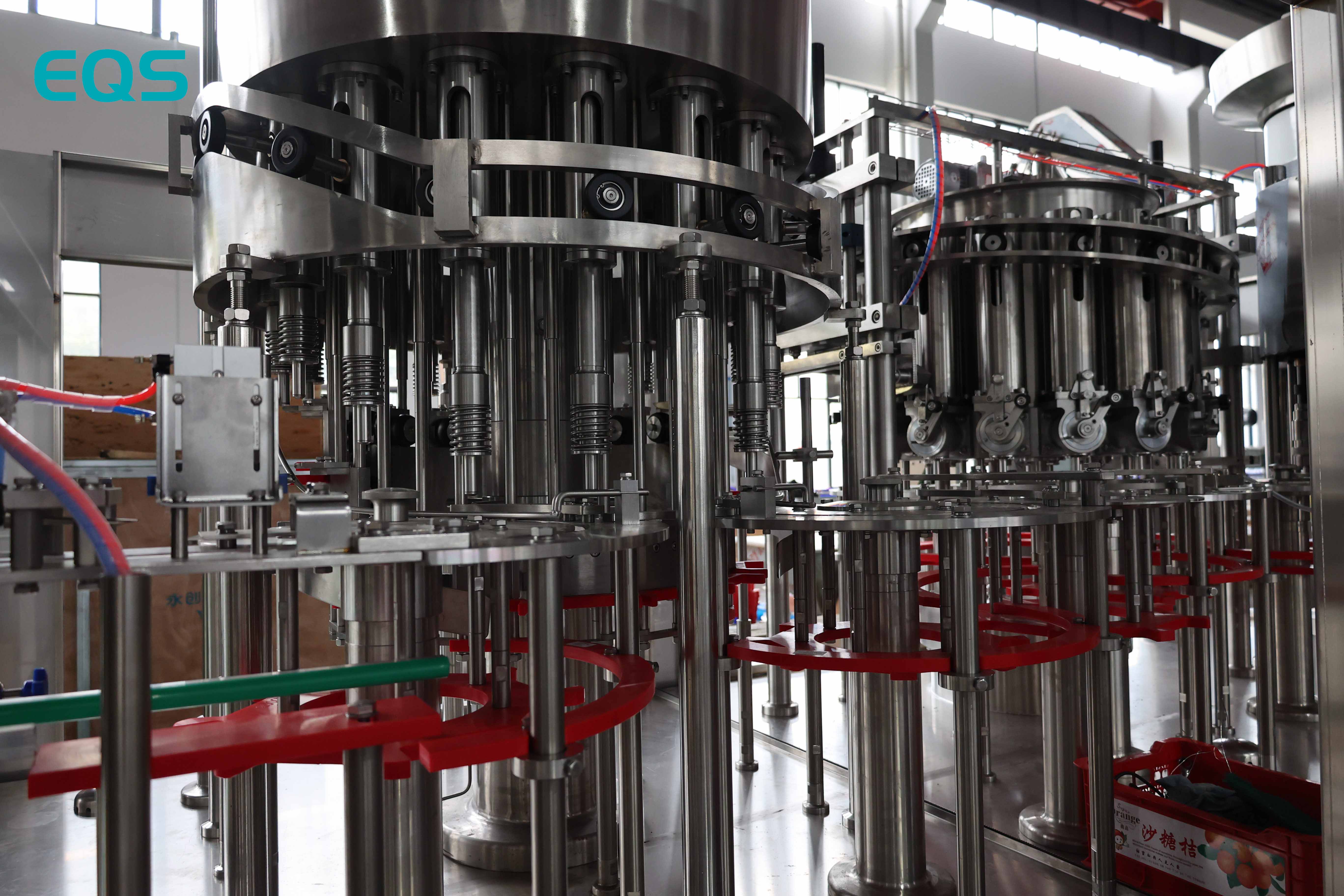
Empty plastic bottles enter through a bottle unscrambler, allowing them to arrive in bulk instead of being placed on the conveyor individually. They travel towards the filling block on an air conveyor. Neck support helps light plastic containers remain upright while the conveyor supplies a controlled flow to the infeed.
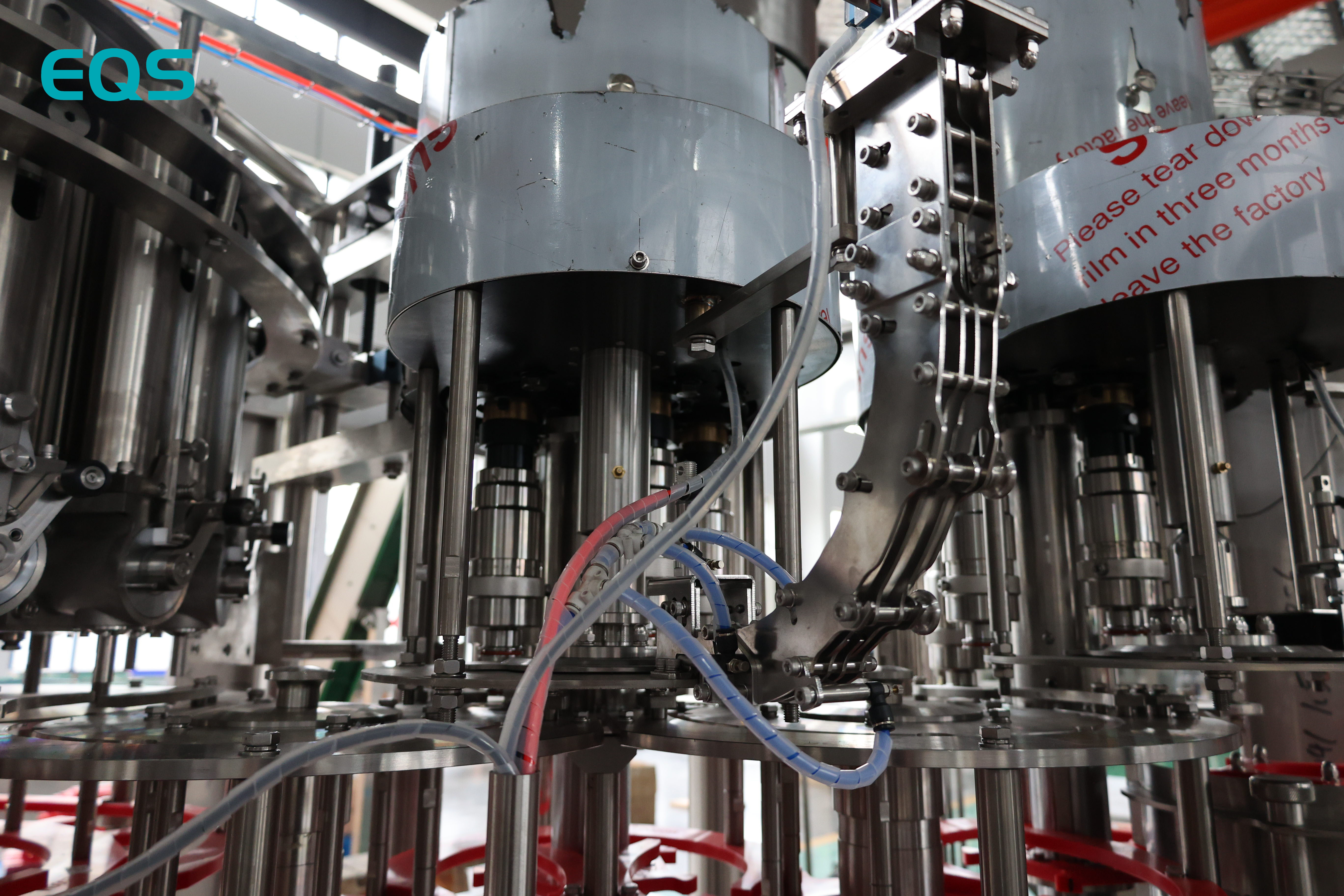
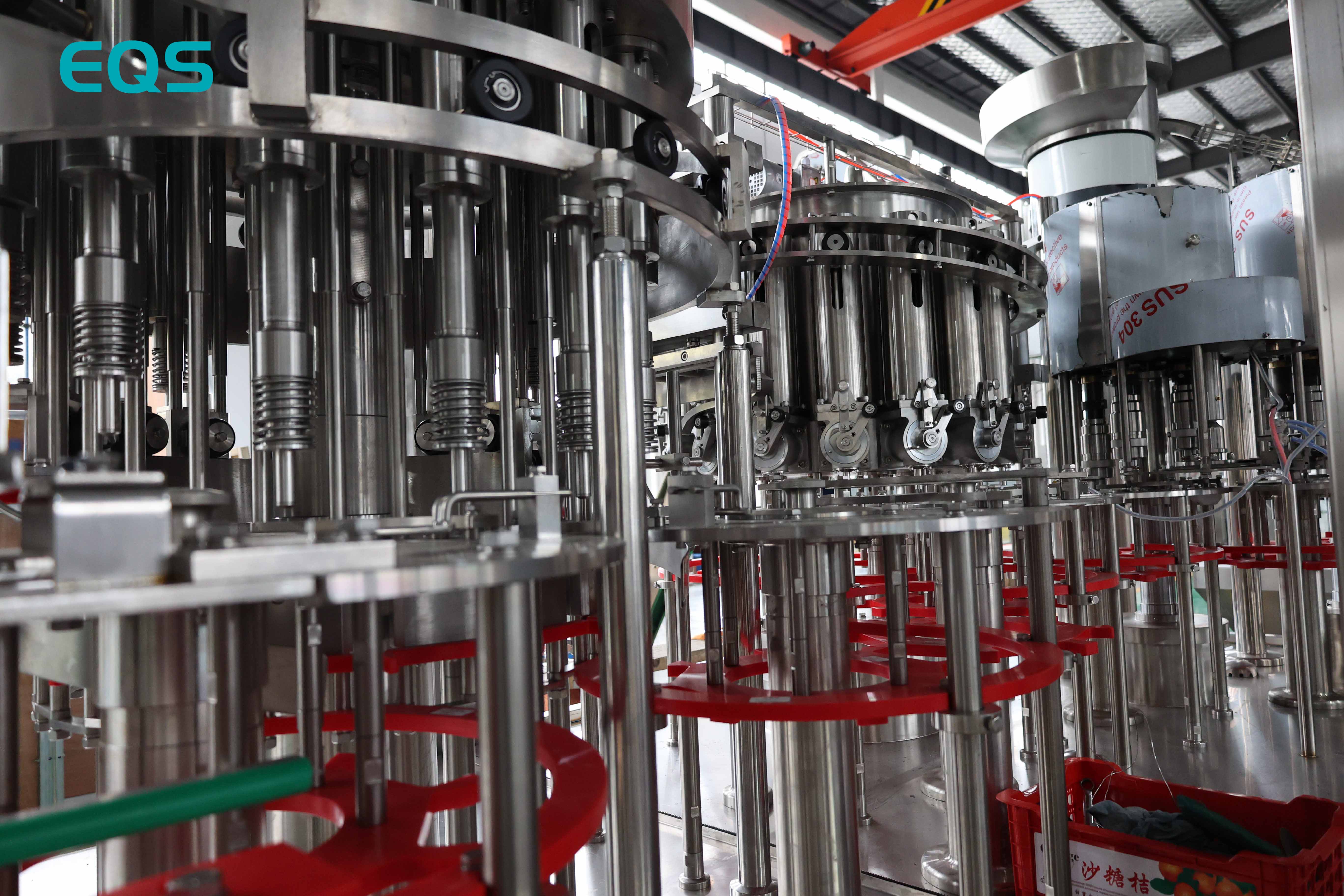
At the main block, the GFF16-16-5-5 carries out filling and closing. The code is the project reference for this four-in-one washing filling capping machine. It is not presented as an equipment family on the EQS website. A cap feeder and cap sorter orient the threaded screw caps before the capping section. Correct orientation allows each cap to enter the closing path as intended.
Downstream, a bottle dryer removes surface water and product carryover from the outside. The coder applies date and batch information, then the labeller finishes the container. Keeping external moisture away from coding supports a legible result. A damp bottle shoulder can interfere with ink adhesion or leave printed information difficult to read after handling.
This route connects bulk bottle feeding with filling, screw capping and downstream finishing. Each transfer maintains bottle control for the next station. The project record supplies no station-level efficiency figures or separate machine performance claims.
The Ecuador plant operates on 120 V, 60 Hz, and the line was built for that supply. Electrical requirements affect motor selection, control voltage and the bill of materials, so they need early confirmation. Another factory supply cannot be assumed to require only a simple site adjustment.
About 100 days passed from order to shipment. Three EQS engineers then spent 15 days on site in Ecuador. This single total covered installation, commissioning and operator training, with training provided free of charge. The record does not support a separate day count for each activity, so the 15 days remains one combined period.
Production began five days after commissioning was completed. For a team entering a new packaging category, this marked the move from project work to routine output. It does not establish an uptime figure or prove long-term performance. The confirmed figures remain a stable 6,000 BPH and a peak of 6,500 BPH.
After operating the disinfectant filling line, the same buyer returned to EQS for a carbonated beverage filling line, a film shrink wrapper and a sleeve labeller. These are recorded follow-on purchases. They show that the commercial relationship continued after the disinfectant project without requiring an assumption about the customer's reasons.
The beverage equipment serves another product category. No claim is made about shared operators, spare parts or maintenance routines between the lines.
A useful enquiry starts with the actual liquid, bottle and cap intended for production. A specification establishes which formats a machine is designed to accept. Samples allow filling behaviour and bottle handling requirements to be considered for the proposed combination. This distinction matters for a foaming disinfectant because the Ecuador result confirms that the issue was solved while leaving the method undocumented.
For several bottle sizes, the enquiry should separate immediate production formats from future requirements. State the factory power supply from the outset as well. For each bottle, identify the required fill volume and confirm whether the format must run during acceptance or only remain within the machine specification. This keeps specified capability separate from a commissioned result.
Output language needs the same care. This disinfectant filling line holds 6,000 BPH in stable production, while 6,500 BPH is the recorded peak. A quotation for another liquid should use its own stable target and bottle format rather than treating the Ecuador peak as a transferable rating.
Copyright © JIANGSU EQS MACHINERY CO.,LTD