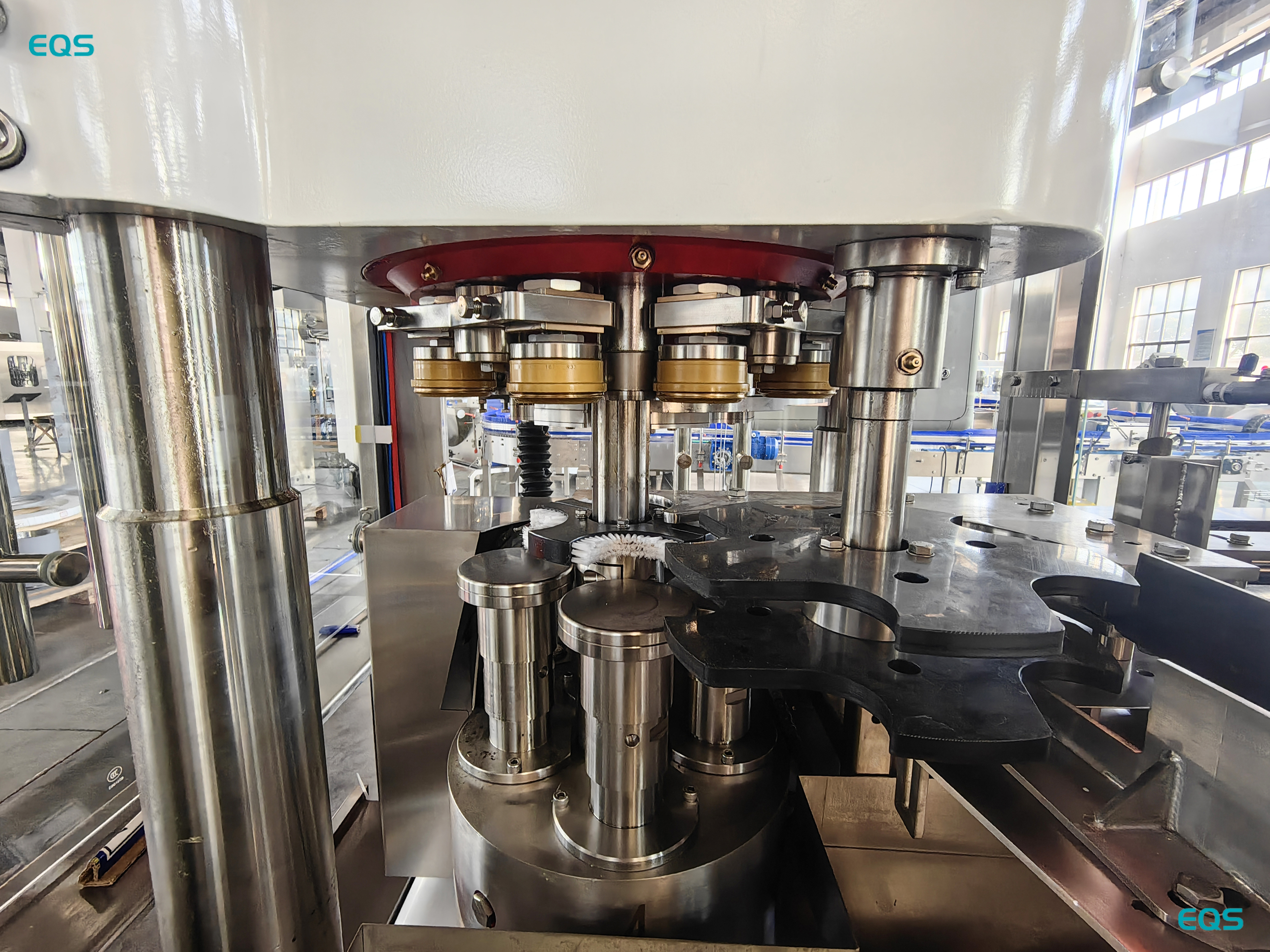
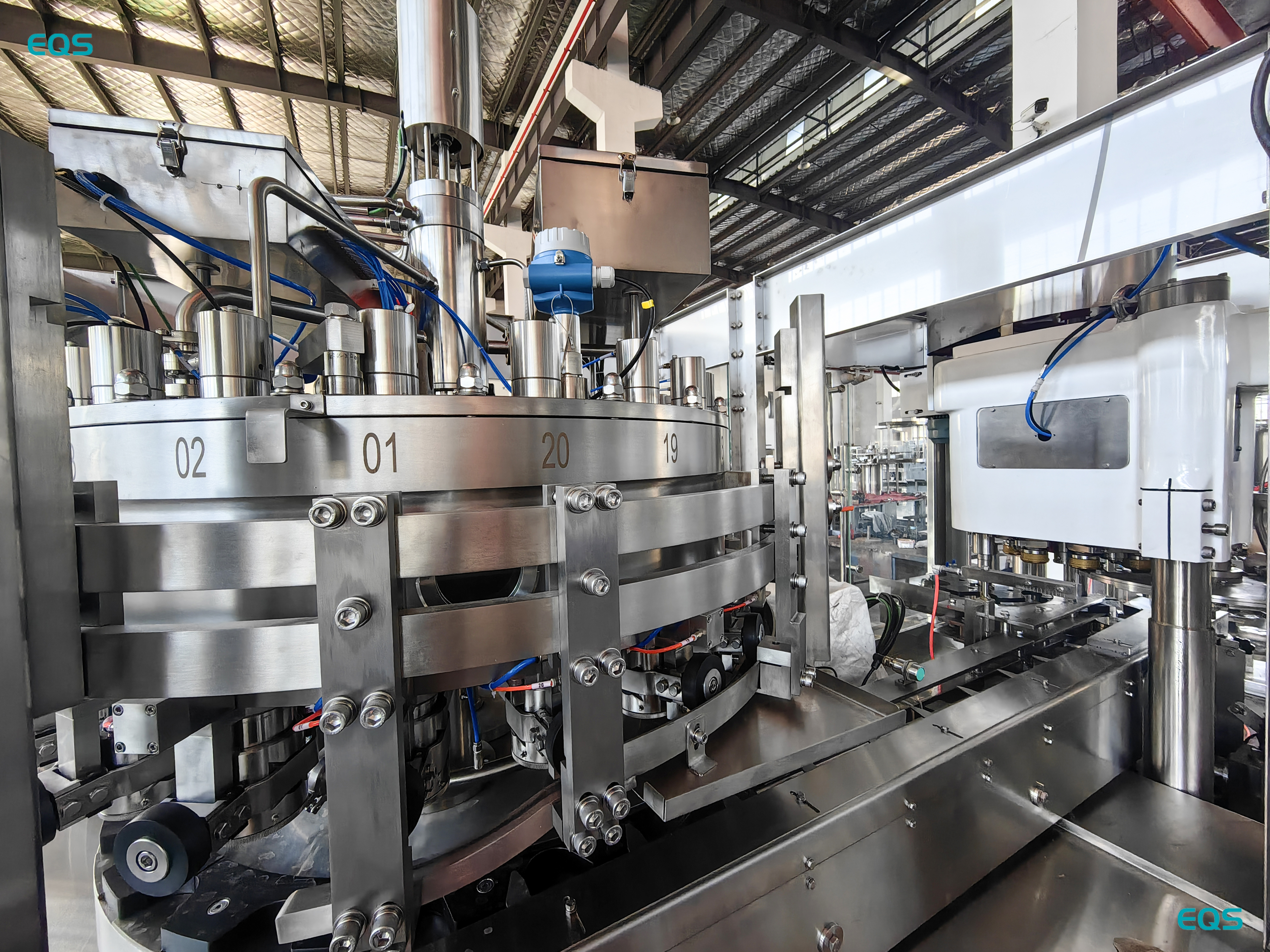
Significantly Improved Filling Accuracy, Eliminating Measurement Deviations
Replacing the mechanical triggering mechanism of traditional mechanical valves—such as cams and springs—solenoid valve beer filling machines adopt a solenoid valve plus PLC control system, enabling millisecond-level response to electrical signals. With closed-loop control integrating flow meters, liquid level probes and pressure sensors, the machines precisely regulate the filling flow rate and termination timing. The measurement error is typically controlled within ±1mL, far superior to that of mechanical valve models.
The machines support flexible adaptation to multi-specification products. Filling volume, speed and other parameters can be adjusted directly via the touch screen, without the need to replace mechanical parts or repeatedly debug mechanical structures. A single machine can swiftly switch between 330ml, 500ml, 600ml and other sizes of beer bottles and cans, delivering exceptional adaptability for small-batch and multi-variety production.
Guaranteed Beer Quality and Extended Shelf Life
Beer is highly sensitive to oxygen, foam and carbon dioxide content, and solenoid valve filling machines are engineered to maximally protect liquor quality.
- Effectively Reduced Oxygen Pickup: Equipped with an isobaric filling system, solenoid valves deliver precise control over the entire process—including back-pressure preparation, filling, pressure relief and gas return. This prevents air ingress caused by delayed switching or poor sealing in mechanical valves, lowering the oxygen pickup of the liquor to an extremely low level. It delays beer oxidation, reduces flavor loss and extends the product shelf life.
- Minimized Foam and Product Loss: The machines realize multi-stage filling—rapid filling in the early stage to boost efficiency, and low-speed filling in the final stage for precise finishing. Coupled with a foam control device, foam overflow is effectively suppressed. This reduces material waste caused by excessive foam, while avoiding issues such as insufficient liquid level and faulty capping.
- Stable CO₂ Content: Precise pressure and flow control maintains a consistent carbon dioxide content in every bottle of beer, ensuring uniform taste and effervescence.
Greatly Enhanced Production Efficiency and Lower Operation & Maintenance Costs
- Efficient Production Changeover and Debugging: When switching product specifications or container types, pure electronic control replaces mechanical modification, drastically shortening downtime for debugging. This is especially advantageous for craft beer production and multi-brand contract manufacturing, significantly improving the Overall Equipment Effectiveness (OEE).
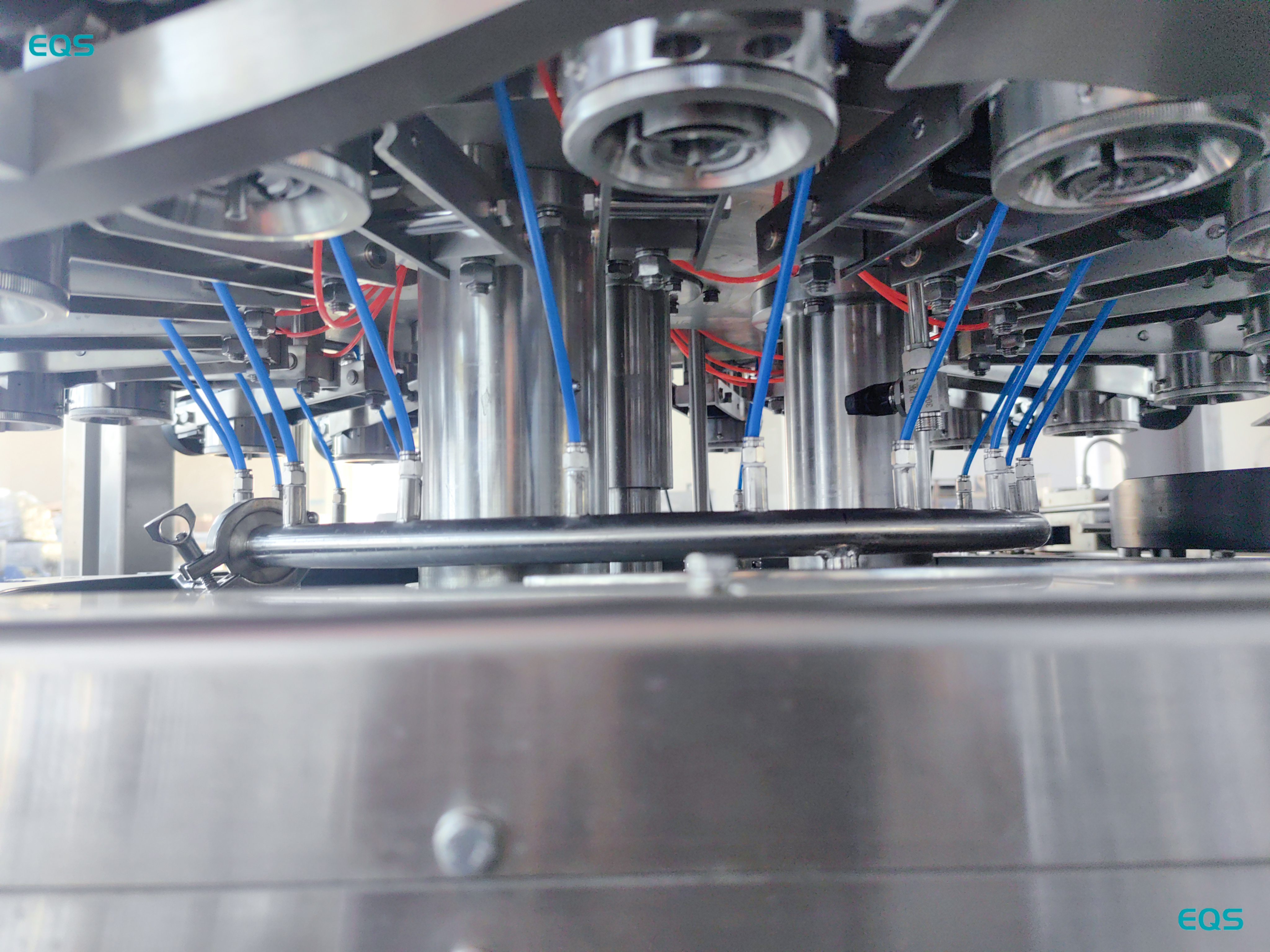
- Convenient Fault Diagnosis: The built-in electronic monitoring system tracks the operating status, pressure, flow rate and other parameters of each solenoid valve in real time. In the event of faults such as valve jamming, seal failure or abnormal pressure, the system can quickly locate the faulty point. Compared with the one-by-one troubleshooting required for mechanical valves, maintenance efficiency is greatly improved and downtime losses are reduced.
- Reduced Mechanical Wear: Core control relies on electrical signals, decreasing the use of numerous mechanical transmission and friction components. This lowers the replacement frequency of vulnerable parts including cams, sliding blocks and springs, prolonging the service life of the equipment and reducing costs for spare parts procurement and manual maintenance.
Excellent Hygienic Performance, Compliant with Food Safety Production Standards
- Hygienic Structural Design: The filling valves of solenoid valve beer filling machines are mostly manufactured from food-grade 316L stainless steel, with a sanitary, dead-space-free valve body design. Integrated with an automatic CIP cleaning system, solenoid valves can automatically open and close in accordance with the cleaning program, achieving full-range cleaning and sterilization of pipelines and valve bodies. The design meets beer industry hygiene standards and compliance requirements such as GMP and FDA.
- Avoidance of Secondary Contamination: The reduced need for manual disassembly and assembly of mechanical parts lowers the risk of microbial contamination from human contact, making the machines ideal for large-scale beer production with stringent hygiene requirements.
Intelligent and Digital Upgrading, Adaptable to Modern Factory Management
- Data Traceability: The system can record operating data of each filling valve, filling volume, production batches, running hours and other information, and generate production reports. It meets the traceability management requirements of the food industry, facilitating enterprises in quality traceability, cost accounting and production optimization.
- Strong Scalability: The machines can be easily connected with upstream equipment such as bottle washers and sterilizers, as well as downstream equipment including capping machines, labeling machines and cartoning machines, realizing automated linkage of the entire production line. They also support integration with factory MES and ERP systems, enabling remote monitoring, remote parameter modification and cloud-based management of equipment operating status, helping to build smart factories.
My name is Allen, and I'm an expert in filling machine technology at EQS, a leading liquid packaging solution provider based in China. If you're looking for top-quality equipment for your production line, feel free to reach out to me at [email protected]. We specialize in providing customizable solutions with cutting-edge technology.
 EN
EN