 EN
EN


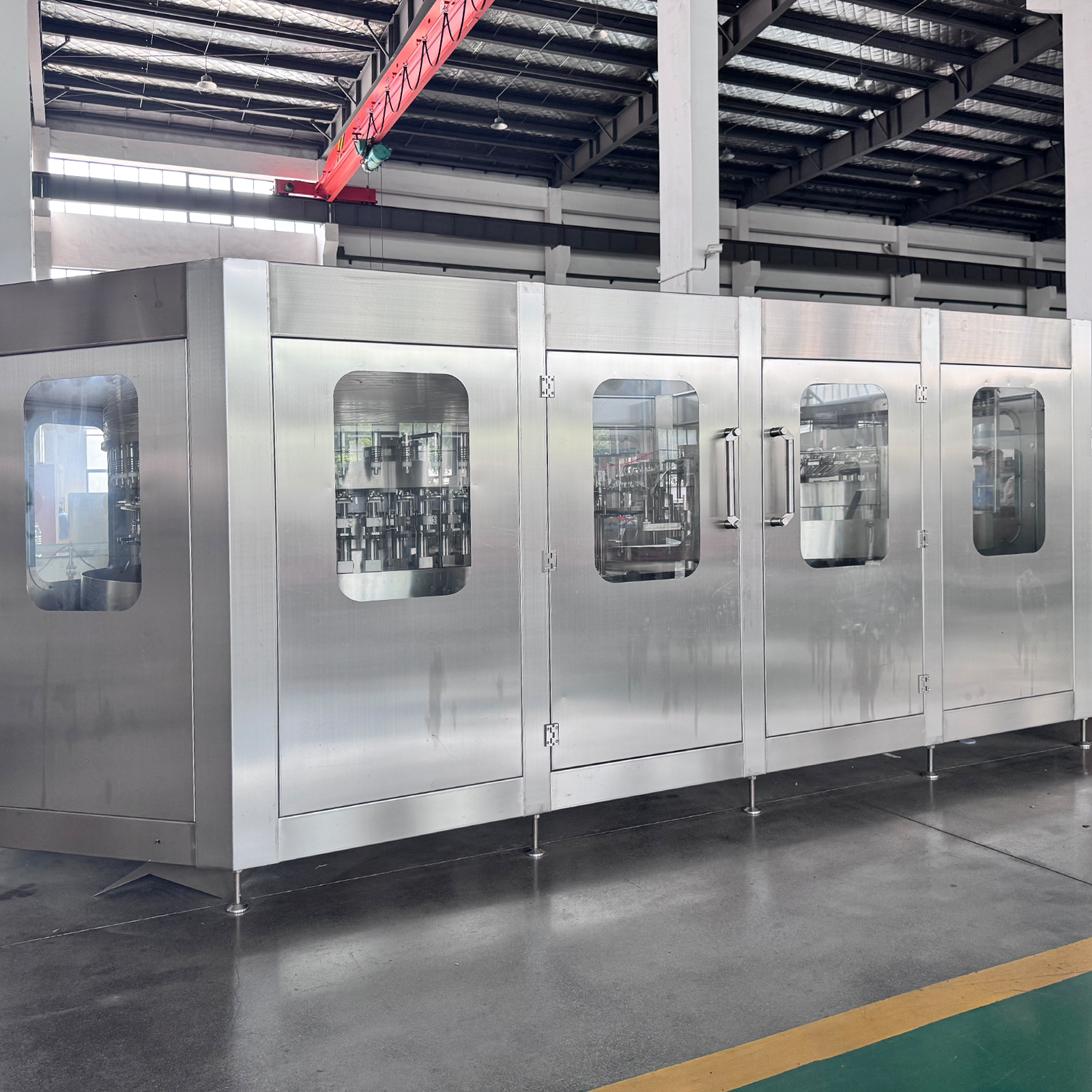
Adapting Water Filling Machines to Diverse Bottle Sizes
Modern beverage manufacturers require water filling machines capable of handling containers ranging from 250ml PET bottles to 19L reusable jugs. The 2024 Packaging Machinery Report reveals a 34% increase in demand for multi-format systems since 2021, driven by consumer preferences for varied packaging and seasonal production needs.
The Demand for Versatility in Handling Different Bottle Sizes
For companies supplying drinks to grocery stores, hotels, and individual customers, handling around 12 different product variants at once is pretty standard nowadays. The trouble comes when equipment isn't built for flexibility. Old fashioned setups really slow things down because switching between formats takes anywhere from 15 to 25 minutes according to FoodTech Journal last year. That's where modern water filling systems shine though. These newer machines can handle bottles ranging from 25mm all the way up to 150mm in diameter without missing a beat, keeping production rates well over 200 units per minute even during transitions.
How Automatic Water Bottle Filling Systems Enhance Production Flexibility
Programmable automation enables:
- Speed adjustments: Gradual ramp-up/down prevents liquid spillage during container changes
- Height compensation: Sensor-guided nozzle positioning adapts to 150–350mm bottle heights
- Flow-rate modulation: Peristaltic pumps maintain ±1% volume accuracy across 0.5–5L fills
These capabilities allow producers to switch between 500ml sport bottles and 5-gallon office water jugs in under 7 minutes–63% faster than semi-automatic systems (2023 Beverage Production Benchmarks).
Role of Modular Design in Bottle Size Adaptability in Filling Machines
Leading manufacturers now implement bolt-on modular components:
- Quick-swap guide rails: Accommodate ±40% diameter variations
- Interchangeable filling heads: Support foamless carbonated water fills and still water fills
- Scalable conveyor segments: Expandable from 3 to 15 filling stations
Modular designs reduce format changeover time by 40% compared to fixed systems while cutting spare parts inventory costs by $18k/year (FoodTech Journal 2023).
Case Study: JIANGSU EQS MACHINERY CO LTD’s Multi-Format Filling Line
A 2024 implementation for a Southeast Asian bottler demonstrated:
- 8 bottle formats: 330ml–8L capacities
- 98% format recognition accuracy: Machine vision-guided container identification
- Production efficiency gains: 30% higher OEE (Overall Equipment Effectiveness) versus single-format lines
The system processes 3,200 5-gallon bottles hourly while resuming 500ml production within a 9-minute changeover.
Customization Features in Water Filling Machine Design
Tailor-Made Automatic Bottle Filling Systems for Plain or Sparkling Water
Water filling machines today come in different models depending on whether they're meant for regular water or fizzy drinks. The ones used for carbonated water need special pressurized chambers so the bubbles stay in the bottle. For still water systems, manufacturers often add nitrogen flushing features to stop oxygen from getting into the product. According to some industry data from last year, companies that invest in these specialized setups tend to waste about 18 percent less product than those using off-the-shelf equipment. This makes sense when looking at how sensitive both types of beverages can be during processing.
Adjustable Nozzles and Changeover Mechanisms for Rapid Format Switching
With quick release nozzle systems, changing sizes takes less than 15 minutes flat. Some pretty cool tech makes this possible including those self centering grippers that work great from 200ml right up to 2 liter containers. There's also these servo driven height adjustment columns that get super precise measurements down to plus or minus half a millimeter. And let's not forget the tool free changeover kits which cut down format switching to just three simple steps. Bottling plants have seen massive improvements thanks to all this modular design stuff. We're talking about a 73 percent drop in downtime during changeovers according to Packaging Digest's latest report from 2024 on production efficiency.
Integration of Customer-Specific Requirements in Machine Engineering
Over 82% of manufacturers now request tailored sensor arrays for real-time viscosity monitoring and anti-drip mechanisms for high-pH alkaline waters. Custom PLC interfaces allow operators to program parameters for hybrid beverages like oxygen-infused or electrolyte-enhanced waters without mechanical recalibration.
Balancing Standardization and Customization in Bottling Lines
While specialized components meet niche needs, 60% of machine frameworks use ISO-certified modules for motors, conveyors, and control panels. This hybrid approach ensures compatibility with common sanitation protocols and delivers 35–40% cost savings on replacement parts compared to fully bespoke systems.
Specialized Solutions for 5-Gallon Water Bottle Filling
Technical Challenges in 5-Gallon Water Bottle Filling Capabilities
Working with those big 5 gallon (about 18.9 liters) containers brings some real engineering headaches because they get pretty heavy once filled up, over 45 pounds actually. To handle them properly, equipment needs reinforced frames and strong drive systems to avoid getting bent out of shape. Getting things aligned right becomes super important too since those necks vary by around plus or minus 2.5 millimeters. That's where the advanced photoelectric sensors come into play along with those servo controlled actuators making sure everything lines up just right. And let's not forget why this matters so much practically speaking. According to Beverage Production Quarterly from last year, nearly two thirds of all stoppages on large format lines happen during these container transfers. So getting this part right really makes a difference for production efficiency.
Specialized Conveyor and Gripping Systems for Large-Container Stability
The latest 5 gallon systems have been designed with staggered roller conveyors that include auto centering guides. These help keep everything upright even when moving fast across production lines. For handling containers during those tricky 45 degree inclines and declines, vacuum assisted grippers come into play. With full 360 degree contact surfaces, these grippers hold onto bottles much better than old school claw mechanisms did. Tests show they cut down on spills by around 92%, which makes a huge difference for anyone dealing with liquid products. And there's another smart feature too load sensitive braking technology that adapts automatically based on what kind of bottles are coming through. Heavier ones get handled differently from lighter ones, yet nothing slows down the overall process speed.
Operational Efficiency Gains in 5-Gallon Production
When it comes to handling 5-gallon formats, specially configured equipment delivers around 30% better throughput compared to older standard models that have been retrofitted. Take the EQS-5G series as a prime example of this kind of efficiency boost. These machines come equipped with tooling that can be swapped out quickly, cutting down format changeover time to less than 15 minutes total. That represents a massive 73% reduction in downtime when compared to earlier versions according to Bottling Technology Review from last year. What's more impressive is how consistently they perform at production speeds above 1,200 containers every hour, all while keeping fill volumes within just half a percent variance either way. Such precision makes a real difference in day-to-day operations where even small inconsistencies can add up over time.
Achieving Precision with Advanced Filling Technologies
Filling Technologies Enabling Accuracy and Consistency in Volume Control
Today's water filling equipment can hit around plus or minus half a percent accuracy when it comes to volume thanks to those fancy servo driven pumps paired with mass flow meters. We've seen this work well in setups connected to the internet of things according to Packaging Technology Journal from last year. What makes these systems so good is their ability to tweak settings on the fly whenever there are changes in how thick the liquid gets or what temperature it runs at. Plants that switched over reported cutting down on wasted product by about 18 percent each year without running afoul of any regulations set forth by either the FDA or European Union standards per the Beverage Industry Report coming out in 2024.
Comparison of Volumetric vs. Gravimetric Filling Methods
| Metric | Volumetric Systems | Gravimetric Systems |
|---|---|---|
| Speed | 200–400 BPM | 120–220 BPM |
| Accuracy Range | ±0.5–1.5% | ±0.2–0.8% |
| Best For | Low-viscosity still water | High-value sparkling water |
| Changeover Time | 15–30 minutes | 45–90 minutes |
Use of Servo-Driven Pumps and Mass Flow Meters for Precision
The latest measurement tech brings together Coriolis mass flow meters and those PLC boxes to get fill weights accurate within just one gram. For fancy drinks on store shelves, this matters a lot since pouring too much product can cost around seven bucks for every thousand liters sold according to Beverage Production Insights last year. A real world example comes from a mineral water factory that saw their carbonation losses drop by nearly a third once they swapped out old equipment for new servo controlled filling heads. These upgraded systems respond lightning fast at only ten milliseconds between adjustments, making all the difference in maintaining consistent quality across production runs.
Trend: AI-Based Calibration Systems in Next-Gen Water Filling Machines
Modern machine learning tools can actually spot signs of nozzle wear up to three days before it becomes a problem, which lets factories schedule maintenance work ahead of time instead of dealing with unexpected breakdowns. According to recent industry reports from Food & Pharma Machinery in 2024, this approach cuts down on unplanned downtime by around 40%. The AI behind these systems digs through years worth of production records to figure out what settings work best for different products. We saw this in action at a major beverage plant where switching between small and large bottle sizes used to create all sorts of messes. After implementing these smart adjustments, they managed to slash their waste levels by nearly 30% when moving from 500ml containers to those holding a full liter. That kind of improvement makes a real difference in bottom line costs while keeping quality standards high.
Scalability and Future-Proofing Automated Water Filling Lines
Designing for Future Growth: Flexibility and Scalability in Bottling Lines
Modern water filling machines must balance current output with long-term adaptability. Modular designs allow incremental addition of filling heads, conveyor extensions, or quality-control modules as demand grows. This phased scalability reduces upfront investment while sustaining 98.5% equipment utilization across shifts (2024 Bottling Industry Report).
Modular Expansion Options in Industry-Leading Systems
Leading providers offer interchangeable components that can scale a standard 12-head filling line to 36 heads within eight hours. Standardized connection interfaces ensure seamless integration of upgraded sensors, filler valves, and PLC controllers. This flexibility supports seamless transitions between 500ml PET bottles and 5-gallon containers without halting operations.
Scalability Case Study: From Small Plant to Regional Distribution Center
A bottled water company in the Midwest managed to boost their output from just 10 thousand to a staggering 120 thousand bottles each hour thanks to expandable filling tech. They implemented this growth through three separate phases of modular upgrades spread out over nearly 18 months. The best part? Production never stopped during any of these improvements. By spacing out investments rather than making one huge capital expenditure, they got their money back 40 percent quicker compared to companies that replace entire lines at once. According to research from Ponemon Institute in 2023, smart automated systems designed with future expansion in mind can save manufacturers around $740,000 on retooling expenses when markets change unexpectedly. These days, even better solutions are emerging with built-in AI capacity planners that look at sales trends and analyze production data to suggest exactly when to schedule those critical upgrades for maximum efficiency.
FAQ
What are the main benefits of using modern automatic water filling systems?
Modern automatic water filling systems offer flexibility in handling different bottle sizes, quick changeover times, high precision in volume control, and enhanced production efficiency. They reduce downtime and waste, while maintaining high output and consistency.
How do modular designs in water filling machines enhance production?
Modular designs allow manufacturers to quickly adapt to different bottle formats, minimize changeover times, and reduce spare parts inventory costs, leading to enhanced production efficiency and cost savings.
What are the advantages of AI-based calibration systems in water filling machines?
AI-based calibration systems can predict machine maintenance needs, reduce unplanned downtime, and optimize settings for different products, leading to consistent quality and reduced waste.
How can water filling machines be customized for different types of water?
Machines can be customized with features like pressurized chambers for carbonated water and nitrogen flushing for still water, ensuring product quality and reduced waste with specialized setups.
Table of Contents
- Adapting Water Filling Machines to Diverse Bottle Sizes
- Customization Features in Water Filling Machine Design
- Specialized Solutions for 5-Gallon Water Bottle Filling
- Achieving Precision with Advanced Filling Technologies
- Scalability and Future-Proofing Automated Water Filling Lines
-
FAQ
- What are the main benefits of using modern automatic water filling systems?
- How do modular designs in water filling machines enhance production?
- What are the advantages of AI-based calibration systems in water filling machines?
- How can water filling machines be customized for different types of water?