 EN
EN


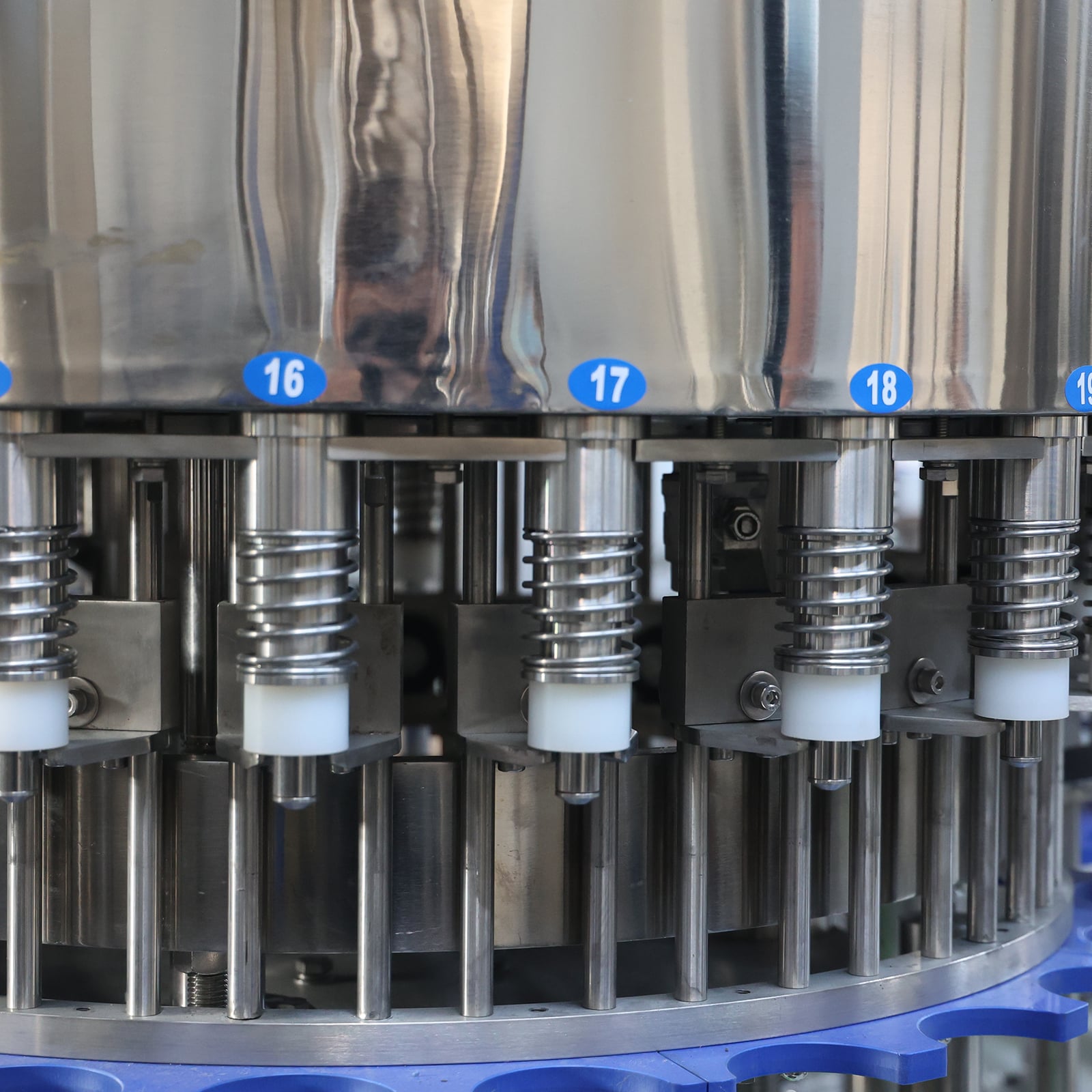
Cutting Labor Costs with Automated Water Filling Machines
How automation reduces dependency on manual labor in bottling lines
Water filling machines that are automated cut down on the number of people needed for bottling by around 40 to 60 percent according to Boston Consulting Group from 2023. The machines take care of all those boring repetitive jobs like lining up bottles, putting caps on them, and checking if everything looks good visually. With advanced sensors and motors driving the system, these setups run almost constantly at about 99.5% uptime. That means factories can keep producing their products with only one or two techs working each shift rather than needing eight to ten manual laborers doing the same work.
Manual vs. automated water filling: A comparison of labor efficiency and error rates
| Manual Bottling Line | Automated System |
|---|---|
| Requires 8 workers/hour for 1,200 bottles | Operates with 1 technician/hour for 4,800 bottles |
| Human error causes 5–8% product waste | Precision filling valves reduce waste to <0.8% |
| Hourly labor cost: $96 (8 workers × $12/hr) | Hourly labor cost: $24 (1 technician × $24/hr) |
Automated systems achieve 33% lower labor costs while tripling output speeds to 12,000–24,000 bottles per hour (BPH), compared to manual operations’ 4,000 BPH ceiling.
Real-world savings: Case study of a mid-sized bottler using advanced systems
A 2024 analysis of a 50-employee bottling plant revealed:
- Labor costs decreased by $18,500/month after implementing automated water filling machines
- ROI achieved in 22 months despite $380k initial investment
- Error-related recalls dropped 73% due to AI-powered quality control
This aligns with IBWA data showing automated facilities reduce per-unit labor costs by 14% annually compared to manual operations. By reallocating staff to maintenance and logistics roles, plants maintain productivity while scaling output 30–40% year-over-year.
Boosting Production Output Through High-Speed Automation
Achieving Higher Throughput with High-Speed Water Filling Machine Operations
Today's water filling machines can crank out over 1200 bottles every single minute, which is roughly three to four times faster than what manual bottling lines manage. These high speed automated systems take away all those problems that come from tired workers or people working at different paces, allowing bottlers to handle anywhere between 20 thousand and 50 thousand units each hour. The machines use these special servo motors that keep things really accurate when filling bottles, staying within about half a milliliter either way. This kind of precision cuts down on wasted product by around seventeen percent each year when compared to older semi automatic systems according to a study published in Beverage Production Journal last year.
24/7 Operational Capability and Consistent Output in Modern Filling Systems
Automated water filling systems operate continuously with 95% uptime, unlike manual lines limited to 60% utilization due to shift changes and breaks. Closed-loop quality control sensors detect deviations in real time, maintaining 99.8% fill consistency across 72-hour production runs. This reliability reduces rework costs by $12–$18 per 1,000 units in bottling operations.
Scalable Automation Solutions for Growing Beverage and Bottled Water Businesses
Water filling machines built with modular designs give manufacturers the ability to boost their capacity anywhere from about 30% all the way up to 200%, and they don't have to replace entire production lines to do it. The systems come with smart conveyors that work seamlessly together, plus nozzle arrays that can be swapped out quickly. This means switching formats is no big deal at all - moving from standard 8 ounce cans to those 1 liter PET bottles or even handling those bulky 5 gallon jugs takes less than 15 minutes most of the time. Such flexibility lets companies expand what they produce without much hassle. And best part? Downtime stays really low, typically below 2% when expanding capacity, which keeps operations running smoothly despite changes in demand.
Smart Technology Integration in Modern Water Filling Machines
AI-driven precision: Enhancing fill accuracy and minimizing product waste
Today's water filling equipment uses artificial intelligence to get fill accuracy down to around half a percent, which cuts down on those annoying overfills and underfills that can really eat into profits for bottling companies. Some studies suggest this kind of waste costs them as much as $1.2 million every year according to Food Production Analytics from 2023. These machines actually have vision systems that check where bottles sit and how full they are in real time. When something looks off, the nozzles move themselves around automatically so everything stays precise even when dealing with different shaped containers. No more waiting for someone to manually adjust things all day long. The result? More consistent production runs and significantly less wasted materials. Bottlers report saving somewhere between 18 and 22 percent on raw materials when switching from traditional systems to these smart AI enabled ones.
IoT-enabled monitoring for predictive maintenance and real-time performance tracking
Sensors connected to IoT networks inside filling valves, on conveyor belts, and within sterilization equipment gather over 40 different performance indicators ranging from how motors vibrate to the condition of seals. These smart systems analyze all this information and can actually spot problems with bearings or pumps about seven to ten days before they break down completely. This early warning system cuts unexpected stoppages at bottling facilities by around two thirds according to Packaging Tech Journal from last year. When something starts looking off track, plant supervisors get automatic notifications so they can tweak operations while keeping production moving at good speed without letting quality standards slip.
How advanced technology lowers long-term production costs
Smart water filling machines can slash maintenance expenses by around 30 to 40 percent each year thanks to built-in diagnostics and smart lubrication systems that automatically refill when needed based on how much they're used. The energy efficient models run on variable frequency drives which cuts down on electricity bills quite a bit actually about 22% for every 10 thousand bottles processed. And let's not forget the water savings either these machines come with AI optimized cleaning routines that conserve roughly 15 thousand gallons or more each month at medium sized operations. Most companies see their money back within just over a year and a half, sometimes even faster. Plus there are upgradeable tech modules included so as production needs grow, the system stays affordable without needing complete replacement.
Customization and Flexibility for Diverse Bottling Needs
Adapting Water Filling Machines for Various Bottle Types, Sizes, and Production Volumes
Water filling equipment these days comes with adjustable settings that can accommodate everything from small 200ml PET bottles right up to big 20 liter reusable containers. Some top-end systems can move their nozzles in under 250 milliseconds according to Industrial Automation Journal from last year, plus they handle different liquid viscosities so they work well with products like electrolyte drinks or vitamin waters. Getting rid of those time-consuming manual adjustments makes all the difference, especially when we look at the numbers: Food & Beverage Tech Review reported back in 2023 that about seven out of ten beverage makers change their packaging frequently, which means downtime costs money.
Modular Designs That Meet Specific Industry Requirements in the Beverage Sector
With modular systems, manufacturers can pick and choose parts depending on what local rules require or what kind of containers they need to handle. Take carbonated drinks makers who often go for pressure sensitive fillers because of the gas content, whereas spring water facilities tend to focus more on getting those lightweight PET bottles handled efficiently. The flexibility saves money upfront too. Studies from Packaging Efficiency Report 2024 show savings around 18 to 32 percent when compared to traditional fixed setups, which really helps startups entering specialized markets test their waters first. Most top tier solutions these days start with standard bases but allow swapping out different bits like sensors, conveyor belts, and capping equipment. This means companies stay compliant with all those strict FDA, EU and APAC cleanliness requirements without having to rip everything apart and replace whole systems every time regulations change.
Ensuring Hygiene, Safety, and ROI with Advanced Water Filling Systems
Closed-Loop Automation and Sterilization Features for Contamination-Free Filling
Today's water filling machines are built with hygiene at the forefront, featuring closed loop systems that keep workers hands off the actual bottled products during processing. The latest equipment comes equipped with advanced cleaning tech like UV-C lights for sanitation plus automatic Clean-in-Place cycles. These features help manufacturers comply with ISO 22000 food safety requirements and cut down on microbes by almost 99.7% when compared to old fashioned manual cleaning techniques. Such an approach not only maintains product consistency but also saves companies from expensive recall situations caused by simple hygiene failures in production lines.
Calculating ROI: Cost-Benefit Analysis of Water Filling Machine Investment
According to a look at operations from 2023, companies that bottle drinks are finding they get their money back on automated systems pretty fast - usually around 18 to 24 months after installation. This happens mainly because these systems require far less labor time (about 62% less staff hours needed) and create much less waste since the filling process hits 91% accuracy most of the time. Bottlers who implement predictive maintenance also see their machines last about 40% longer than those relying on fixing problems as they happen, according to some research done last year. For anyone looking at return on investment numbers, it's worth checking out the newer energy efficient models too. These can slash electricity bills by roughly 30% each year without sacrificing much in terms of reliability, keeping things running smoothly about 98% of the time even during busy periods.
Long-Term Savings Versus Initial Capital: Making a Strategic Automation Decision
Advanced water filling machines do cost money upfront, but they come with modular designs that let companies upgrade piece by piece as needed. This is pretty important for businesses that expect their demand to go up or down by about 25% each year. Some big manufacturers say their customers get around double their money back within five years when switching from manual operations to automation. And interestingly enough, maintenance usually stays under 12% of what it costs to run these systems overall. The real benefit here is that the equipment can scale along with growing production demands instead of forcing companies to throw out everything and start fresh when things expand.
FAQ Section
What is the main advantage of using automated water filling machines?
Automated water filling machines significantly reduce labor costs, increase production efficiency, and provide precision, thus minimizing product waste and error rates compared to manual bottling lines.
How does automation impact labor efficiency in water bottling?
Automation allows for fewer workers to manage production lines, operating with just one technician per hour for thousands of bottles, whereas manual lines require multiple workers, reducing labor costs by about 33%.
Are automated water filling machines cost-effective in the long run?
Yes, despite the initial investment, automated water filling systems usually offer fast ROI within 18 to 24 months due to reduced labor costs and waste, and improved operational efficiency.
How do modern machines ensure hygiene and safety in water bottling?
Modern machines are equipped with closed-loop systems and sterilization features like UV-C sanitation and automatic cleaning cycles, which help meet ISO 22000 food safety standards and reduce contamination.
Table of Contents
- Cutting Labor Costs with Automated Water Filling Machines
- Boosting Production Output Through High-Speed Automation
- Smart Technology Integration in Modern Water Filling Machines
- Customization and Flexibility for Diverse Bottling Needs
- Ensuring Hygiene, Safety, and ROI with Advanced Water Filling Systems
- FAQ Section