 EN
EN


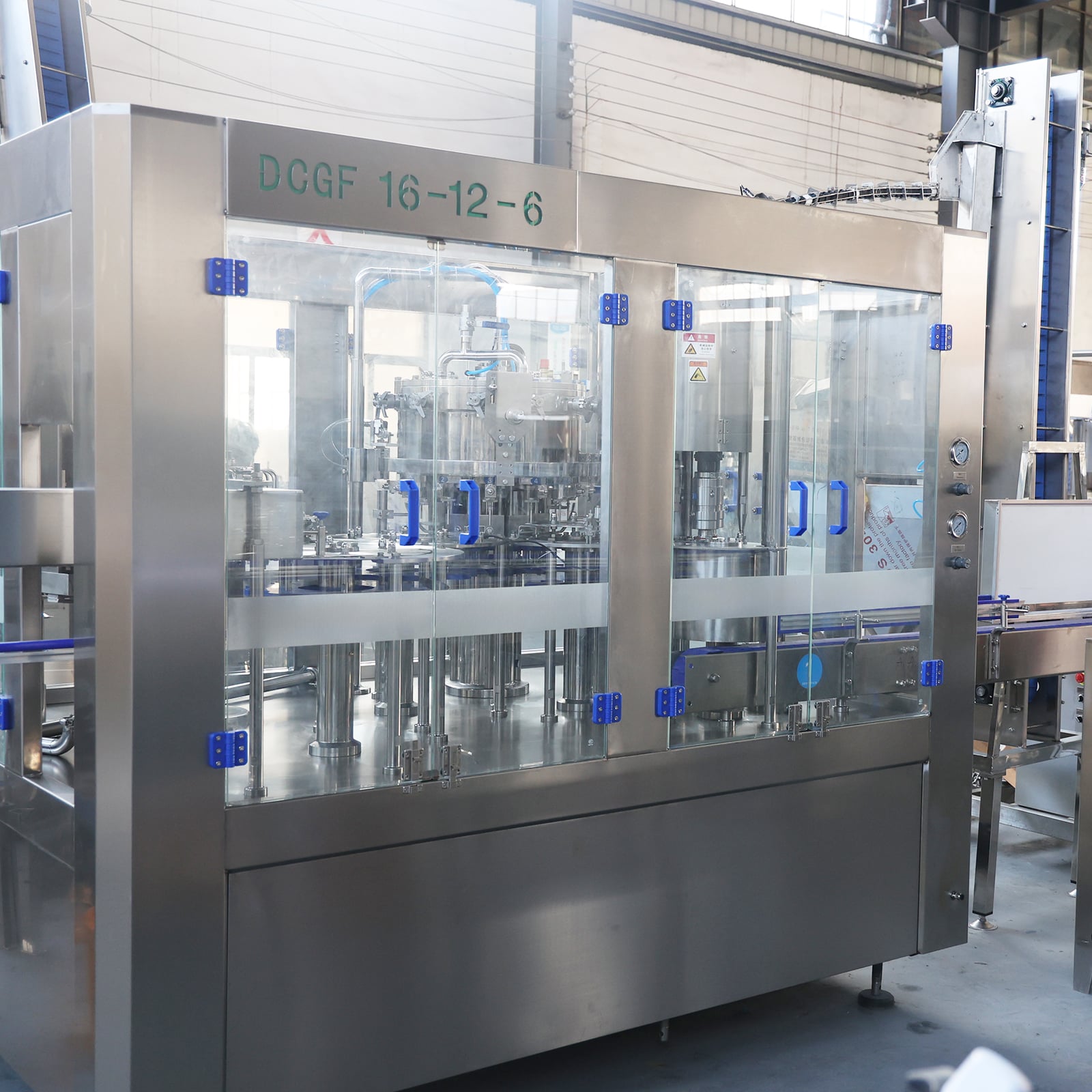
Precision Filling Technology for Consistent Bottle Fill Levels
Understanding Fill Volume Accuracy in Water Filling Machines
Modern water filling machines achieve ±0.5% fill accuracy using volumetric displacement systems and inline load cells. These technologies dynamically adjust for variables like liquid viscosity and ambient temperature, maintaining deviations within 2 mL per bottle—even at speeds exceeding 200 containers per minute.
How Precision Ensures Consistency Across Production Batches
Servo-driven dosing pumps deliver ±0.3% volume repeatability over 24-hour operations, effectively eliminating the batch-to-batch variances that once caused 3–5% product discrepancies. This consistency allows manufacturers to standardize settings across polyethylene terephthalate (PET), glass, and aluminum containers without manual recalibration.
Uniform Fill Levels Across Diverse Bottle Types and Sizes
Adaptive nozzle arrays automatically adjust spacing and tilt to accommodate containers from 250 mL pouches to 20 L jerricans. Optical sensors map bottle geometries in under 50 ms, enabling real-time flow adjustments that prevent splashing in narrow-neck designs while ensuring precision in wide-mouth formats.
Reducing Product Waste and Recalls Through Accurate Fills
Automated overflow detection reduces underfill and overfill rates to just 0.2%, down from 1.8% in traditional systems. This improvement prevents 98% of packaging-related recalls and recovers approximately 2,500 liters of product annually per production line through closed-loop recirculation.
High-Speed Automation Powered by Servo-Driven Systems
Maximizing Production Efficiency with Automatic Water Filling Machine Operations
Water filling machines powered by servos hit around 98% efficiency when they coordinate bottle movement, filling, and capping all in one smooth process. The latest data from an industry report shows these advanced systems cut down on cycle time about 40% better than older pneumatic models, plus they keep fill levels pretty accurate within half a percent either way. Traditional equipment needs someone constantly adjusting things manually, but servo driven systems can switch between different container sizes in just under a minute or so once the right settings are programmed into them. This kind of flexibility makes production lines much faster and less error prone over time.
High-Volume Liquid Filling Capabilities of the CGF Series
The CGF series can process as many as 12,000 bottles per hour, working with all sorts of containers from small 200 mL vials right up to large 5 gallon jugs. What makes this system stand out is its dual track conveyor setup that gets rid of those pesky bottlenecks by handling each bottle's position and alignment separately. Looking at actual performance numbers from 27 different bottling facilities tells us something interesting too. These plants saw their spillage problems drop by around two thirds after implementing dynamic flow compensation technology. This smart feature constantly tweaks the nozzle pressure whenever there are shifts in how thick or thin the liquid being processed actually is.
Integration of Servo-Driven Pump Technology for Reliable Performance
Precision-engineered servo pumps address the most common maintenance issue in liquid filling—seal degradation—by eliminating pressure spikes associated with diaphragm systems. Three key advantages drive their adoption:
- Energy efficiency – On-demand motor activation reduces power consumption by 25%
- Self-diagnostics – Predictive algorithms detect pump wear more than 500 cycles before failure
- Hygienic design – FDA-compliant, CIP-ready surfaces minimize bacterial buildup
These features support continuous 24/7 operation with less than 0.1% variance in fill volumes, essential for compliance with strict net content regulations.
Intelligent Control and Real-Time Monitoring Systems
Programmable logic controllers (PLCs) enabling smart automation
Modern water filling machines rely on Programmable Logic Controllers (PLCs) to achieve around 0.1% volumetric accuracy when dispensing liquids. These specialized industrial computers handle complex filling sequences even when conditions change throughout the day. What makes them so valuable is their ability to quickly modify settings for different flow rates, various container sizes, and adapt to changing environmental conditions through user-friendly control panels. According to recent research from the packaging industry in 2023, facilities using automated systems experience roughly 78% fewer fill errors than those relying on manual processes. Plus, these machines can keep going at impressive speeds, handling as many as 1,200 bottles per hour without breaking a sweat.
Sensor-based monitoring for instant fill accuracy feedback
Eight-point laser sensors at critical stations measure fill levels within ±0.5 mm tolerance. When changes in material viscosity or ambient temperature occur, the system instantly triggers pressure compensation. Operators receive real-time alerts via HMI (Human-Machine Interface) panels if measurements exceed preset thresholds.
Data-driven optimization through automated feedback loops
Performance data from over 120 machine parameters feeds self-correcting algorithms. For sensitive batches like electrolyte solutions, the system automatically reduces fill speed by 15% when viscosity rises beyond optimal ranges. This closed-loop control maintains 99.8% fill consistency across shifts without requiring manual recalibration.
Hygiene Standards and Regulatory Compliance in Water Filling
Ensuring Food and Pharmaceutical Safety Through Sanitary Design
Modern water filling equipment relies on food grade stainless steel materials like grades 304 and 316 along with special antimicrobial plastics wherever they touch the product. These materials help stop rust from forming which might otherwise get into the water supply. The machines are built using seamless weld techniques and equipped with Clean-In-Place systems that create surfaces so smooth they measure around 0.8 microns roughness. That's actually below what bacteria need to stick to surfaces, plus it ticks all the boxes for NSF and 3-A sanitation requirements. Manufacturers report something like an 89% drop in product recall incidents when these designs are implemented in pharmaceutical settings. The reason? Those super smooth interior parts just don't let residues build up inside valves or spray heads where problems tend to start.
Meeting Industry Regulations With Precision and Cleanliness
| Compliance Feature | Operational Impact |
|---|---|
| Automated sterilization logs | Real-time documentation for FDA 21 CFR Part 11 |
| HACCP-aligned sensors | Monitors critical control points for ISO 22000 |
| Material certifications | Validates FDA CFR 177.2600 compliance |
Third-party audits confirm that fill accuracy tolerances (±0.5% volumetric) comply with EU 2022/2635 bottled water directives. Closed-system architectures maintain ISO Class 5 air purity during filling, supporting adherence to WHO GMP guidelines—particularly vital in vaccine adjuvant production.
Frequently Asked Questions (FAQ)
What is the fill accuracy of modern water filling machines?
Modern water filling machines achieve ±0.5% fill accuracy using volumetric displacement systems and inline load cells.
How do servo-driven systems enhance production efficiency?
Servo-driven systems can switch between different container sizes under a minute, making production lines faster and less error-prone.
What is the significance of hygienic design in water filling machines?
Hygienic design minimizes bacterial buildup and supports continuous operation with strict compliance to food safety regulations.