 EN
EN


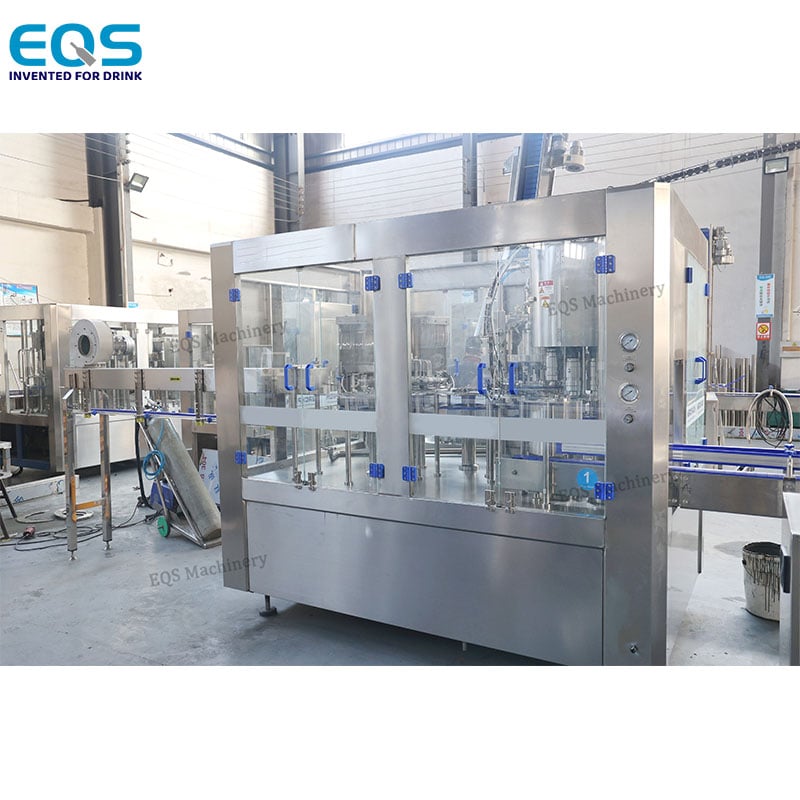
Water Filling Machine: Maximizing Production Efficiency and Speed
How high-speed operations enhance bottling throughput
Water filling machines that run at high speeds can really crank up production numbers for bottling operations, often hitting over 1,200 bottles an hour straight through. These systems rely on sophisticated servo motors and careful control of liquid flow to keep each bottle filled just right, no waiting around for humans to handle things manually. The difference in speed between fully automated lines and those that need some human input is pretty dramatic too. Industry research from last year shows automated setups produce roughly 40 percent more than their semi-automated counterparts, which makes sense when looking at all the time saved.
Reducing bottlenecks in liquid processing with automation
Automated filling systems eliminate key bottlenecks by synchronizing seamlessly with upstream and downstream equipment. Intelligent sensors detect bottle presence and alignment, ensuring smooth material flow and preventing jams. Integrated handling stations reduce transitional delays, cutting cycle times by approximately 30% while maintaining accurate fill levels across various container sizes.
Comparative analysis: Manual vs. automatic water filling machine performance
| Performance Metric | Manual Filling | Automatic Water Filling Machine |
|---|---|---|
| Production Speed | 300-400 BPH | 800-1,200 BPH |
| Fill Accuracy | ±5% variance | ±0.5% variance |
| Labor Requirement | 3-4 operators | 1 supervisor |
| Changeover Time | 15-20 minutes | 2-5 minutes |
Automatic systems deliver triple the throughput with far greater precision, reduce labor needs by 75%, and minimize changeover downtime, making them ideal for high-volume production environments.
Real-world data: Production gains from leading manufacturer installations
Facilities adopting fully automated water filling solutions report production increases of 45–60% within the first quarter. One mineral water producer reduced operational costs by $0.08 per case, attributing these gains to continuous flow technology and the elimination of manual errors–improving both speed and consistency without sacrificing accuracy.
Ensuring Filling Accuracy and Consistency Across Bottle Types
Precision engineering for uniform fill levels in varied bottle formats
Today's water filling equipment relies on both volumetric measurements and pressure control techniques to keep fill accuracy within about 1 percent for all kinds of containers ranging from small 200ml PET bottles right up to those big 5 gallon jugs. The machines are smart enough to adapt to various bottle shapes and sizes automatically. This eliminates the uneven fills that happen so often with older manual or semi automatic systems. Every single bottle comes out meeting the required volume specifications no matter what kind of container it is or how long the production run lasts.
Minimizing product waste through advanced water filling machine technologies
Modern sensors track how thick liquids are and their temperature as they go through the process, so the automatic system can tweak how much gets filled into each container. When machines do this job right, there's no extra stuff going into containers that just ends up wasted, nor does anyone get shortchanged either since that causes problems with regulations and makes customers unhappy. Studies show these kinds of automated setups cut down on wasted materials around 3 or 4 percent better than when people handle everything themselves. For companies running large operations, those small reductions add up fast across thousands of units produced daily.
Case study: Improved quality in large-scale mineral water production lines
Large-scale mineral water facilities reported a jump in fill accuracy from 92.3% in semi-automated systems to 98.7% after upgrading to full automation. Product rejection rates dropped by 4.2%, and customer complaints about inconsistent fills fell by 87% within one year–highlighting how modern filling technology enhances quality and brand reliability.
Measuring ROI: Reduced overfill and spillage in automated systems
Studies show automated filling systems can slash overfill losses by around 2.8% each year and bring down spillage waste by about 3.1%. Throw in reduced staffing expenses and faster production speeds, and most mid-sized to big businesses see their investment paid back in just 18 to 24 months. These machines are built with exacting standards that keep measurements spot on for years without much drift, so there's hardly any product going to waste. For companies running multiple shifts or dealing with high volume demands, this kind of precision isn't just good for the bottom line—it keeps operations running smoothly day after day.
Future-Proof Operations with Scalable Water Filling Machine Integration
Design principles for integrating water filling machines into existing bottling lines
When adding an automatic water filling machine to existing production lines, there are basically three things manufacturers need to consider first. The machine has to work well with whatever conveyance system is already in place so companies don't end up spending extra money on new infrastructure. Second, it needs proper communication protocols that let it talk to other equipment in real time without any hiccups. And third, the mounting options should be flexible enough to fit various factory floor plans since no two manufacturing spaces are exactly alike. Getting these basics right means less time lost during installation and keeps the production line running smoothly without unexpected stoppages or delays.
Modular synchronization with capping, labeling, and conveyance units
Modern filling machines feature modular designs that synchronize with capping, labeling, and conveyance units via programmable logic controllers (PLCs). This integration ensures precise timing across all stages–for example, fill-level detection triggers correct cap placement–eliminating gaps in production and maintaining throughput efficiency above 99% in optimized configurations.
Scaling capacity without system overhaul: Modular design advantages
Modular systems allow manufacturers to scale capacity incrementally by adding nozzles, increasing conveyor speeds, or integrating new modules as demand grows. Facilities using modular designs achieve 40% faster expansion than those retrofitting fixed systems, enabling responsive adaptation to seasonal fluctuations or market growth without major capital reinvestment.
Future-ready innovations: Energy-efficient motors and sustainable water use
The latest generation of industrial machines is equipped with energy efficient servo motors that slash electricity bills by around 35% compared to older drive systems. Many factories have started implementing smart water recovery solutions too, where excess and cleaning fluids get recycled back into the system. This cuts down on fresh water consumption by almost half when using closed loop configurations. Beyond just saving money on utilities, these improvements make it easier for manufacturing plants to stay ahead of increasingly strict environmental rules from regulators across different regions.
Safe, Hygienic & Reliable Operations Powered by Water Filling Machines
Preventing contamination with enclosed, automated water filling systems
Automated systems boost safety levels because they come with sealed stainless steel enclosures that keep the filling area separate from outside stuff getting in. The positive air pressure inside these systems acts as another layer of defense against germs floating around in the air, which means fewer problems caused when people touch things during production. According to some industry research published last year in the Food Safety Journal, facilities using this kind of automation saw contamination rates drop by nearly 9 out of 10 cases compared to old fashioned manual methods. That makes a real difference for maintaining clean products all the way through manufacturing.
Maintaining sterile environments through automated hygiene protocols
Automated systems keep things clean and sterile through those programmable CIP setups that run sanitizing solutions through all the nooks and crannies like nozzles, valves, and wherever product actually touches equipment. Manual cleaning just can't match this consistency. The numbers back it up too - automated cleaning knocks down microbes by about 99.8%, while people doing the job manually only hit around 85 to 90% effectiveness according to Beverage Processing Quarterly from last year. For companies making bottled water, this matters a lot because consumers expect nothing but pure water coming out of every bottle they buy. Contamination risks simply aren't acceptable in this industry.
Hygiene risks in semi-automatic systems: A comparative assessment
Semi automatic systems actually create bigger problems when it comes to keeping things clean because people have to touch bottles so much during handling, adjusting fills, and moving them around. All this contact brings in all sorts of stuff we don't want there like bits of skin, hair falling out, and even tiny droplets from breathing. According to some recent research published by Packaging Technology Review back in 2023, facilities using these semi auto setups end up rejecting products at nearly four times the rate compared to fully automated lines. And guess what? Almost seven out of ten microbial issues traced back to those same systems were directly linked to human hands getting involved somewhere along the line. Check out the table right here to see exactly where these problems tend to happen most often across different parts of production.
| Risk Factor | Semi-Automatic Systems | Fully Automated Systems |
|---|---|---|
| Human contact points | 12-18 per production hour | 0-2 (maintenance only) |
| Airborne contamination exposure | High (open systems) | Minimal (enclosed design) |
| Cleaning consistency | Variable (operator-dependent) | Consistent (programmable CIP) |
| Microbial testing failure rate | 4.2% | 0.3% |
Automation shifts hygiene management from reactive corrections to proactive prevention, fundamentally improving safety outcomes.
Achieving Long-Term Labor and Operational Cost Savings
Reducing labor dependency through full automation
Automatic water filling machines take care of those boring repetitive jobs all day long without needing anyone to watch them closely most of the time. No more hiring people for night shifts or paying overtime because these machines just keep going. Companies save money on wages and don't have to spend so much on training new staff either. Many businesses report cutting their workforce needs somewhere between 40 to maybe even 60 percent once they install this kind of equipment. The savings stack up month after month while still keeping production numbers steady, which makes sense when looking at the bottom line.
Quantifying cost savings over a 3-year operational cycle
Over a three-year period, the financial benefits of automation become clear despite higher initial investment. Automated systems reduce annual operating costs by 30–50% through:
- Lower labor expenses from reduced staffing needs
- Fewer errors, minimizing waste and rework
- Less unplanned downtime, maintaining steady output
- Optimized energy use in modern motor systems
Industry analyses confirm full ROI within 24–36 months, with subsequent years generating pure profit improvements.
Industry shift: From labor-intensive to automated cost models
Bottled water companies are moving away from their reliance on manual labor as costs rise and customers demand better quality at lower prices. Automation has become essential for staying competitive, especially with wages going up across the board. Today's advanced water filling equipment isn't just another machine sitting on the factory floor anymore. These systems connect directly with everything else happening in the plant, from raw material handling all the way through packaging and shipping. For businesses looking ahead, investing in automation makes sense both environmentally and economically. Facilities that embrace these changes will find themselves better positioned to meet regulations, cut waste, and keep making money even as the market continues to change around them.
FAQ Section
What are the benefits of automated water filling machines?
Automated water filling machines enhance production efficiency, accuracy, and speed, reduce labor costs, and minimize waste. They ensure precise fill levels and are cost-effective in the long run.
How do automated systems reduce bottlenecks in bottling operations?
Automated systems synchronize with upstream and downstream equipment, use intelligent sensors to ensure smooth material flow, and have integrated handling stations to reduce cycle times and jam risks.
What is the ROI timeline for investing in an automated water filling machine?
Most mid-sized to large businesses see their investment in an automated water filling machine paid back within 18 to 24 months, with ongoing savings afterward.
How does automation improve product hygiene and safety?
Automation reduces contamination risks with enclosed systems, consistent cleaning protocols, and minimizes human contact. This improves product safety and hygiene.
Why is modular design advantageous for manufacturers?
Modular designs allow manufacturers to incrementally increase capacity by adding new modules, speeding up production expansion without major reinvestment.
Table of Contents
- Ensuring Filling Accuracy and Consistency Across Bottle Types
- Future-Proof Operations with Scalable Water Filling Machine Integration
- Safe, Hygienic & Reliable Operations Powered by Water Filling Machines
- Achieving Long-Term Labor and Operational Cost Savings
-
FAQ Section
- What are the benefits of automated water filling machines?
- How do automated systems reduce bottlenecks in bottling operations?
- What is the ROI timeline for investing in an automated water filling machine?
- How does automation improve product hygiene and safety?
- Why is modular design advantageous for manufacturers?