 EN
EN


Two EQS engineers spent October 2025 inside a Korean mineral water plant, bringing the filling machine identified by project number XGF72-72-20 up to speed. The project replaced equipment inside an existing factory. The plant removed an older filler from another supplier and installed the faster EQS machine in the same space. Demand had moved beyond the amount that the ageing equipment could bottle during a shift.
The confirmed supply scope was one water filling machine. A blower and labeller were outside the EQS order. Conveyors were also outside it. Every operating observation reported here therefore applies to the filler itself.
Rated speed was the most direct part of the enquiry. The harder questions came from a team that had experience with a machine unable to hold its output. They wanted to know whether the replacement could maintain rated speed through a full shift and how closely it could control filling accuracy. They also considered after-sales response when a problem occurred. Format changeover time between the two bottle sizes was another concern. The delivery date carried equal weight because the project involved replacing the plant's only filler.
A rated figure describes a defined bottle format and operating point. For the plant, the useful issue was whether that point could be held during the working period. Filling accuracy mattered because unstable fill levels can increase filling loss. The source records the customer's later view without a tolerance value or measurement data. No measured changeover time or response time is claimed.
!EQS mineral water filling machine supplied under project XGF72-72-20 to a plant in South Korea
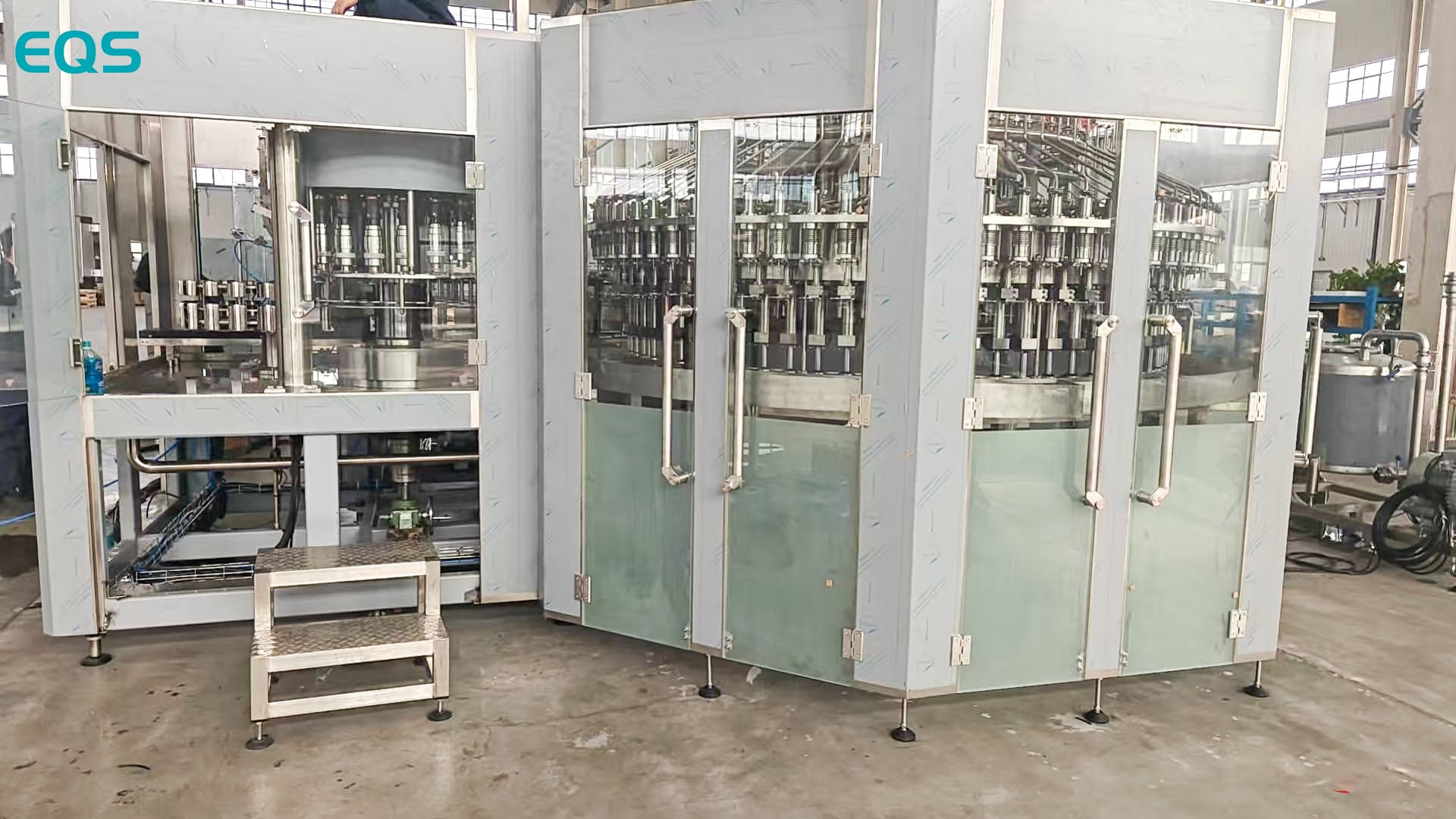
The mineral water filling machine was built for plastic bottles on a 380 V, 50 Hz supply. Project number XGF72-72-20 identifies this specific project and does not represent a published EQS product series. Two formats were specified. The rated output for 500 ml bottles was 36,000 bottles per hour. The separate rated output for 2,000 ml bottles was 15,000 bottles per hour. Each figure belongs only to its stated bottle size. They are separate duty points and do not describe simultaneous production.
The lower bottle count for the 2,000 ml format does not indicate a shortfall against the 500 ml format. One 2,000 ml bottle holds four times the volume of one 500 ml bottle. At the specified duty points, the larger format moves more litres per hour even though fewer individual bottles pass through the filler. This explanation comes from the confirmed volumes and rated outputs. It is not an additional test result.
Voltage and frequency are worth defining in the quotation instead of leaving them until installation. This machine went to a 380 V, 50 Hz market. A version prepared for 60 Hz requires a different electrical package. Plants that leave this point open until the container arrives can lose commissioning days while the electrical specification is addressed.
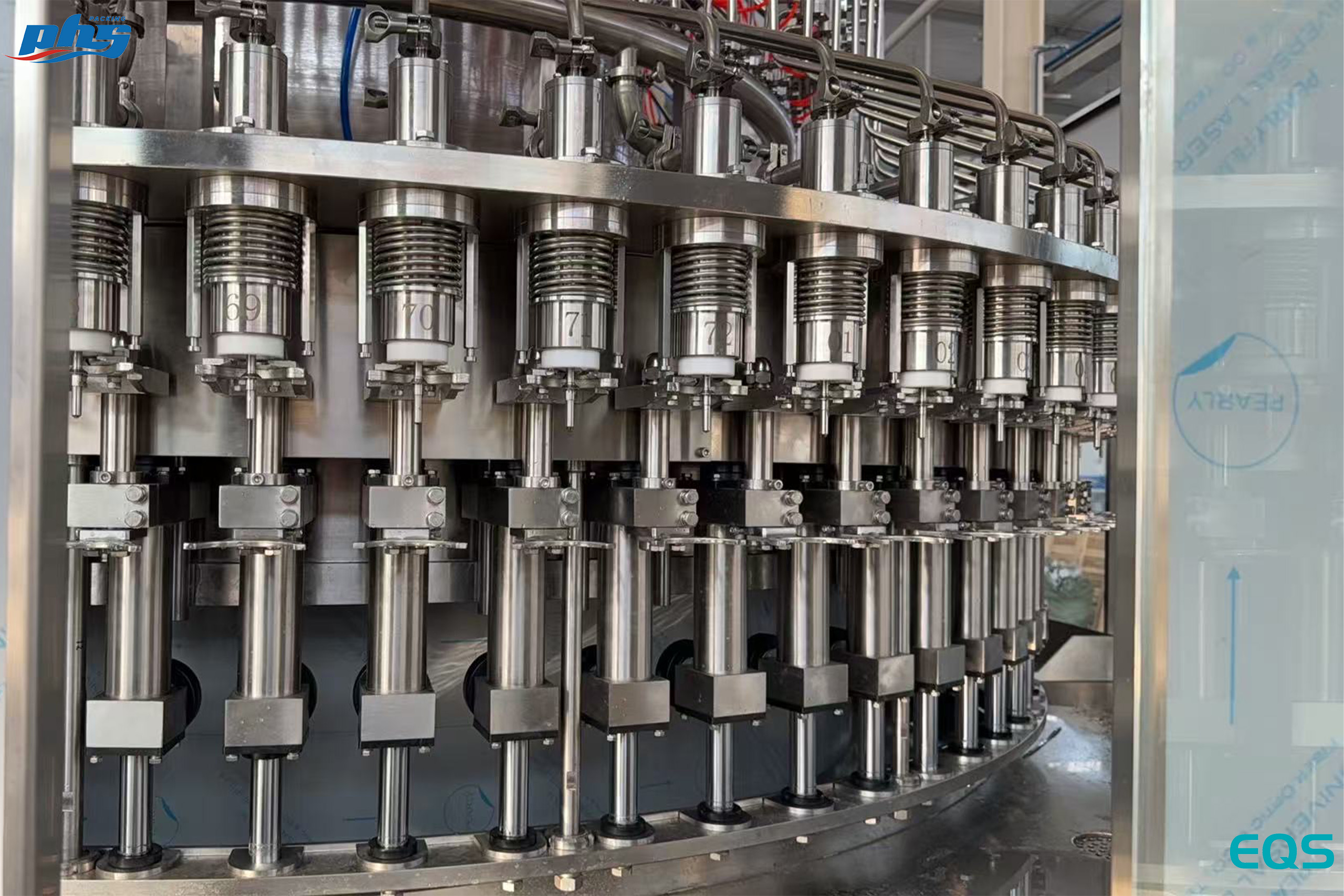
The two engineers stayed on site for 20 days. Installation and commissioning took 15 days, followed by 5 days of operator training. These were consecutive parts of the same visit. The schedule does not mean 20 days of commissioning or 20 days of training.
The operators already knew how to run a filling machine, although their experience came from a slower unit. Familiarity with one filler does not automatically transfer to another. Different valve behaviour changes the operating routine, while different format changeover steps require new habits. The five training days gave the team time to work with those differences around the replacement machine.
Production started the day after commissioning closed. On 500 ml bottles, the equipment held roughly 36,000 BPH. This statement concerns the 500 ml format only. The separate 2,000 ml rating remains 15,000 BPH. The result also belongs to the filler, since the confirmed scope was not a complete water bottling line.
"It performed much better than expected, and the filling accuracy is very stable."
That is the customer's assessment, translated from the review call. It is the only customer sentence quoted for this project. No numerical accuracy tolerance accompanied the comment, so the wording remains an assessment rather than a measured specification.
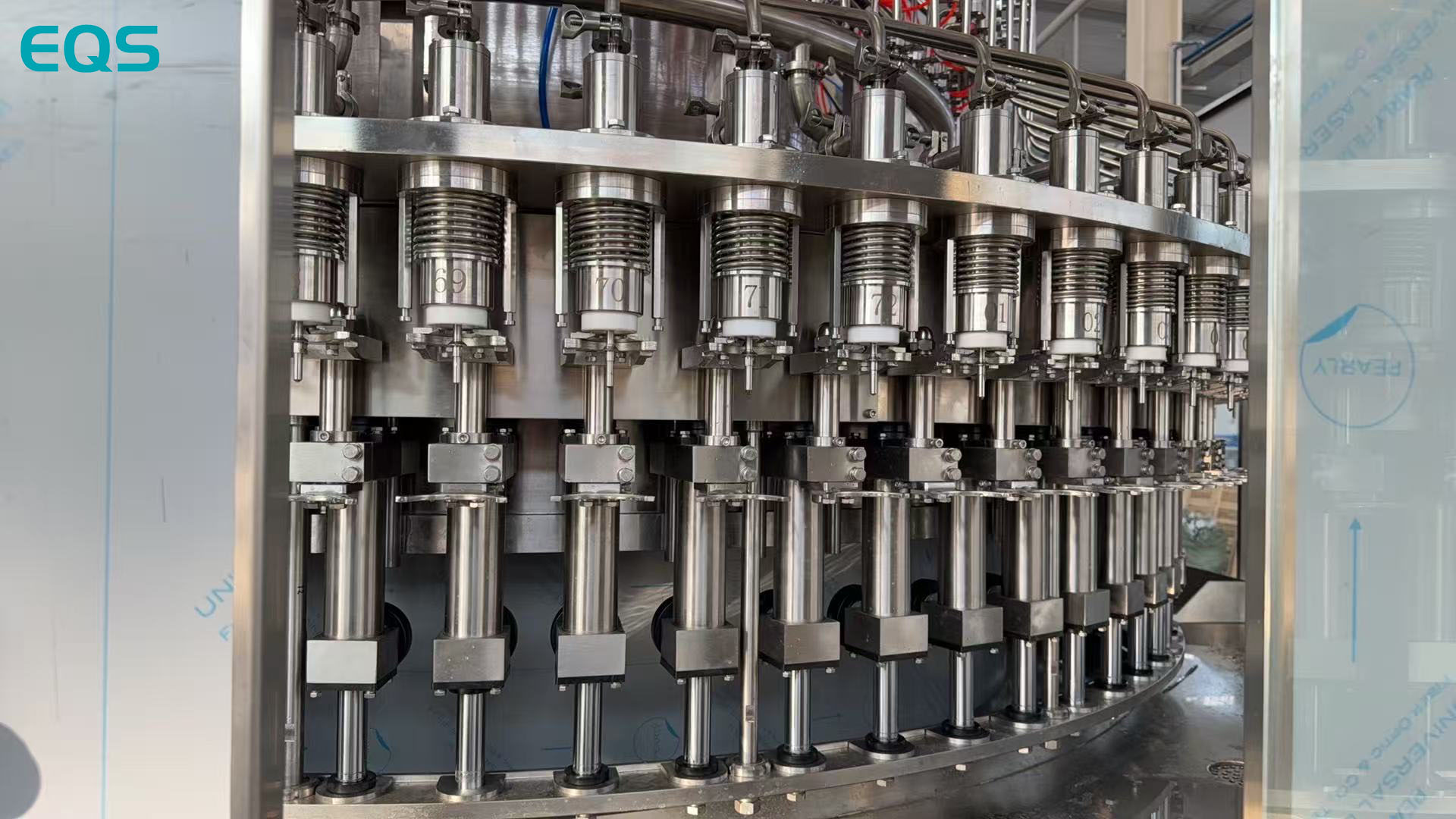
The plant puts the capacity gain at 60% against the machine it replaced. This comparison records the stated gain without calculating a capacity for the old filler. Its rated or sustained output is absent from the project information. Any back-calculation would introduce a figure that the plant did not provide.
Filling loss also came down. Neither side measured that change as a percentage, so it remains a direction observed by the plant. It should not be converted into a cost saving or used as a quantified business result. The available evidence supports the direction only.
After eight months of operation, the filler had experienced no major failure. That record applies only to this installed machine during the reported operating period. It does not establish a broader reliability rate or predict future performance. The plant then ordered a second filling machine with the same configuration. This confirmed order is for another filler. It is not an order for a complete water line.
A bottle blowing machine remains under discussion, with no equipment specification confirmed. The second identical filler is ordered, while the blower remains at the discussion stage.
Copyright © JIANGSU EQS MACHINERY CO.,LTD