The ESL Challenge: Why microbial ingress limits shelf life in fresh dairy
Fresh dairy products—milk, yogurt, liquid cream—are ideal growth media for spoilage bacteria, yeasts, and molds. Even a few colony‑forming units introduced during filling can multiply rapidly under refrigeration, degrading flavor, texture, and nutritional quality. Traditional fillers expose the product stream to ambient air, operator contact, and machine surfaces that harbor microorganisms. This microbial ingress is the primary barrier to Extended Shelf Life (ESL). Without preservatives, achieving 21–45+ days of refrigerated stability hinges entirely on eliminating contamination at the point of fill.
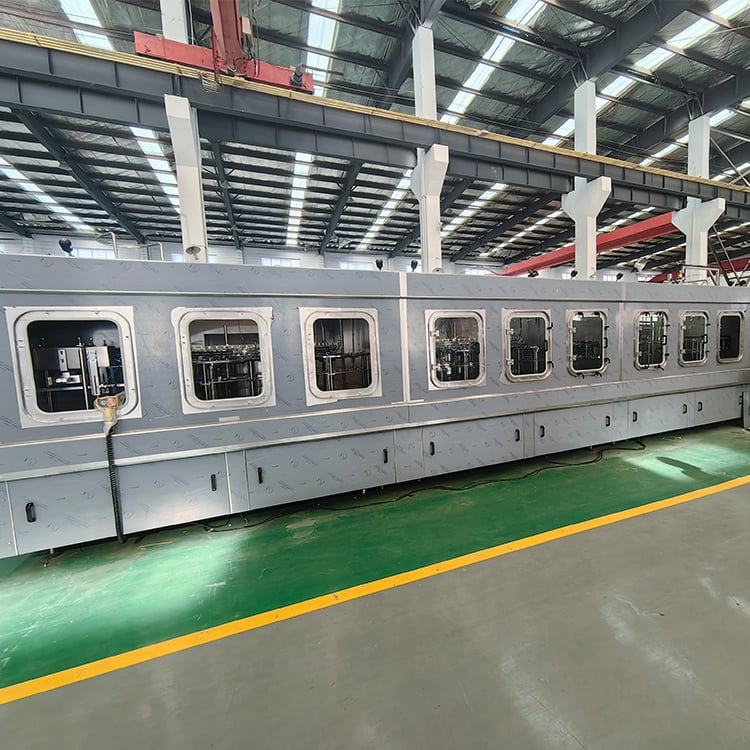
Ultra clean filling machines break this contamination chain by creating a physically isolated, high‑purity food‑grade environment. The setup prevents airborne and surface‑borne contamination while preserving product integrity without thermal damage. Compared with filling lines built for full container sterilization and ambient long‑term storage, ultra‑clean systems are purpose‑built for pasteurized dairy ESL applications, delivering effective contamination control with lower operational complexity and cost.
Core technology: ISO Class 5 laminar airflow + positive‑pressure high‑hygiene enclosures
Ultra clean filling machines achieve shelf‑life extension by maintaining a filling work zone compliant with ISO Class 5 particulate standards (fewer than 100 particles ≥0.5 µm per cubic foot). HEPA‑filtered laminar airflow sweeps the filling area unidirectionally, carrying particles away from exposed product, while a positive‑pressure enclosure prevents infiltration of unfiltered room air.
All interior surfaces adopt smooth, crevice‑free food‑grade materials and undergo standardized periodic sanitization, mainly with vaporized hydrogen peroxide (H₂O₂). The system builds a stable, high‑purity micro‑environment suitable for dairy production, where product contact surfaces and ambient filling air remain consistently clean. By integrating laminar flow with positive‑pressure isolation, ultra‑clean systems deliver reliable microbial control for refrigerated ESL dairy products, serving as a practical, scalable alternative to high‑investment long‑shelf filling processing.
Hygiene Architecture: Achieving ≤1 CFU/100mL in Production
An ultra clean filling machine establishes a high‑hygiene filling zone through a multi‑barrier strategy that controls microbial ingress at all potential contamination points. Controlled concentration and temperature vaporized hydrogen peroxide (H₂O₂) sanitization reduces surface microbial loads on all product‑contact and critical equipment surfaces, eliminating common heat‑resistant spoilage microorganisms.
This sanitization process is paired with a validated ISO Class 5 laminar airflow system that maintains stable positive pressure differentials against the surrounding workshop environment. Unidirectional airflow continuously removes suspended particles from the filling zone, while positive pressure blocks external contaminants from entering the core working area. Combined controls sustain a consistent microbial level of ≤1 CFU per 100 mL, meeting strict hygiene benchmarks for fresh, preservative‑free dairy and sensitive juice production lines.
Robust validation: Media fill results across 500+ runs confirming consistent hygiene performance
Hygiene stability is verified through systematic production validation rather than theoretical estimation. A comprehensive media fill program simulates full‑scale filling operations with nutrient broth under rigorous practical conditions, including frequent manual interventions, reduced filling speed, and prolonged line standby periods.
Over 500 consecutive media fill trials recorded zero contaminated product units. Continuous environmental monitoring via air samplers and settle plates confirmed no viable spoilage microorganisms detected in the core filling zone during operation. This complete validation data stabilizes production hygiene consistency and supports reliable extended shelf‑life performance for fresh dairy and other microbe‑sensitive beverage products.
Precision Filling Integrity: Protecting Viscosity, Texture, and Stability
Maintaining the delicate physical properties of fresh dairy products, including drinkable yogurt, cultured creams, and protein‑fortified beverages, requires precise and gentle filling handling. Ultra clean fillers adopt non‑contact filling nozzles that avoid rim contact with packaging containers, eliminating physical disturbance to product flow and preventing shear force‑induced viscosity loss.
Volumetric dosing accuracy is controlled within ±0.3% tolerance, a key parameter for texture‑sensitive dairy formulations that avoids material waste and packaging sealing issues caused by inconsistent filling volume. Integrated gravimetric checkweighing performs real‑time filling volume verification to sustain uniform production quality. For shear‑thinning products such as yogurt drinks or pulpy beverages handled by a specialized juice filling setup, the non‑contact filling method retains stable resting viscosity, effectively preventing ingredient phase separation and preserving original taste and mouthfeel. Since physical texture deterioration often occurs before microbial spoilage and affects consumer acceptance, paired with strict hygiene control, this precision filling technology fully stabilizes product quality from production to retail shelf storage.
Automated CIP/SIP: Eliminating Human Error and Ensuring Repeatable Hygiene Standards
Manual cleaning and sterilization processes introduce inconsistent operation risks that compromise filling hygiene. Fully automated CIP (Clean‑in‑Place) and SIP (Steam‑in‑Place) systems eliminate human operational variability, executing standardized, repeatable cleaning and thermal sterilization cycles to maintain stable microbial control levels for food production.
Thermally calibrated SIP cycles apply saturated steam at ≥121.1 °C to fully sanitize all product‑contact equipment surfaces. System thermal mapping identifies low‑temperature zones with weak steam penetration, and the control system focuses sterilization parameters on these key areas to ensure thorough sanitization. The equipment automatically suspends operation and triggers alarms if sterilization parameters fail to meet set standards, ensuring every production batch follows unified hygiene specifications. All operational data including temperature, pressure and cycle parameters is electronically recorded, forming complete traceable files for food quality audits and meeting mainstream global food safety standards including FDA food manufacturing guidelines, EFSA requirements and ISO 22000.
FAQ
What is the primary barrier to achieving Extended Shelf Life (ESL) in fresh dairy products without preservatives?
Microbial ingress introduced during filling acts as the primary barrier, where even a small number of colony‑forming units can multiply rapidly under refrigeration to degrade flavor, texture, and quality.
How do ultra-clean filling machines maintain a high-purity environment within the filling zone?
They utilize an ISO Class 5 compliant work zone featuring HEPA‑filtered laminar airflow to sweep particles away and a positive‑pressure enclosure that prevents unfiltered room air from infiltrating.
How is the hygiene stability and long-term performance of the filling system validated?
Hygiene stability is verified through systematic production validation, such as a comprehensive media fill program across over 500 consecutive trials that recorded zero contaminated product units.
How do ultra clean filling machines maintain a high purity environment within the filling zone
They use an ISO Class 5 compliant work zone featuring HEPA filtered laminar airflow to sweep particles away and a positive pressure enclosure that prevents unfiltered room air from infiltrating
What is the primary barrier to achieving Extended Shelf Life in fresh dairy products without preservatives
Microbial ingress is the primary barrier because even a few colony forming units introduced during filling can multiply rapidly under refrigeration and degrade flavor texture and nutritional quality
 EN
EN