 EN
EN


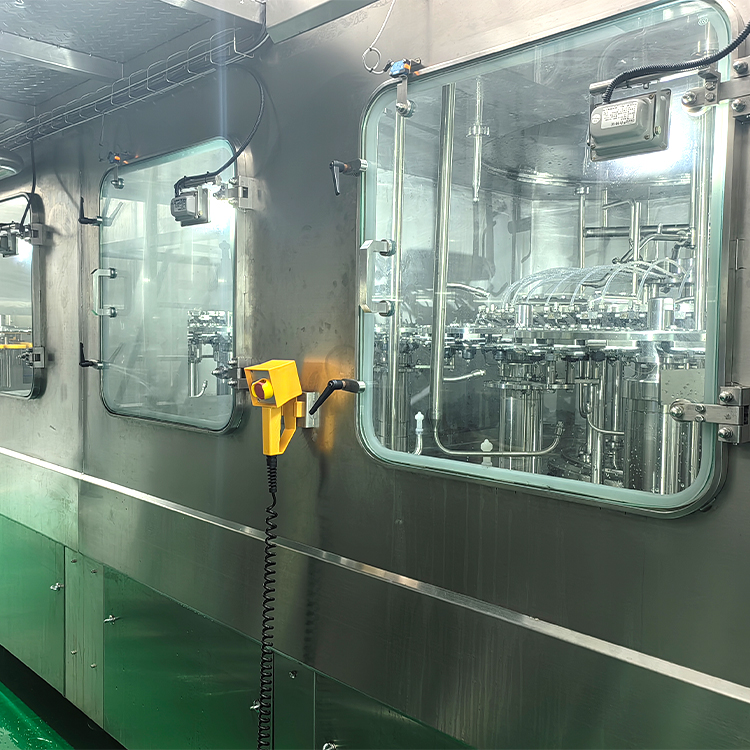
Design Foundations of the Ultra Clean Filling Machine
The core of an ultra clean filling machine lies in its ability to create and maintain a near-sterile internal environment—fundamentally separating the product pathway from external contamination. This is achieved through a meticulously engineered architecture that integrates advanced air handling with hygienic geometry. The design philosophy elevates the equipment from a simple bottling device to a critical process barrier, essential for extending product shelf life without preservatives while preserving taste and nutritional value. This section explores the two foundational elements that make this possible: the sterile chamber itself and the materials used to construct it.
Sterile chamber architecture: HEPA-filtered overpressure and zero dead-leg geometry
The sterile chamber is the heart of the ultra clean filling machine, acting as both a physical and aerodynamic barrier. Its primary defense is a laminar airflow system, where HEPA filters (High-Efficiency Particulate Air), rated for 0.3 µm particles, generate a vertical, unidirectional sweep of ISO Class 5 air—delivering fewer than 3,520 particles per cubic meter. This continuous clean-air flood actively displaces contaminants from the critical filling zone. A positive pressure cascade ensures air flows outward from the cleanest chamber, preventing ingress of unfiltered ambient air during operation.
Equally critical is the mechanical design: “zero dead-leg” geometry eliminates recesses, crevices, and undrained pipe sections where liquid can stagnate and foster microbial growth. This is realized through flush-mounted connections, crevice-free diaphragms, and fully drainable product contact surfaces. Together, the overpressure shield and obstruction-free architecture provide redundant protection—forming the foundation of a contamination-free dosing process.
Pharmaceutical-grade stainless steel construction: ASTM A453/A276 compliance and Ra ≤ 0.8 µm surface finish
Material selection is the other foundational pillar. The standard material is austenitic stainless steel—typically AISI 316L—specified to meet pharmaceutical-grade standards such as ASTM A276 for bars and shapes. Its low-carbon composition delivers superior corrosion resistance against aggressive cleaning and sterilizing agents.
But the alloy alone is insufficient. The decisive performance factor is the final surface finish: internal product contact surfaces are mechanically polished to a roughness average (Ra) of 0.8 µm or finer—a non-negotiable requirement for aseptic operations. At this microscopic level, the surface becomes too smooth for bacteria to adhere and form biofilms. In contrast, rougher finishes harbor microorganisms in valleys deep enough to shield them from fluid shear forces, undermining cleaning and sterilization efficacy. This mirror-like finish—verified via profilometer measurement—is not merely cosmetic; it transforms the machine’s structure into an active component of contamination control, enabling validated bioburden reduction.
Hygienic Filling Precision: Non-Contact Technology & Process Control
The core of an ultra clean filling machine is its ability to deliver product without introducing contamination—a challenge met through advanced, non-contact dosing technologies. These systems decouple the sterile product path from the external environment, ensuring the filling process itself does not become a source of risk.
Weight-based, non-contact filling for contamination-free dosing
In a non-contact weight-based filling system, the dispensing nozzle remains suspended above the container, eliminating cross-contamination risks associated with nozzle-to-container contact. A load cell monitors container weight in real time, feeding data to a closed-loop control system that stops flow precisely at the target weight. This method aligns with ISO 13408-1 (2019) guidance on aseptic processing and delivers consistent fill accuracy across thousands of cycles—without physical interaction.
| Feature | Process Impact | Result |
|---|---|---|
| Nozzle-Container Separation | Eliminates direct contact points and potential biofilm formation | Prevents cross-contamination between containers |
| Real-Time Weight Feedback | Closed-loop control adjusts fill on the fly | Achieves ±0.5% dosing accuracy, minimizing product waste |
| No Mechanical Touchpoints | Removes crevices and surfaces where microbes could accumulate | Simplifies sterility assurance and cleaning validation |
By implementing the non-contact weight-based filling principle, manufacturers can switch between container formats without mechanical changeovers—significantly reducing downtime while preserving the sterile barrier. This capability is a defining feature of modern aseptic lines, ensuring product integrity from first dose to last.
Integrated CIP/SIP Validation for Regulatory Compliance
CIP/SIP systems aligned with ISO 13408-1 and EU GMP Annex 1 requirements
The stainless steel ultra clean filling machine incorporates fully integrated CIP (Clean-in-Place) and SIP (Sterilization-in-Place) systems engineered to comply with ISO 13408-1 (Aseptic processing of health care products) and EU GMP Annex 1 (Manufacture of Sterile Medicinal Products). The design follows a lifecycle validation approach covering Design Qualification, Installation Qualification, Operational Qualification, and Performance Qualification.
Automated control sequences enforce recipe interlocks—preventing sterilization initiation until cleaning is successfully completed—to ensure data integrity per ALCOA+ principles. Steam quality testing, temperature mapping, and biological indicator challenges are conducted at worst-case locations to confirm lethal conditions throughout the circuit. Dead-leg-free geometry and sloped piping facilitate complete condensate drainage, eliminating microbial sheltering risks. Residue removal is verified via conductivity and TOC testing, with strict acceptance criteria for post-CIP rinse water to prevent interference with subsequent SIP cycles. This integrated validation strategy provides documented evidence of process capability—ensuring consistent regulatory compliance.
Validated bioburden reduction: log⁴ reduction confirmed per PDA TR#1
The SIP cycle is validated to achieve a minimum 4-log reduction in bioburden, as recommended by PDA Technical Report No. 1 (PDA TR#1) for moist heat sterilization of porous/hard goods. Validation uses Geobacillus stearothermophilus spore–based biological indicators placed at the most challenging locations—such as filling nozzle tips and filter housings—where steam penetration is least assured. After exposure, indicators are incubated for 7 days at 55–60°C; absence of growth confirms a sterility assurance level (SAL) of ≤ 10⁻⁶.
Temperature mapping with calibrated thermocouples verifies that the entire system maintains ≥121.1°C for the required dwell time—typically 30 minutes—with a consistent F₀ value exceeding 15 minutes. This rigorous protocol, documented in the site validation master plan, ensures internal surfaces are free of viable microorganisms—supporting aseptic filling of high-value biologics. Annual requalification and post-change revalidation maintain the validated state over the equipment lifecycle.
Proven Aseptic Performance in Commercial Biologics Manufacturing
Ultra clean filling machines have become indispensable in the production of high-value biologics, where even a single contamination event can trigger catastrophic batch losses and regulatory action. Their design—integrating closed-barrier isolators, automated weight-based filling, and real-time environmental monitoring—directly supports the aseptic processing of monoclonal antibodies, gene therapies, and vaccines. By eliminating operator interventions and maintaining ISO 5/Grade A conditions throughout the fill, these systems deliver the sterility assurance commercial-scale biologics manufacturing demands.
Real-world performance data reinforces this reliability. Media fill simulations—conducted per PDA Technical Report No. 22 (2011)—routinely achieve an SAL of 10⁻⁶ or better, with zero contaminated units across thousands of vials. A 2023 analysis of commercial aseptic filling lines found facilities using closed-isolator ultra clean technology reported a 45% reduction in contamination-related batch rejections compared to conventional clean-room setups—translating directly into higher yield, fewer wasted batches of expensive drug substance, and faster time-to-market for critical therapies.
Beyond sterility, the machine’s in-process control system—100% weight verification of every filled container—eliminates drift that compromises product integrity over long runs. When paired with validated no-touch filling nozzles and single-use fluid paths, biologics manufacturers achieve a level of aseptic consistency unmatched by manual interventions or open-processing lines. The result is a robust, audit-ready process—one that regulators and patients alike can trust—cementing the ultra clean filling machine as a cornerstone of modern biologics manufacturing.
Frequently Asked Questions
What is an ultra clean filling machine?
An ultra clean filling machine is specialized equipment designed to fill containers with liquids in a near-sterile environment while preventing contamination. These machines are crucial for industries such as pharmaceuticals, where sterility and strict hygiene levels are required.
How does the sterile chamber work in the machine?
The sterile chamber maintains a contamination-free environment using HEPA-filtered overpressure air and zero dead-leg geometry. This ensures that no contaminants enter the critical filling zone.
What is the importance of non-contact weight-based filling?
Non-contact weight-based filling eliminates the risk of cross-contamination as the nozzle does not touch the container. This provides high precision and maintains the hygiene of the filling process.
What standards do ultra clean filling machines comply with?
Ultra clean filling machines comply with regulations including ISO 13408-1 for aseptic processing and EU GMP Annex 1 for sterile medicinal manufacturing. They also meet bioburden reduction requirements as outlined in PDA reports.
What are the benefits of CIP/SIP systems in these machines?
CIP (Clean-in-Place) and SIP (Sterilization-in-Place) systems ensure the machine's internal surfaces are clean and sterilized. These systems eliminate contaminants and prove regulatory compliance through a validated, automated process.
How do these machines perform in commercial biologics manufacturing?
Ultra clean filling machines deliver high sterility assurance (SAL 10⁻⁶ or better) and minimize contamination-related batch rejections, making them crucial for manufacturing monoclonal antibodies, vaccines, and other biologics.
Table of Contents
- Design Foundations of the Ultra Clean Filling Machine
- Hygienic Filling Precision: Non-Contact Technology & Process Control
- Integrated CIP/SIP Validation for Regulatory Compliance
- Proven Aseptic Performance in Commercial Biologics Manufacturing
-
Frequently Asked Questions
- What is an ultra clean filling machine?
- How does the sterile chamber work in the machine?
- What is the importance of non-contact weight-based filling?
- What standards do ultra clean filling machines comply with?
- What are the benefits of CIP/SIP systems in these machines?
- How do these machines perform in commercial biologics manufacturing?