 EN
EN


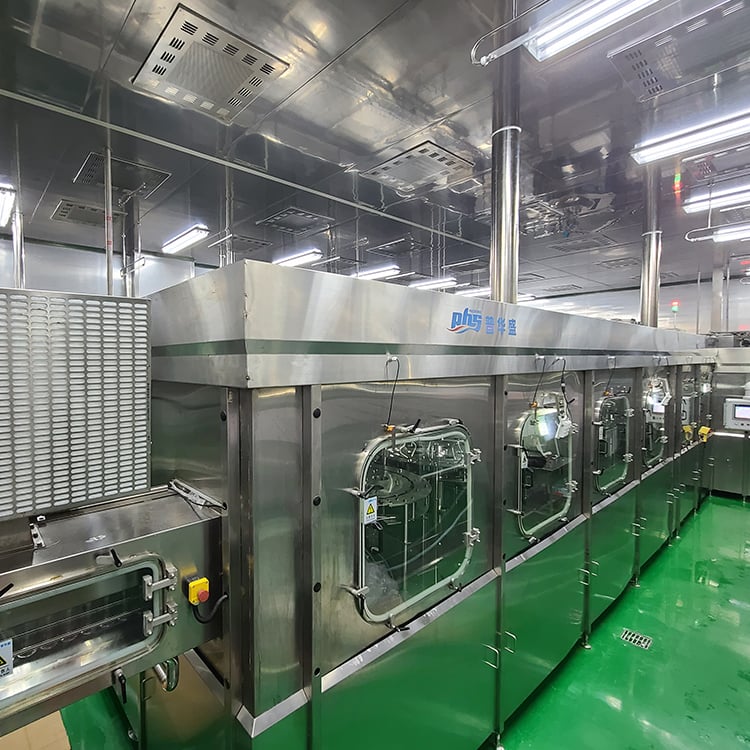
What Makes an Ultra Clean Filling Machine GMP-Compliant and Sterile-Ready?
Good Manufacturing Practice (GMP) demands that every element of an ultra clean filling machine—from airflow to surface finish—is designed to exclude contamination. Achieving compliance goes beyond general hygiene; it requires strict adherence to international regulatory frameworks and the use of certified materials that can withstand repeated sterilization without compromising integrity.
Regulatory Foundations: FDA, EU Annex 1, and ISO 14644 for Ultra Clean Environments
The ultra clean filling machine must operate within a controlled environment aligned with FDA 21 CFR Parts 210–211, which mandate validated processes for sterile drug and food production. The EU GMP Annex 1 revision (2022) reinforces a holistic contamination control strategy, requiring barrier technology and continuous environmental monitoring. Underpinning this is ISO 14644-1 (2015), which classifies cleanroom air cleanliness. An ultra clean filling zone typically meets ISO Class 5 (≤ 3,520 particles ≥0.5 µm per cubic meter), enforced through HEPA-filtered unidirectional airflow, positive pressure cascades, and routine particle counting. Compliance is not a one-time event but an ongoing state verified through documented performance qualification, routine monitoring, and periodic re-qualification.
Material Contact Integrity: 316L Stainless Steel, Electropolished Surfaces, and CIP/SIP Validation
All product-contact parts are fabricated from 316L stainless steel—selected for its corrosion resistance and compatibility with aggressive cleaning agents. Electropolishing reduces surface roughness to Ra ≤ 0.8 µm, a threshold EHEDG guidelines associate with a 90% reduction in microbial adhesion compared to standard finishes. This smooth, passive layer prevents biofilm formation and simplifies sanitization. The machine’s Clean-in-Place (CIP) and Sterilize-in-Place (SIP) systems are validated to achieve a 6-log reduction of Geobacillus stearothermophilus spores, per FDA guidance. SIP cycles integrate spray balls, temperature sensors, and conductivity meters to ensure every crevice reaches 121°C for at least 15 minutes. Full material traceability certificates and surface roughness logs are maintained as part of the GMP documentation package, providing auditable proof of hygienic design.
How Energy-Saving Technologies Enhance the Ultra Clean Filling Machine’s Operational Efficiency
Smart Drive Systems: VFDs and Regenerative Braking in Conveyors and Peristaltic Pumps
An ultra clean filling machine integrates smart drive systems to cut energy use significantly. Variable Frequency Drives (VFDs) replace fixed-speed motors, dynamically matching speed to real-time demand and reducing consumption by 20–30% across conveyors and peristaltic pumps. Regenerative braking captures kinetic energy during deceleration, feeding it back into the power system instead of dissipating it as heat. This dual approach lowers electrical load, reduces mechanical wear, and extends component life. In high-speed lines, synchronous control of multiple VFD-driven axes prevents energy spikes while maintaining fill accuracy. The result is quieter, cooler, and more efficient operation—fully aligned with sustainability goals and sterile throughput requirements.
Thermal Optimization: Heat Recovery from Sterilization Loops and Low-Energy Steam Management
Sterilization loops generate substantial thermal energy that can be repurposed. Heat exchangers capture waste heat from hot water or steam condensate to preheat incoming process water for CIP cycles. Low-energy steam management systems—using vacuum steam generation or flash steam recovery—reduce boiler demand by up to 15%. Insulated pipework and precision temperature control further minimize thermal losses. By closing the energy loop, these measures cut total thermal input while sustaining required aseptic temperatures. The outcome is lower carbon emissions, reduced operational costs, and clear evidence that rigorous sterility standards and energy efficiency coexist seamlessly.
Fast Changeover Design: Minimizing Downtime While Maintaining Ultra Clean Filling Machine Integrity
Frequent product or container format changes are inevitable in high-mix production, yet every minute of downtime directly erodes throughput and profit. A fast changeover design for an ultra clean filling machine must reconcile speed with the stringent sterility requirements of ISO 5 environments. By integrating modular tooling, quick-release mechanisms, and digital twin–guided setup, manufacturers can slash changeover times while preserving the aseptic barrier. The table below contrasts typical conventional changeover practices with results achievable through advanced engineering.
| Changeover Metric | Traditional Manual Method | Fast Changeover Design |
|---|---|---|
| Average downtime per format change | 2–3 hours | < 30 minutes |
| Tooling adjustment steps | 15+ manual interventions | 3–5 quick-release modules |
| Contamination risk (exposure time) | High – extended glove-port access | Low – minimal open-line duration |
| Operator intervention inside sterile area | Required for recalibration | Eliminated by auto-calibration |
Modular Tooling & Quick-Release Mechanisms for Rapid Format Swaps
Rapid changeover centers on modular components that swap without breaching the sterile boundary. Instead of disassembling entire line sections, operators replace pre-sterilized, single-piece modules—such as filling nozzles, stopper tracks, and conveyor guides—using quick-release clamps and tool-free locking pins. These parts are fabricated from electropolished 316L stainless steel to resist microbial adhesion and endure aggressive CIP/SIP cycles. Industry data shows modular tooling reduces format-change downtime by an average of 45%, as most adjustments occur outside the controlled environment. Color-coded, error-proof fittings prevent misalignment, ensuring the ultra clean filling machine returns to a validated sterile state immediately after the swap—preserving HEPA-filtered airflow integrity and limiting line exposure to seconds.
Digital Twin–Guided Setup Validation and Auto-Calibration for Consistent Cleanliness
Before production begins, a digital twin simulates the new format’s parameters—fill volume, nozzle height, conveyor speed, and stopper insertion force—and automatically calibrates servo drives. This eliminates trial-and-error adjustments inside the sterile zone, a common source of contamination. Plants using digital twin–guided setup report a 60% reduction in changeover-related sterility failures and a 50% shorter validation window. The system cross-references the simulated fill profile with historical CIP data to confirm all product-contact surfaces meet the validated sterility assurance level. Any deviation triggers an automated re-flush of the relevant circuit before line release. This closed-loop, data-driven approach ensures cleanliness is never compromised for speed—and transforms every changeover into a repeatable, auditable, Annex 1–compliant process.
FAQ Section
What is required for a filling machine to be GMP-compliant?
To be GMP-compliant, a filling machine must ensure contamination control through certified materials, sterilization processes, hygienic design, validated CIP/SIP systems, and documented performance qualifications that align with international frameworks like FDA, EU Annex 1, and ISO 14644.
How do energy-saving technologies improve operational efficiency?
Energy-saving technologies like VFDs, regenerative braking, heat exchangers, and low-energy steam systems reduce energy consumption, minimize waste, lower carbon emissions, and maintain aseptic temperatures efficiently.
What is the benefit of a fast changeover design?
A fast changeover design minimizes downtime and contamination risks during production changes. Techniques like modular tooling, quick-release mechanisms, and digital twin-guided setup ensure rapid swaps without compromising sterility standards.
How does digital twin technology support changeovers?
Digital twin technology simulates production parameters and auto-calibrates drives, eliminating manual adjustments inside sterile zones and reducing sterility failures during changeovers.