 EN
EN


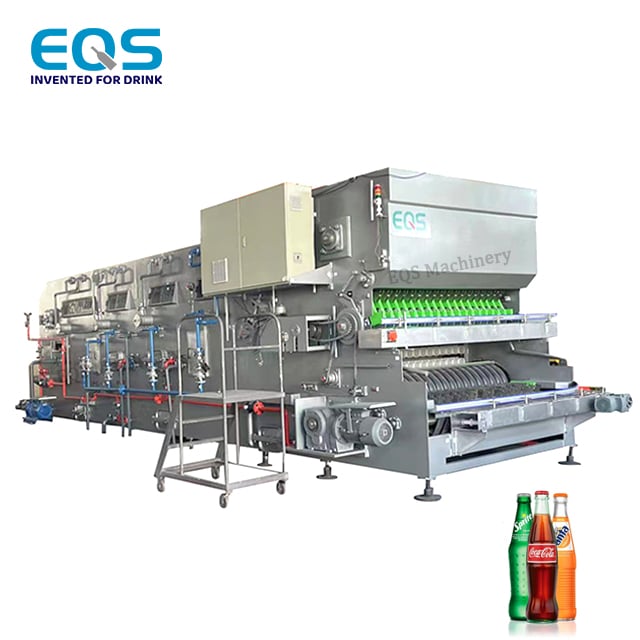
How Multi-Stage Rinsing Maximizes Cleaning Efficiency in Glass Bottle Washing Machines
Why Single-Stage Rinsing Fails at Scale: Contaminant Load, Residue Carryover, and Re-Wash Triggers
Single-stage rinsing falters under high-volume production due to three interrelated limitations:
- Contaminant overload: Label fragments, adhesives, and organic residues overwhelm a single tank’s capacity—leaving 12–18% of bottles inadequately cleaned (Food Processing Journal, 2023).
- Residue carryover: Recirculated wash water redeposits contaminants, causing visible streaks and elevating microbial risk.
- Re-wash triggers: Up to 20% of output requires reprocessing, increasing water and energy use by 34% and forcing production slowdowns or manual intervention.
The Science Behind Sequential Rinse Zones: Shear Force Optimization and Progressive Soil Removal
Multi-stage systems resolve these issues through purpose-built physics and process control:
- Progressive soil removal: Each rinse zone uses progressively cleaner water—coarse debris is removed in early stages; final zones eliminate microscopic residues without recontamination.
- Shear force optimization: Nozzle geometry and pressure are zone-specific—early stages deploy high-pressure (3–5 MPa), turbulent flow for mechanical scrubbing; later stages use lower-pressure, laminar flow for spot-free final rinsing.
- Residence time control: Precisely timed dwell ensures complete dissolution of soils while maintaining throughput—cutting water use by 40% per cycle versus single-tank systems.
Water and Energy Savings Engineered into Modern Glass Bottle Washing Machines
Closed-Loop Filtration and Heat Recovery: Cutting Thermal Energy Use by Up to 29%
Glass bottle washers today combine closed loop microfiltration along with heat recovery systems to bring down the overall thermal needs. The leftover heat from those final rinse waters, which can get pretty hot sometimes over 70 degrees Celsius, gets reused to warm up the fresh water coming into the system. This means less reliance on steam boilers, cutting their usage somewhere between 25 to maybe even nearly 30 percent according to various efficiency reports from bottling plants. At the same time, multiple stage filters take out almost all the tiny particles, about 99.8 percent actually, so the water can be used again and again. When both these technologies work together, they significantly reduce how much wastewater ends up going down the drain and slash utility bills by as much as thirty percent in many cases.
Smart Flow Control: Real-Time Adjustment Based on Bottle Type, Load, and Soil Level
Sensors connected through IoT technology keep track of residue buildup on bottles, how fast the conveyor moves, and the clarity of the water used in processing. All this information gets sent to machine learning systems that tweak various parameters on the fly. The pressure during rinsing can vary between 50 and 100 psi depending on what's needed, temperatures across different zones change within plus or minus 5 degrees Celsius, chemicals are dosed appropriately, and the length of each cleaning cycle adjusts accordingly. These smart adjustments cut down water consumption anywhere from 18% to 22% when compared with older fixed setting approaches, yet still maintain excellent cleaning results. Industry experts who study energy savings in beverage production consistently point out that having this kind of intelligent system makes it possible to uphold strict hygiene requirements while also working toward environmental sustainability targets at the same time.
Total Cost of Ownership: Why High-Efficiency Glass Bottle Washing Machines Deliver Fast ROI
Glass bottle washing systems that operate at high efficiency can pay for themselves pretty quickly when looking at things like saving on labor costs, cutting down maintenance needs, and using resources better overall. When companies automate their cleaning processes, they typically see around a 40% drop in those tedious manual cleaning jobs. That frees up workers to do other important stuff rather than standing there scrubbing bottles all day long, plus it removes the guesswork from human operators. The machines themselves last longer too because of special nozzles that resist corrosion and conveyors that lubricate themselves automatically, which means maintenance bills go down somewhere between 20 to 25% annually. Throw in water recycling systems and heat recovery technology, and many plants report saving anywhere from 22% to almost 30% on their utility bills according to several real world tests. Some setups can handle as many as 18 thousand bottles per hour when everything is running smoothly. Most businesses get their money back within a year and a half at most. Take one bottler in Southeast Asia for instance who actually got their investment back in just 14 months after switching over to this newer system.
Meeting Global Sustainability Standards: Regulatory Drivers for Multi-Stage Glass Bottle Washing Machines
EU Ecodesign Directive 2023/1238 and Its Direct Impact on Rinse Architecture Requirements
The EU Ecodesign Directive 2023/1238 sets strict efficiency standards for industrial cleaning gear, which is changing how rinse systems get designed altogether. Glass bottle washers now need to cut down on water usage by about 25% and slash thermal energy consumption by nearly 30% compared to older single stage models. To comply, manufacturers must implement sequential rinse areas that gradually remove dirt, set up closed loop water systems for reuse, and install sensors that track water flow in real time so they stay within those tight resource limits per bottle. Companies caught violating these rules face fines over 740 thousand dollars according to Ponemon Institute research from last year, plus lose their ability to sell products throughout Europe. Because of all this, we're seeing triple rinse setups become the norm in the industry fast. These advanced systems come equipped with specially designed nozzles that maximize cleaning force and end stages that leave bottles completely free of residue. What was once seen as an expensive hassle is turning into something companies actually want for their bottom line and environmental reputation.
FAQ
What is multi-stage rinsing?
Multi-stage rinsing refers to a cleaning process in glass bottle washing machines where multiple rinse zones are utilized, each with progressively cleaner water, to effectively remove contaminants from bottles.
Why is single-stage rinsing not efficient for high-volume production?
Single-stage rinsing struggles with contaminants overload, residue carryover, and increased re-wash triggers, leading to higher water and energy consumption and necessitating manual interventions.
How do smart flow controls improve efficiency in glass bottle washers?
By using IoT sensors and machine learning systems, smart flow controls adjust various parameters like pressure, temperature, and cycle length on the fly, optimizing water consumption and maintaining hygiene standards.
Table of Contents
- How Multi-Stage Rinsing Maximizes Cleaning Efficiency in Glass Bottle Washing Machines
- Water and Energy Savings Engineered into Modern Glass Bottle Washing Machines
- Total Cost of Ownership: Why High-Efficiency Glass Bottle Washing Machines Deliver Fast ROI
- Meeting Global Sustainability Standards: Regulatory Drivers for Multi-Stage Glass Bottle Washing Machines