 EN
EN


When I talk with beverage factory buyers, I often hear the same problem. They buy one machine at a time, and then the whole line becomes hard to control.
I choose a turnkey beverage bottling line because one supplier matches every unit, the workflow stays stable, the controls stay unified, and the whole plant is easier to install, run, and support.

I think this question matters because many buyers focus only on the price of each machine. That view can hide the real cost. When the line is not matched well, the factory may face delays, speed gaps, product loss, and long troubleshooting time. A turnkey line solves many of these problems before they start.
I define a turnkey line as a full production system from one supplier. It is built to work as one complete unit, not as separate machines that need constant adjustment.
A turnkey line can include water treatment, bottle blowing, rinsing, filling, capping, labeling, coding, case packing, and palletizing. I like this approach because each step is designed for the next one.
The machines are not selected one by one without planning. The supplier checks speed, communication, and size match before shipment.
When the full line uses one PLC control logic, the operator has a clearer system. This makes daily work simpler.
| Turnkey Line Feature | Meaning for the Buyer |
|---|---|
| One supplier | One point of responsibility |
| Full workflow | Complete line coverage |
| Unified PLC | Easier control |
| Matched speed | Better line stability |
I think matching is one of the biggest reasons to choose a turnkey line. A bottling plant is not just a group of machines. It is a chain. If one part runs too fast or too slow, the rest of the line suffers.
If the filler is faster than the labeler, bottles pile up. If the packer is slower than the filler, the line stops too often.
Different control systems can speak different “languages.” That makes integration harder and troubleshooting slower.
When machines do not move at the same pace, parts may shake, jam, or wear out faster.
A bad match can lead to unstable filling, poor capping, or damaged labels. That creates waste and customer complaints.
| Matching Problem | Result |
|---|---|
| Speed gap | Bottlenecks |
| Communication gap | Control errors |
| Mechanical gap | More wear |
| Process gap | Lower quality |
I like unified PLC control because it gives the plant a single logic system. That makes the whole line easier to manage.
Operators do not need to learn many different control styles. They work with one system.
If the line stops, the control system can show where the issue is. That saves time.
The line can start, stop, and adjust in a smoother way when one PLC controls the flow.
If the buyer wants to expand later, it is easier to build on a standard control base.
| PLC Advantage | Practical Benefit |
|---|---|
| One interface | Easier training |
| Clear alarms | Faster diagnosis |
| Shared logic | Smoother running |
| Standard base | Easier expansion |
I see transmission speed as the hidden core of a stable bottling line. The line can only work well when every unit moves in rhythm.
When bottle flow is smooth, there is less knocking, tipping, and breakage.
Stable speed means fewer sudden stops and fewer jams.
A line that runs at a steady speed gives more reliable daily production.
When the system is stable, it is easier to keep filling levels, cap torque, and labeling position within range.
| Speed Benefit | Factory Result |
|---|---|
| Smooth flow | Less damage |
| Stable rhythm | Less downtime |
| Consistent output | Better planning |
| Controlled movement | Better quality |
I do not think individual machines are always wrong. But they create more risk when the buyer does not have strong technical integration support.
Each machine may come from a different supplier. That means more work during installation and startup.
If the line fails, each supplier may blame another unit. That slows the fix.
Different brands and models mean more part types and more inventory pressure.
The factory must solve more issues on its own. That can be difficult for teams with limited technical staff.
| Individual Machine Risk | Buyer Impact |
|---|---|
| Mixed suppliers | Harder integration |
| Separate service teams | Slower support |
| Many spare parts | Higher inventory burden |
| Shared responsibility gaps | More project risk |
I often hear buyers say a turnkey line costs more at the start. That can be true in some cases. But the total cost over time is often lower.
A matched line usually needs less on-site adjustment. That saves time and labor.
When the system is pre-matched, the factory can reach stable production faster.
If the line runs more smoothly, the plant loses fewer production hours.
One supplier and one system make service easier.
| Cost Area | Turnkey Advantage |
|---|---|
| Installation | Less adjustment work |
| Startup | Faster commissioning |
| Running cost | Fewer stops |
| Maintenance | Simpler service |
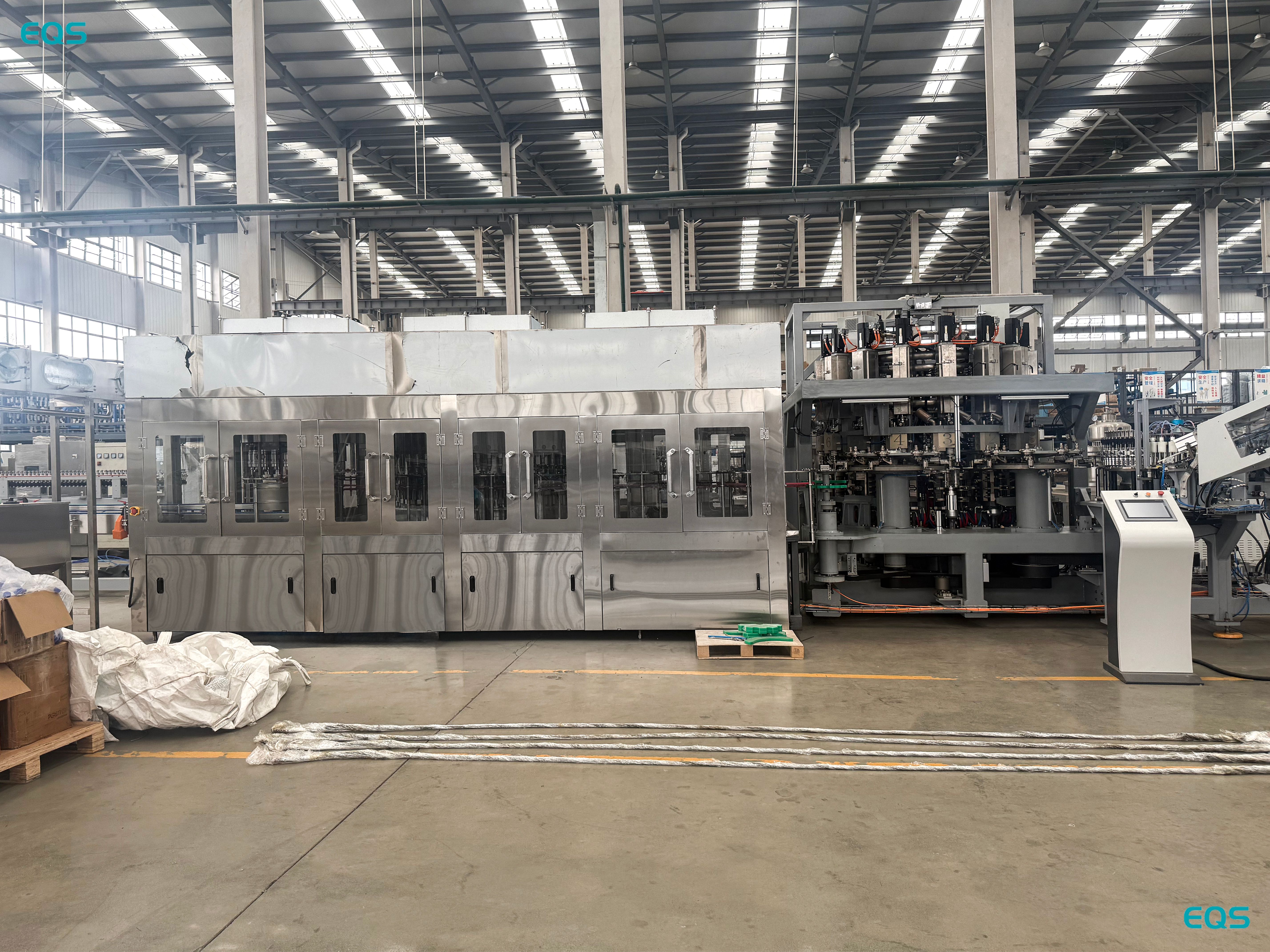
I think quality control is one of the strongest arguments for a turnkey system. Beverage buyers want stable product, and stable product needs stable equipment.
A matched filler works better with the upstream and downstream flow. That helps keep volume more consistent.
The capping unit can work in sync with bottle delivery and container handling.
When the bottles move at a steady speed, labeling is cleaner and more accurate.
A unified line makes it easier to collect process data across the full workflow.
| Quality Area | Turnkey Benefit |
|---|---|
| Filling | Better accuracy |
| Capping | More stable seal |
| Labeling | Cleaner position |
| Traceability | Better data flow |
I usually recommend turnkey solutions when the buyer wants lower project risk and faster launch.
Large plants need more coordination. A turnkey approach reduces complexity.
If the factory does not have a big engineering team, one supplier can make the job easier.
For premium beverage products, stable line performance matters a lot.
If the buyer wants to start production quickly, turnkey support can shorten the path.
| Best Use Case | Why It Fits |
|---|---|
| Large project | Better coordination |
| Small technical team | Easier management |
| High-quality product | Stable output |
| Fast launch | Faster commissioning |
I still think a turnkey line needs careful review. One supplier does not mean no due diligence.
I ask for speed data, layout drawings, and control logic details.
I want to know how the supplier handles installation, training, and spare parts.
I ask if the line can grow with the business.
A lower price can hide higher operating cost later.
| Buying Check | Why It Matters |
|---|---|
| Technical match | Stable operation |
| Service plan | Faster support |
| Expansion path | Future growth |
| Total cost | Better investment view |
I choose turnkey beverage bottling lines because they reduce integration risk, improve stability, and give me one matched system from water treatment to palletizing.
My name is Allen, and I'm an expert in filling machine technology at EQS, a leading liquid packaging solution provider based in China. If you're looking for top-quality equipment for your production line, feel free to reach out to me at [email protected]. We specialize in providing customizable solutions with cutting-edge technology.
Copyright © JIANGSU EQS MACHINERY CO.,LTD