 EN


How Does a Juice Packaging Machine Protect Flavor During Packing?
A juice packaging machine helps protect flavor by limiting the conditions that change juice between processing and sealing: contact with oxygen, unnecessary heat exposure, contamination, and leaks. The machine is only one part of that protection. The recipe, validated treatment, container, closure, and storage conditions must work together.
For a line planner, the useful question is not simply how quickly a bottle can be filled. It is where the juice meets air, how long it spends at a given temperature, and whether the sealed pack stays intact. The answer depends on the product and process. Check it with a food technologist before specifying equipment.
Why flavor can change before a bottle is sealed
Juice contains aroma compounds that give fruit its characteristic smell. Oxygen introduced during transfer or filling can contribute to changes in aroma and color over storage. Heat can also change the sensory profile, while residues or microbial spoilage may introduce unwanted flavors. These mechanisms are different; a single machine setting cannot address all of them.
Consider a clear juice that enters the filler with low dissolved oxygen. If the transfer line draws in air or the liquid splashes into the bottle, the packed product may contain more oxygen than the incoming juice. A juice packaging machine should therefore be evaluated as part of the whole product path, not just by its filling valve.
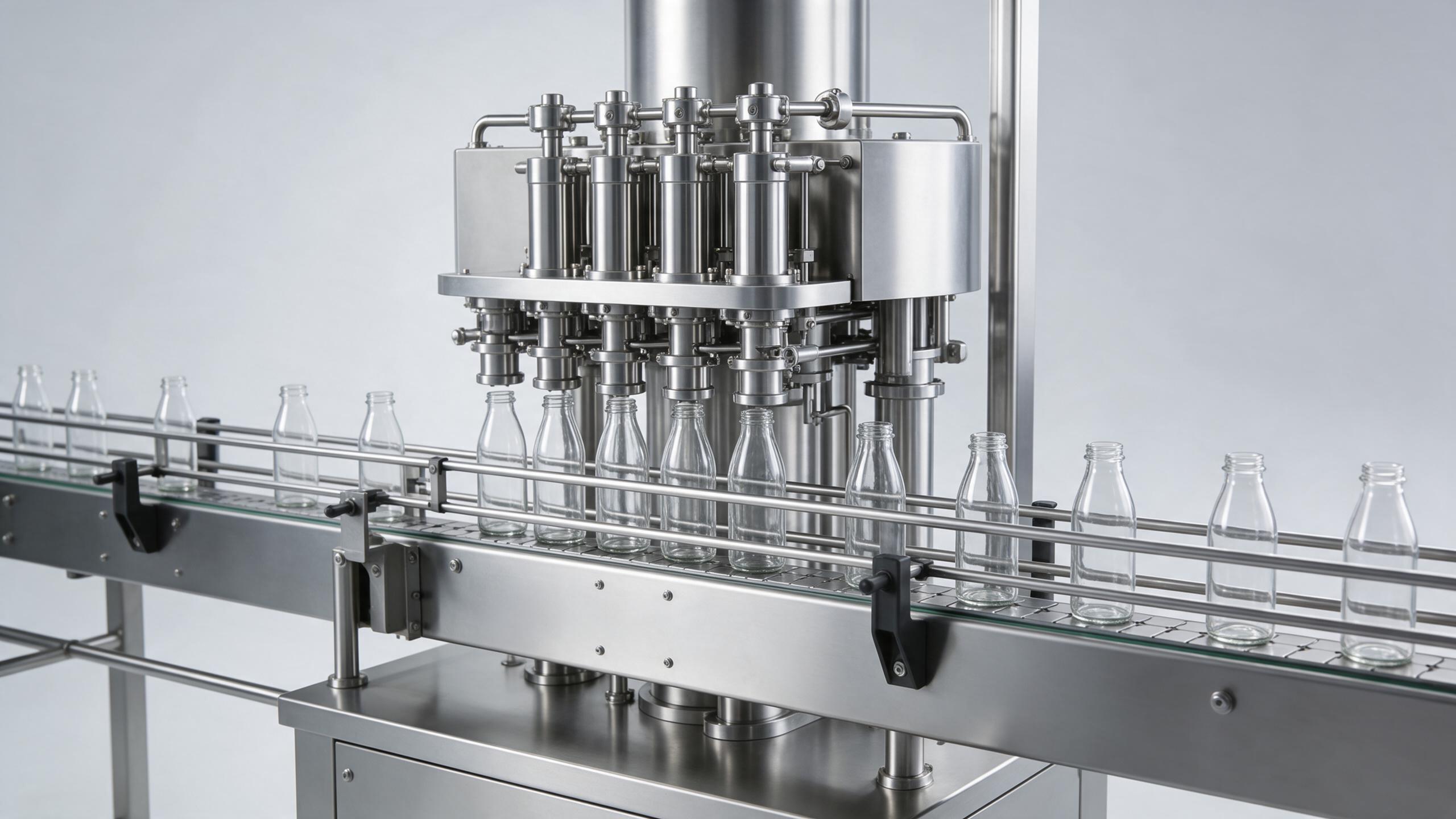
Control oxygen from the supply tank to the closure
Closed, correctly assembled transfer lines can reduce exposure to surrounding air. Depending on the product, the upstream process may include deaeration to reduce dissolved gas. A juice packaging machine may also use controlled filling and optional gas management, but these features must be confirmed for the actual configuration. Deaeration has a trade-off: volatile aroma compounds can be lost as well, so its settings need sensory review.
Filling behavior matters at the nozzle. Excessive splashing or turbulence can entrain air; a filling method suited to the container and liquid can reduce that opportunity. For pulpy products, the passage and valve design must also accommodate the particles without treating a uniform laboratory sample as representative of every batch.
Headspace is the unfilled volume above the juice. Its oxygen content, as well as oxygen dissolved in the liquid, contributes to total package oxygen. Some lines use a food-compatible inert gas to displace air, where the process and package permit it. Ask the supplier what is included, how gas use is controlled, and how the result is measured. Neither a gas purge nor a low headspace reading alone proves that the finished drink will retain its intended taste.
Match heat exposure to the validated process
Heat can support juice safety and stability, but extra time at elevated temperature may alter delicate aromas. A juice packaging machine used for hot filling should be compatible with the approved filling temperature, product-contact components, bottle, and closure. The time from thermal treatment through filling, closing, and cooling should be considered together, including what happens during a line stop.
Hot filling is not the same as aseptic filling. An aseptic system relies on a validated combination of product treatment, package treatment, a controlled filling environment, and sterile closure. A chilled process has different handling and distribution requirements. A juice filling machine must be selected for the process actually validated; the presence of a capper or a clean enclosure does not make a line aseptic.
For juice subject to US 21 CFR 120.24, juice HACCP controls generally must achieve at least a five-log reduction of the pertinent microorganism, with specified exceptions. That is a regulatory performance requirement, not a universal time and temperature recipe. Local rules, the product formulation, and the process authority determine the applicable controls. Do not lower a validated treatment merely to chase a fresher taste.
Keep contact surfaces clean and product flow consistent
A juice packaging machine can help maintain hygienic conditions when its product-contact surfaces are suitable for the juice and accessible to the agreed cleaning method. Review the contact-material documentation, seals, drainability, and areas where pulp or residue could collect. A cleaning-in-place arrangement can be useful where designed and validated for the installation; its presence alone does not verify cleanliness.
At a changeover, ask how the line is drained, rinsed, cleaned, and checked before the next product. Residual flavors from a previous recipe can affect a new batch even when the filling volume is accurate. A juice filling machine should also be assessed for cleaning access around valves and seals, with work performed under the equipment supplier's safety procedures.
Routine monitoring belongs alongside the equipment design. The plant's food safety team can define sampling points, cleaning verification, corrective actions, and restart conditions. Flavor protection is stronger when operators know what to do after a delay rather than improvising with juice left in the line.
Seal the container and protect the product after filling
A juice packaging machine must transfer the filled container to the closure stage without avoidable delay or instability. Closure alignment, the container finish, and the cap or seal specification all influence package integrity. Too little or too much applied torque can create problems for a threaded closure; acceptable values and test methods should come from the closure and container suppliers for the specific pack.
A sound seal is only one barrier. Oxygen can also enter through packaging materials during storage, and light and elevated temperatures can affect sensitive products. Compare container and closure barrier information at the intended shelf life and distribution conditions. A juice packaging machine cannot compensate for a package that is unsuitable for the product, nor can it control warehouse temperature after the pack leaves the line.
What should buyers measure during a line trial?
Before ordering a juice packaging machine, agree on the recipe, container, expected production rate, target distribution conditions, and the measurements used for acceptance. Include normal running and a planned stop-and-restart scenario. A trial can reveal a mismatch between the transfer system, filler, and capper that a nominal speed figure does not show.
- Incoming and packed oxygen: Measure dissolved oxygen before filling and in the finished pack; assess headspace oxygen where relevant using an agreed sampling method.
- Temperature and time: Record product temperature at defined points and document holding or delay times against the validated process.
- Closure integrity: Inspect closure placement and test torque or seal integrity using the pack supplier's agreed method.
- Sensory quality: Compare coded samples from the incoming product and finished packs, then repeat during storage under representative conditions.
- Hygiene and changeover: Verify cleaning according to the plant's plan and examine whether the actual product, including pulp, can be removed from contact areas.
Use agreed sampling frequency, instruments, acceptance limits, and responsibilities; there is no single flavor target for every juice. If a result is outside the agreed range, trace the point where it changed before adjusting equipment. The comparison is more useful when the same recipe, bottle, cap, line speed, and treatment are used across trials.
Putting flavor protection into the specification
Specify a juice packaging machine around the product's risks: oxygen pickup, thermal history, hygiene, package integrity, and storage exposure. Give the equipment supplier the recipe characteristics, particle information, container drawings, process temperatures, and cleaning requirements. Then ask which features are included and which require separate validation.
Jiangsu EQS Machinery works in beverage filling equipment. For a project discussion, share the intended juice and pack format along with the planned process; suitability, available features, and service scope need confirmation for the proposed configuration. The result should be a juice packaging machine specification that can be tested against both flavor and food safety requirements, rather than a promise based on equipment speed alone.