 EN
EN


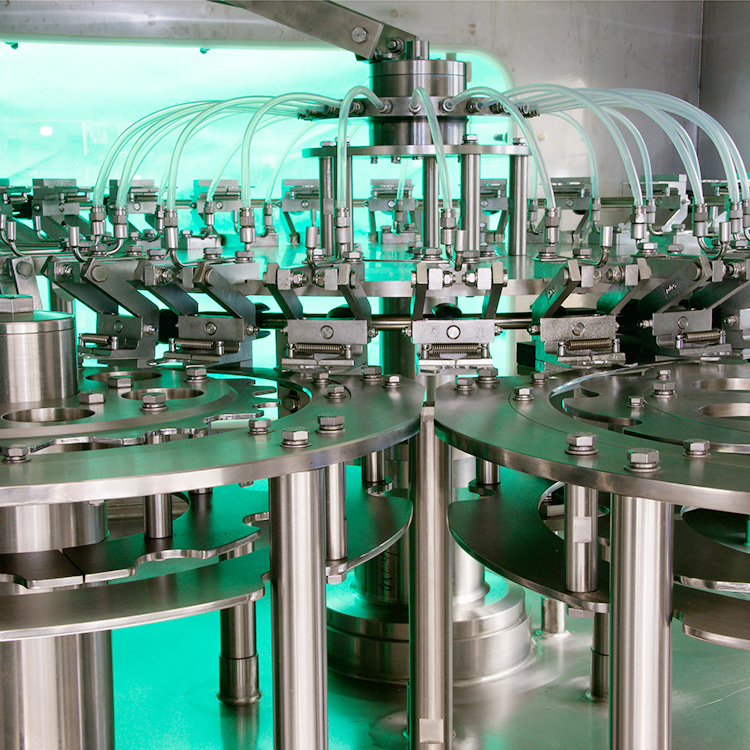
Core Sterility Assurance: Dual-Barrier Design and Environmental Isolation
How the aseptic filling machine eliminates contamination at the source
Aseptic filling machines prevent contamination at its origin using a dual-barrier strategy. The first barrier is physical isolation—rigid, sealed enclosures (isolators) that surround critical filling zones and block airborne particulates and microorganisms from entering product contact areas. The second barrier is environmental control: HEPA-filtered laminar airflow (ISO Class 5 or better) sweeps contaminants away from open containers during transfer and filling. Together, these barriers maintain sterile conditions precisely where sterility matters most—the point of fill.
Isolator integration and its impact on microbial bioburden reduction
Integrating isolators directly with the aseptic filling machine drastically reduces microbial bioburden by eliminating direct human access to critical zones. Operators perform interventions remotely via glove ports or half-suits, removing the need for manual entry. Isolator-based systems consistently achieve microbial counts below 1 CFU per cubic meter—up to 100× lower than conventional cleanrooms. This isolation enables automated bio-decontamination (e.g., hydrogen peroxide vapor), continuous particle monitoring, and stable positive pressure—all of which reduce contamination risk to near-zero without dependence on operator gowning alone.
Human Factor Mitigation: Reducing Intervention-Driven Contamination Risks
Why human operators remain the top contamination vector—and how modern aseptic filling machines minimize exposure
Human operators are the largest single source of contamination in sterile manufacturing. Every movement—adjusting nozzles, inspecting vials, or handling stoppers—sheds particles and microorganisms that threaten product sterility. Modern aseptic filling machines mitigate this by automating high-risk tasks: robotic arms manage vial transport, stoppering, and capping entirely within a closed isolator. Advanced barrier technology physically separates operators from the sterile core, while rapid transfer ports allow material entry without compromising the clean zone. By reducing human intervention to near zero, these systems cut contamination rates by orders of magnitude—enhancing both safety and operational efficiency.
Critical Control Points (CCPs) monitored in real time during aseptic filling
To sustain sterility, the aseptic filling machine continuously monitors key Critical Control Points. Differential pressure sensors verify the isolator maintains positive pressure relative to surrounding areas, preventing contaminant ingress. Particle counters sample fill chamber air every few seconds and trigger alarms if limits are exceeded. Temperature and humidity are tightly regulated, as fluctuations can weaken sterile boundaries. The system also logs every validated intervention—such as stopper pickup or needle rinse—to confirm adherence to approved parameters. Real-time CCP tracking delivers immediate operator feedback and generates an auditable, compliance-ready record.
Validation, SIP/CIP, and Real-Time Decontamination Verification
FDA-cited gaps in aseptic filling machine validation—and how to close them
The FDA frequently identifies two major validation gaps in aseptic filling operations: insufficient media-fill realism and inadequate biological indicator (BI) studies. Many facilities fail to replicate worst-case production scenarios—like extended equipment hold times or simulated operator interventions—during media fills. To close this gap, design simulations that mirror actual process severity and duration. Likewise, sterilization cycles must be validated with documented BI kill curves across all load configurations—not just nominal ones. Real-time monitoring of SIP parameters (e.g., temperature, pressure, dwell time) provides continuous assurance, while a rigorous change-control system ensures modifications—such as new components or software updates—do not compromise validated state.
Hydrogen peroxide vapor (HPV) mapping: Ensuring uniform sterilization across the fill chamber
Effective HPV decontamination requires verified uniformity throughout the isolator. Non-uniform airflow can create dead zones where spore reduction falls short. Your validation protocol must measure HPV concentration, exposure time, and temperature at multiple spatial locations—including hard-to-reach corners and shadowed surfaces. Chemical integrators and biological indicators placed at high-risk points confirm ≥6-log spore reduction. Real-time vapor concentration sensors further strengthen verification. Repeat this mapping after any chamber modification—or at defined cycle intervals—to ensure ongoing decontamination efficacy.
Preserving Product Integrity: Precision Filling and Shear-Sensitive Formulation Handling
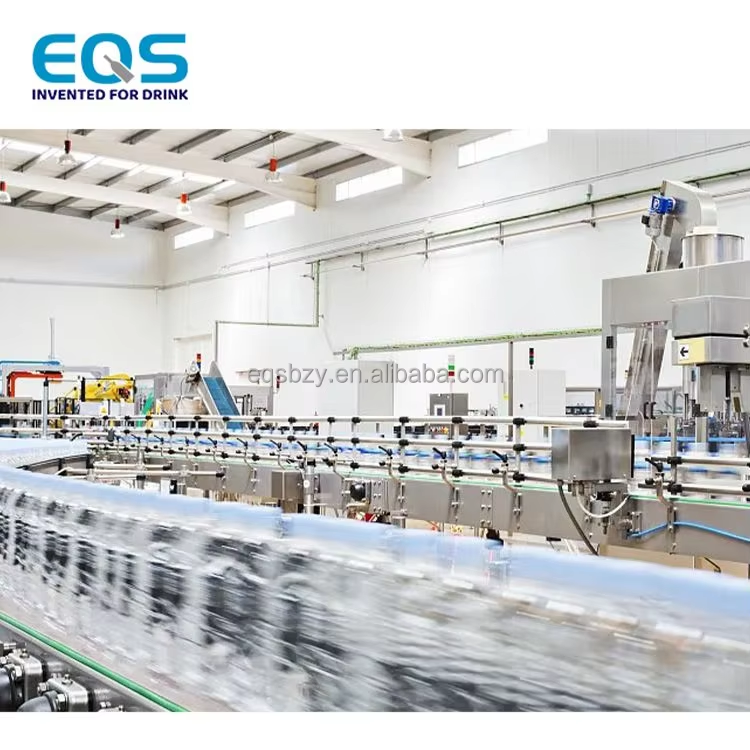
Preventing aggregation and degradation in biologics via optimized aseptic filling machine parameters
Biologics—especially monoclonal antibodies and cell therapies—are highly susceptible to shear-induced aggregation and thermal degradation. Modern aseptic filling machines protect structural integrity through purpose-built engineering: reduced nozzle diameters, minimized fluid-path lengths, and low-shear valve designs preserve laminar flow. Fill speed and pressure profiles are dynamically optimized to avoid turbulence, while integrated temperature-controlled pathways safeguard thermosensitive formulations from inlet to final seal—ensuring consistent product quality and shelf-life stability.
Gravimetric feedback and servo-driven control for ±0.5% fill accuracy
Top-tier aseptic filling systems use real-time gravimetric feedback paired with servo-driven actuators to deliver ±0.5% fill accuracy—among the tightest tolerances in pharmaceutical manufacturing. Continuous weight measurement during filling allows instantaneous, closed-loop adjustments for viscosity shifts, environmental drift, or pump wear. This precision prevents costly overfill (“giveaway”) and underfill risks—both of which carry regulatory and dosing implications—making it essential for high-value biologics and narrow-therapeutic-index products.
Table of Contents
- Core Sterility Assurance: Dual-Barrier Design and Environmental Isolation
- Human Factor Mitigation: Reducing Intervention-Driven Contamination Risks
- Validation, SIP/CIP, and Real-Time Decontamination Verification
- Preserving Product Integrity: Precision Filling and Shear-Sensitive Formulation Handling