 EN
EN


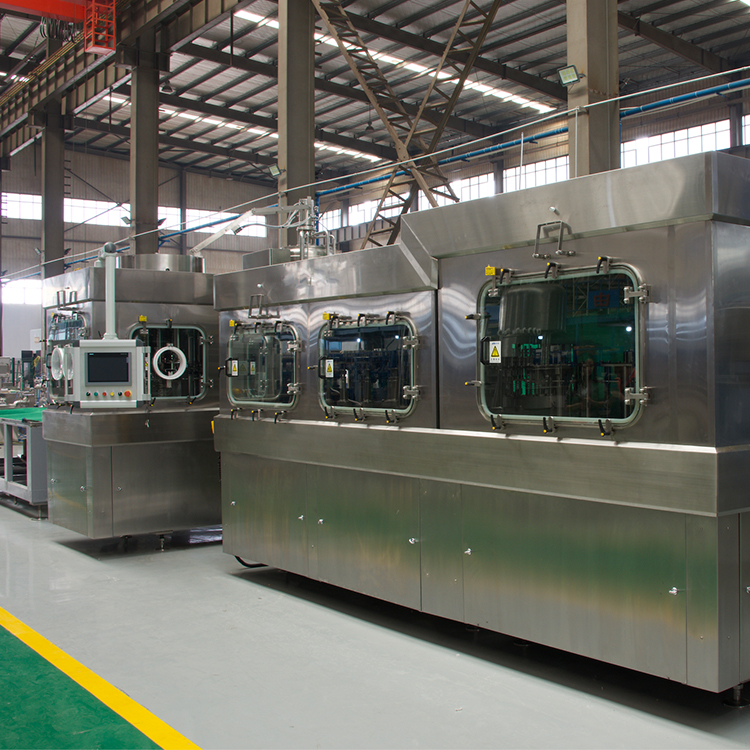
Why Compact Aseptic Filling Machines Are Reshaping Modern Biopharma Facilities
The rapid growth of biologics, personalized medicine, and sterile injectables is pushing biopharma facilities to rethink their fill-finish strategies. Traditional lines occupy hundreds of square meters, but compact aseptic filling machines now deliver the same sterility assurance in a fraction of the footprint. By integrating modular isolator designs and robotic automation, these systems meet ISO Class 5 requirements while enabling faster changeovers between clinical and commercial batches. For facilities in urban hubs or retrofitting legacy cleanrooms, the space savings are transformative—eliminating the need for costly expansions. Beyond footprint, the compact design lowers energy consumption and reduces contamination risk by minimizing personnel intervention. As the industry moves toward smaller, high-value batches, the compact aseptic filling machine becomes a strategic asset, balancing regulatory compliance with operational agility.
Core Compact Design Principles of the Aseptic Filling Machine
Modular architecture for minimal footprint and ISO Class 5 sterility assurance
Compact aseptic filling machines leverage modular architecture to drastically reduce floor space while upholding ISO Class 5 sterility assurance. By segmenting critical functions—such as container sterilization, filling, and capping—into independent, stackable modules, manufacturers can arrange equipment in a tight “L” or “U” layout that fits under 15 m². Each module maintains its own HEPA-filtered air supply and pressure cascade, preventing cross-contamination without requiring a large cleanroom. Integrated CIP (clean-in-place) and SIP (sterilize-in-place) systems eliminate manual cleaning steps, preserving an aseptic boundary. This design reduces facility footprint by up to 40% compared to traditional linear lines, making it ideal for retrofitting into legacy cleanrooms.
Tool-less disassembly and rapid reconfiguration for flexible, space-constrained line changeovers
Tool-less disassembly enables operators to swap filling stations, change container sizes, or replace pump modules in under five minutes—a stark contrast to the 30–60 minute changeovers typical of conventional machines. Quick-release clamps, magnetic couplings, and color-coded components allow single-person reconfiguration without wrenches or screwdrivers. This flexibility is critical in space-limited facilities where multiple product batches run on the same line. Rapid changeovers also reduce downtime and product waste, directly improving overall equipment effectiveness (OEE). For production lines operating within tight floorplans, this modular agility ensures that the aseptic filling machine adapts to shifting demands without sacrificing sterile integrity.
Integrating the Compact Aseptic Filling Machine into Space-Limited Production Lines
Retrofitting legacy cleanrooms: Livron-style spatial optimization without facility rebuild
Retrofitting an existing cleanroom with a compact aseptic filling machine eliminates the need for costly facility expansion. Livron-style optimization reorients equipment layout to fit within tight footprints—often reducing required floor area by over 40% compared to traditional line designs. The machine’s modular architecture allows direct integration into ISO Class 5 zones without structural modifications. Utilities such as HVAC and electrical connections are pre-configured for quick hook-up. Changeover time drops to under 15 minutes, enabling rapid product switching within the same sterile envelope. This approach preserves validated cleanroom classifications while boosting production agility.
RABS vs. isolator configurations in sub-15 m² floor allocations
When floor space is below 15 m², the choice between RABS (Restricted Access Barrier Systems) and isolators hinges on sterility assurance and operational flexibility. RABS uses unidirectional airflow and physical barriers to maintain ISO Class 5, requiring less than 12 m² for installation. Isolators demand a slightly larger footprint due to integrated decontamination chambers but offer absolute containment—critical for high-potency compounds. For space-constrained lines, a compact aseptic filling machine paired with RABS reduces capital expenditure by up to 30% while achieving sterility assurance levels of 10⁻⁶. Isolators, though pricier, suit facilities running toxic products where operator protection is paramount. Both configurations fit within sub-15 m² allocations when using compact equipment with centralized utility ports.
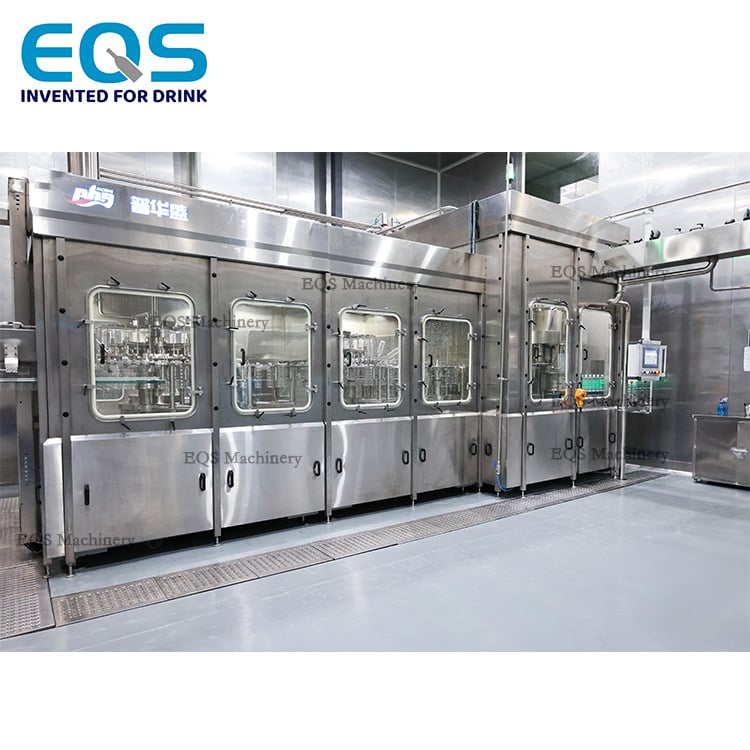
Sterility Assurance Without Compromise: Validating Compact Aseptic Filling Machine Performance
Validating compact aseptic filling machines requires specialized protocols to confirm sterility assurance despite reduced spatial configurations. These systems undergo rigorous performance qualification (PQ) that simulates worst-case production scenarios, including microbial challenge tests at 120% of maximum runtime to verify contamination control under stress conditions. Environmental monitoring must demonstrate consistent ISO Class 5 air quality through continuous viable particle counting (<1 CFU/m³) and differential pressure maintenance—particularly critical in confined installations. Automation validation focuses on closed-system integrity, with peristaltic pump systems requiring <0.1% fill accuracy deviation thresholds for sensitive biologics. Modern validation aligns with FDA 2022 guidance and EU GMP Annex 1, mandating data integrity safeguards for all sterility-critical parameters. Successful execution proves that spatial efficiency doesn’t necessitate compromised aseptic barriers when proper engineering controls and monitoring regimes are implemented.
Table of Contents
- Why Compact Aseptic Filling Machines Are Reshaping Modern Biopharma Facilities
- Core Compact Design Principles of the Aseptic Filling Machine
- Integrating the Compact Aseptic Filling Machine into Space-Limited Production Lines
- Sterility Assurance Without Compromise: Validating Compact Aseptic Filling Machine Performance