 EN
EN


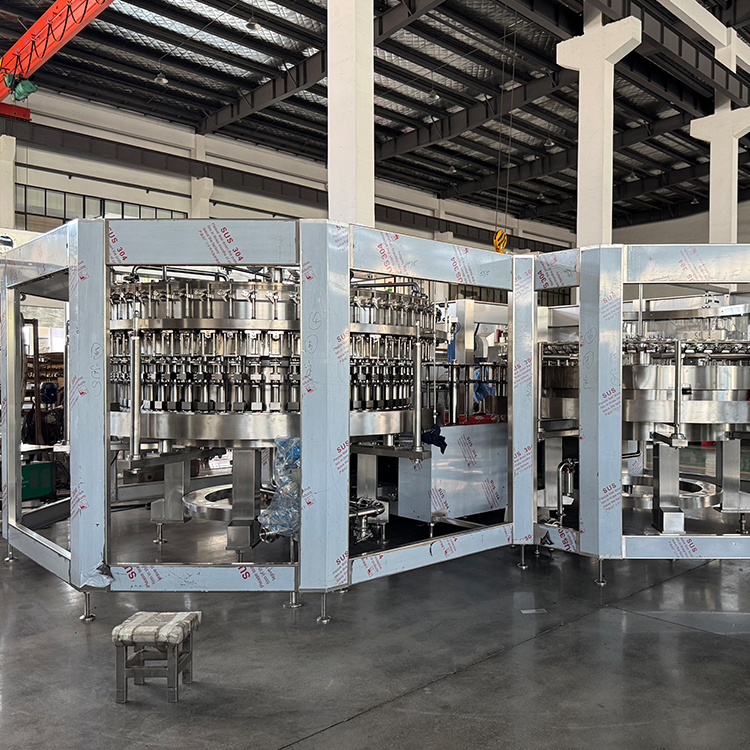
Why Precise Volume Control Is Critical for Carbonated Filling Machine Performance
Foam dynamics and fill accuracy: How CO₂ volatility drives overfill/underfill risk
In a carbonated filling machine, the volatility of dissolved CO₂ is the core challenge to consistent fill volume. Even minor pressure drops or temperature fluctuations during transfer trigger rapid gas breakout—forming dense foam that displaces liquid and interferes with level sensing. A 1–2 mm sensor deviation can mean milliliters of product loss per container, compounding across thousands of units per hour. This instability directly causes overfill—wasting product and stressing downstream capping—or underfill, which risks non-compliance with mandatory volume standards. Without active foam suppression and tight pressure equilibrium, up to 8% of CO₂ may be lost per batch (Ponemon, 2024). Such losses degrade fill accuracy beyond acceptable tolerances, making it impossible to guarantee labeled volume in every bottle or can. Controlling foam isn’t just about quality—it’s the operational prerequisite for efficiency, reliability, and regulatory confidence.
Regulatory compliance: FDA 21 CFR & EU Directive 75/106 volume tolerance requirements
Volume accuracy isn’t optional—it’s legally mandated. EU Directive 75/106/EEC requires that the average fill of a batch never falls below the declared quantity, while individual containers must stay within strict negative error limits—e.g., no more than 7.5 ml short for a 500 ml package. Similarly, FDA 21 CFR 101.105 demands truthful net-content labeling and verifiable sampling plans to demonstrate ongoing compliance. A carbonated filling machine unable to maintain precise volume control inevitably produces out-of-spec units, exposing brands to fines, recalls, and reputational harm. A single foam surge can push a fill below threshold—turning high-speed output into regulatory risk. Modern systems integrate real-time fill monitoring and dynamic pressure management to embed compliance into every cycle, transforming it from an audit-driven obligation into a predictable, built-in outcome.
Isobaric Filling Technology: The Foundation of Efficient Carbonated Filling Machine Operation
Pressure equilibrium mechanics: Minimizing CO₂ loss while enabling high-speed, stable fills
Isobaric filling relies on precise pressure equilibrium to suppress CO₂ breakout during filling. The process begins by pressurizing the empty container with CO₂ until its internal pressure matches the filler bowl’s headspace pressure—eliminating the differential that triggers violent foaming. Once balanced, the filling valve opens, allowing product to flow gently down the container wall under constant backpressure. High-fidelity pressure sensors and responsive regulators sustain this equilibrium throughout the fill—even at speeds exceeding 60,000 bottles per hour. Because the liquid avoids sudden depressurization, CO₂ remains dissolved, foam is minimized, and fill height stays accurate. A controlled decompression phase then safely returns the container to atmospheric pressure, preventing microbubbles or cap ejection. This closed-loop approach preserves carbonation integrity, enabling high throughput without compromising the sensory profile consumers expect from sparkling beverages.
Measuring True Efficiency in a Carbonated Filling Machine: Beyond Bottles Per Minute
CO₂ retention rate (≥97.5% benchmark) and total cost of ownership (TCO) as key KPIs
True efficiency in a carbonated filling machine extends far beyond bottles-per-minute metrics. Two interdependent KPIs reveal long-term performance: CO₂ retention rate and total cost of ownership (TCO). Industry best practice targets ≥97.5% CO₂ retention—ensuring consistent fizz, flavor, and mouthfeel. Losses above this threshold correlate directly with overfill corrections, inconsistent closure torque, and higher gas consumption. A machine losing 3% or more CO₂ may appear fast but silently degrades product quality and inflates ingredient costs.
TCO shifts focus from upfront price to operational reality—factoring in energy use, consumables (e.g., gaskets, valve seals), unscheduled downtime, and waste from foam or inaccurate fills. For instance, a 1% drop in fill accuracy adds thousands of dollars annually in give-away product alone. Tracking both CO₂ retention and TCO uncovers whether a carbonated filling machine delivers sustainable efficiency—not just headline speed.
Selecting a Carbonated Filling Machine: Matching Precision, Speed, and Scalability to Your Line
Choosing the right carbonated filling machine demands alignment across three pillars: volumetric precision, line speed, and future scalability. A high-speed system lacking tight fill-level control generates avoidable waste and compliance exposure; conversely, a highly accurate filler that bottlenecks production undermines throughput goals. The optimal solution maintains isobaric stability across your full range of carbonation levels and container formats—glass, PET, or cans—while delivering repeatable accuracy at target speeds.
Scalability is equally critical: look for modular architecture and clear upgrade paths that support additional filling heads, new container sizes, or expanded product lines without full-system replacement. Evaluate TCO holistically—including energy efficiency, service accessibility, and remote diagnostic capability—and prioritize suppliers with proven after-sales support and field expertise. By anchoring selection in precision, speed, and scalability from day one, you establish a foundation for consistent quality, regulatory resilience, and growth-ready operations.
FAQ
Why is precise volume control important in carbonated filling machines?
Precise volume control ensures that each container meets regulatory requirements, minimizes product waste, and prevents issues like overfill or underfill caused by CO₂ volatility.
What is isobaric filling technology?
Isobaric filling is a process that balances the pressure between the filling machine and the container, minimizing CO₂ loss, reducing foaming, and ensuring consistent fill levels during high-speed operations.
What are the key factors to consider when choosing a carbonated filling machine?
The primary factors include volumetric precision, line speed, and future scalability. Additional considerations include total cost of ownership, energy efficiency, and supplier support for upgrades and maintenance.
What are common regulatory requirements for carbonated beverage filling?
Regulations like FDA 21 CFR 101.105 and EU Directive 75/106/EEC mandate precise volume control and compliance with labeling and fill level standards to avoid penalties, recalls, and legal issues.
What is the significance of CO₂ retention rate?
CO₂ retention rate, ideally above 97.5%, ensures that carbonated beverages maintain their intended taste and fizz while reducing ingredient waste and operational costs.
Table of Contents
- Why Precise Volume Control Is Critical for Carbonated Filling Machine Performance
- Isobaric Filling Technology: The Foundation of Efficient Carbonated Filling Machine Operation
- Measuring True Efficiency in a Carbonated Filling Machine: Beyond Bottles Per Minute
- Selecting a Carbonated Filling Machine: Matching Precision, Speed, and Scalability to Your Line
-
FAQ
- Why is precise volume control important in carbonated filling machines?
- What is isobaric filling technology?
- What are the key factors to consider when choosing a carbonated filling machine?
- What are common regulatory requirements for carbonated beverage filling?
- What is the significance of CO₂ retention rate?