 EN
EN


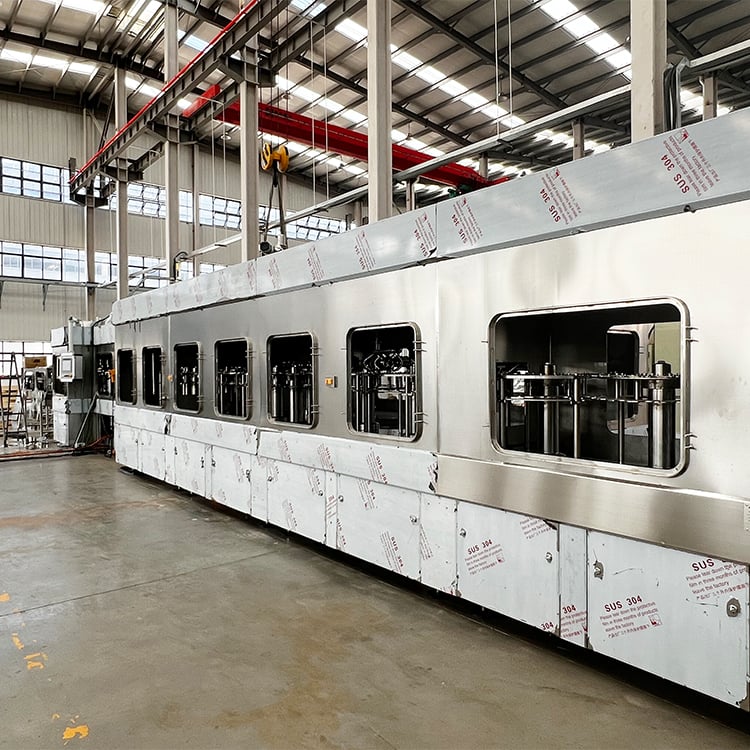
How Ultra Clean Filling Machines Achieve Microbial Safety for ESL Products
ISO 5 HEPA laminar airflow and positive‑pressure isolation
An ultra clean filling machine establishes a critical microbial barrier by constructing an ISO 5 (Class 100) cleanroom around the filling zone. High-efficiency HEPA filters—rated at 0.3 µm—supply vertical laminar airflow that sweeps airborne particles away from the product path, maintaining particle concentrations below 3,520 particles per cubic meter (≥ 0.5 µm), per ISO 14644‑1. Positive-pressure isolation ensures the sterile zone remains at higher air pressure than surrounding areas, preventing unfiltered ambient air from infiltrating the filling station. Together, laminar flow and pressure cascades create a validated environment where airborne contaminants are actively excluded. For extended-shelf-life (ESL) dairy and juice products, this physical barrier is the first line of defense—reducing initial bioburden and enabling the low-count finish that distributors and consumers expect.
Non‑contact filling valves and aseptic zone integrity
Maintaining aseptic integrity during filling depends on eliminating contact between sterile product and potential contaminants. Ultra clean machines use non-contact filling valves—such as electromagnetic or mass-flow meters—that dispense liquid without touching the bottle neck or closure. This avoids the re-contamination risks inherent in traditional tube-in-mouth fillers, where residual product can foster biofilm growth. The aseptic zone is further protected by a hygienic machine enclosure with sloped surfaces and minimal crevices, simplifying cleaning and reducing microbial harborage points. Sterilization of the valve assembly and surrounding surfaces using vaporized hydrogen peroxide or hot sterile air preserves the zone’s low-bioburden state. As a result, processors reliably achieve the ≤1 CFU/100 ml microbiological target required for premium ESL beverages—demonstrating that non-contact technology and sealed enclosure design are essential for consistent safety.
Integrated CIP/SIP Systems: Ensuring Consistent Microbiological Validation
Self-draining architecture and closed-loop cleaning protocols
Ultra clean filling machines for dairy and juice production rely on hygienic design to eliminate microbial niches. Self-draining architecture ensures all product-contact surfaces—including pipes, valves, and tank bottoms—slope toward drain points to prevent liquid pooling, which could otherwise support pathogens like Listeria. Closed-loop cleaning protocols circulate detergents, acid rinses, and sanitizers through the fully enclosed system, never exposing interior surfaces to the plant environment. This preserves positive-pressure isolation and integrates seamlessly with Sterilization-in-Place (SIP), using high-temperature steam to eliminate residual microorganisms. All wetted surfaces are fabricated from 316L stainless steel with a surface roughness (Ra) below 0.8 µm—significantly reducing bacterial adhesion. The combination of self-draining geometry and closed-loop CIP/SIP minimizes cross-contamination risk and supports ESL product safety without manual intervention.
Real-time validation metrics (e.g., conductivity, temperature, time) for ≤1 CFU/100ml compliance
To meet the ≤1 CFU/100 ml microbial limit typical of ultra-clean filling, automated CIP/SIP systems continuously monitor critical parameters. Conductivity sensors detect residual detergent or rinse water; temperature probes and flow meters verify that SIP cycles reach and maintain lethal temperatures—typically 121°C for 30 minutes—at the coldest points in the system. Time-temperature integrators log cumulative lethality, and any deviation triggers an alarm and automatic re-cleaning. These real-time records provide auditable proof that every cleaning cycle meets validated specifications, supporting compliance with global food safety standards such as ISO 22000 and FDA 21 CFR Part 117. Rigorous digital monitoring safeguards product integrity while enabling rapid troubleshooting—reducing downtime and waste.
Precision Filling Technology Optimized for Sensitive Dairy and Juice Formulations
Volumetric servo-piston fillers with ±0.3% accuracy for viscosity- and shear-sensitive ESL products
Precision dosing is foundational to product quality and profitability in ultra clean filling. For sensitive dairy and juice formulations, volumetric servo-piston fillers set the benchmark. These systems use closed-loop servo motors to control piston movement with extreme repeatability—achieving fill volume consistency of ±0.3%. This level of accuracy is critical for variable-viscosity products like yogurt drinks or pulpy juices, where traditional flow meters often underperform. Crucially, the non-contact, gentle handling of servo-piston technology minimizes shear forces on delicate structures—preserving texture, mouthfeel, and functional integrity of premium ESL beverages. This precision reduces product giveaway, saving large-scale producers hundreds of thousands of dollars annually while ensuring strict compliance with net content regulations.
Industry-Proven Performance: Case Studies in UHT Milk and Probiotic Juice Lines
A leading dairy processor in Northern Europe upgraded its UHT milk line with an ultra clean filling machine integrating ISO 5 laminar airflow and non-contact filling. The result: a consistent 90-day ambient shelf life with microbial counts below 1 CFU/ml—verified in its 2023 internal quality audit. The upgrade reduced preservative dependence and expanded export eligibility into markets with stringent clean-label requirements. In parallel, a probiotic juice manufacturer adopted the same platform to protect Lactobacillus casei viability during packaging. Servo-piston fillers maintained ±0.3% fill accuracy while minimizing mechanical stress, and post-packaging analysis confirmed viable L. casei levels above 10⁶ CFU/ml throughout the full 45-day refrigerated shelf life—meeting the brand’s clean-label promise. Microbial challenge testing with Bacillus subtilis spores recorded zero recoveries after 1,000 filling cycles, validating long-term aseptic integrity. According to a 2023 industry survey of 47 dairy processing facilities, those using ultra clean filling reported 40% longer average shelf life and 3.2% lower product loss versus conventional methods—confirming that precision, sterility, and gentle handling deliver measurable commercial advantage.
FAQ
What is the purpose of ISO 5 laminar airflow in ultra clean filling machines?
ISO 5 laminar airflow is used to create a sterile cleanroom environment around the filling zone, reducing airborne particle contamination to ensure microbial safety.
Why are non-contact filling valves essential for ultra clean filling?
Non-contact filling valves prevent re-contamination by eliminating physical contact between the product and potential contaminants during filling.
How do CIP/SIP systems maintain microbiological validation?
CIP/SIP systems use closed-loop cleaning protocols and high-temperature sterilization to eliminate microbial niches, ensuring consistent cleanliness without manual intervention.
What accuracy can be achieved with volumetric servo-piston fillers?
Volumetric servo-piston fillers deliver fill volume accuracy of ±0.3%, making them ideal for sensitive dairy and juice products.
What benefits do ultra clean filling machines provide for ESL beverages?
Ultra clean filling machines enhance microbial safety, preserve product integrity, extend shelf life, and reduce product loss for ESL dairy and juice products.
Table of Contents
- How Ultra Clean Filling Machines Achieve Microbial Safety for ESL Products
- Integrated CIP/SIP Systems: Ensuring Consistent Microbiological Validation
- Precision Filling Technology Optimized for Sensitive Dairy and Juice Formulations
- Industry-Proven Performance: Case Studies in UHT Milk and Probiotic Juice Lines
-
FAQ
- What is the purpose of ISO 5 laminar airflow in ultra clean filling machines?
- Why are non-contact filling valves essential for ultra clean filling?
- How do CIP/SIP systems maintain microbiological validation?
- What accuracy can be achieved with volumetric servo-piston fillers?
- What benefits do ultra clean filling machines provide for ESL beverages?