 EN
EN


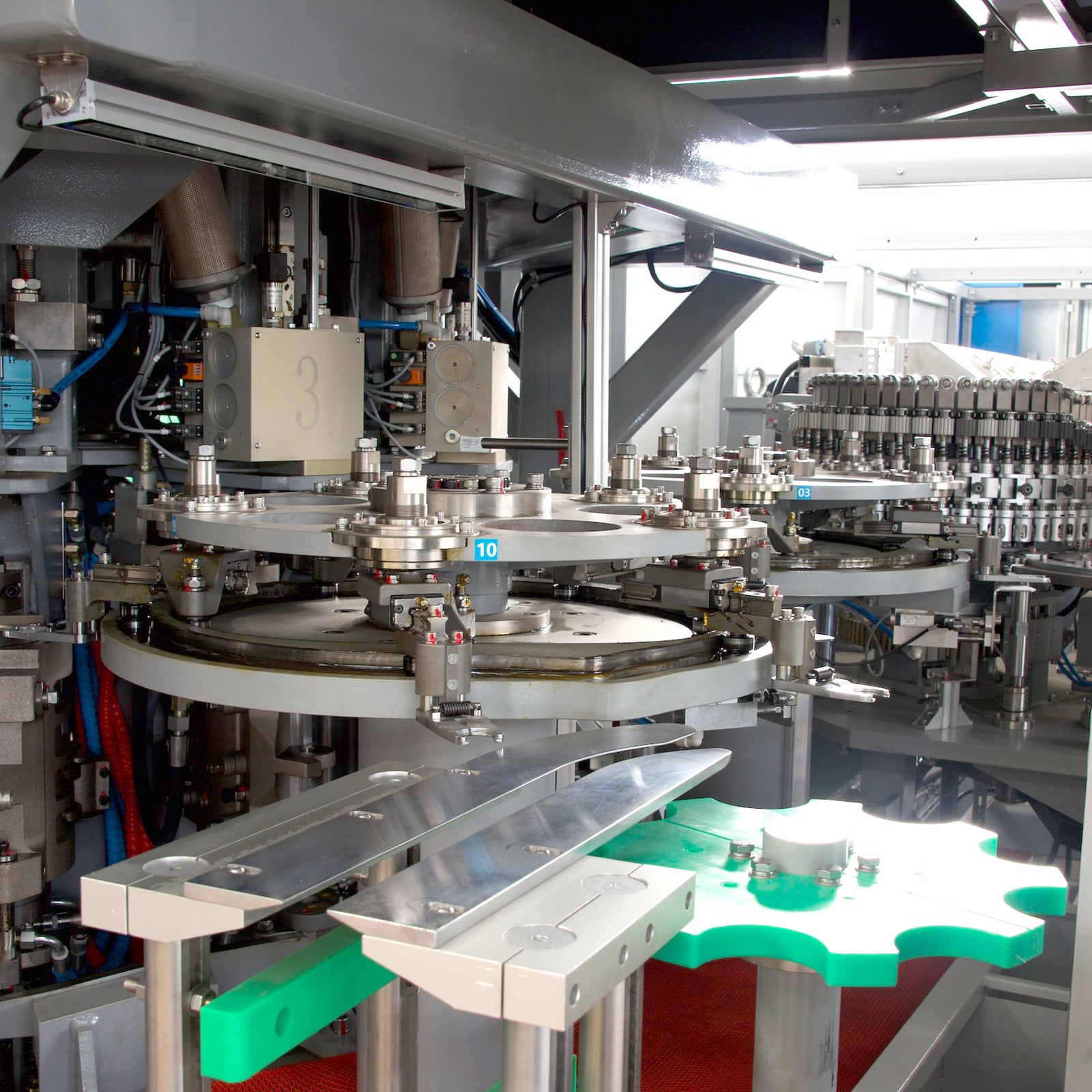
How Servo Integration Unifies Blowing, Filling, and Capping Operations
Synchronized Motion Control Across All Three Unit Operations
The latest blowing-filling-capping (BFS) systems now incorporate servo-driven automation technology that brings together bottle making, filling with liquid, and applying caps all on one mechanical unit. These systems rely on real time PLC controllers to manage powerful servo motors through each stage of production. This setup gets rid of those extra transfer points between processes and keeps everything aligned pretty closely, within about half a millimeter accuracy. According to Packaging Automation Review from last year, this kind of integrated approach cuts down contamination risks during handling by around three quarters when compared to separate machines working independently. When everything runs as a continuous process instead of multiple steps, factories actually see fewer problems with parts getting misaligned. The result? About 23 percent less downtime overall, and still managing to produce over 400 bottles every single minute without breaking stride.
Real-Time Closed-Loop Feedback for Cross-Process Consistency
The servo encoders provide feedback at millisecond resolution throughout various production stages including extrusion, filling, and capping operations. This allows machines to adjust on the fly when dealing with changes in material viscosity, temperature variations, or pressure differences that might otherwise disrupt the process flow. Pressure sensors and temperature monitors work together, sending their readings to control systems which then adjust how servos ramp up power especially important during those critical mold cooling periods when dimensional stability matters most for consistent fills. What this setup achieves is remarkable fill volume accuracy staying within about half a percent variation even as materials change characteristics mid-production run. Meanwhile, current signature analysis keeps track of cap torque levels as they happen, so operators know immediately if something's off. By synchronizing different processes using OPC-UA communication standards, manufacturers eliminate the need for manual transfers between stations. This not only saves time but dramatically cuts down on particulate contamination risks down to around 0.3% in sterile environments where cleanliness is absolutely essential.
Precision Filling Performance: Adaptive Control for Viscosity and Volume Accuracy
Volumetric-to-Gravimetric Adaptation via Servo-Driven Piston and Pump Systems
The servo driven piston and pump systems can hit around ±0.25 mL accuracy when filling containers thanks to their smart ability to switch between measuring volume and weight depending on what's flowing through them. For stuff that flows easily like water, these systems go fast using volume measurements. But when dealing with thicker materials such as gels or pasty suspensions, they kick into gear weighing mode with built in scales. The servos behind the pistons react pretty quick too, changing how much they move about 5 milliseconds after sensing any change in thickness. This setup works well across all sorts of fluids from super runny ones at 1 centipoise up to really thick stuff at 50 thousand centipoise, keeping things accurate within half a percent most of the time.
Mitigating Flow Drift with Adaptive Servo Ramping and Pressure Compensation
Adaptive servo ramping tech gets rid of those pesky flow drift issues by adjusting how fast things speed up and slow down during operation. This helps stop problems like splashing, foaming, and overfilling when dealing with delicate products. Pressure compensation valves work alongside servo feedback systems to keep everything flowing smoothly even when there are changes in pressure from upstream lines, sometimes as much as 3 bar difference. Companies using this dual control approach report cutting down on wasted materials by about 18 percent compared to older methods according to Packaging Efficiency Benchmarks 2023 data. Plus, special torque management features help prevent nozzles from getting clogged when working with thicker substances. What makes these systems stand out is their ability to maintain accuracy for thousands of operations before needing any kind of manual adjustment at all.
Intelligent Capping Reliability: Torque Profiling and Seal Integrity Assurance
Modern BFS systems demand repeatable, verifiable sealing to ensure regulatory compliance and product shelf life. Servo-controlled capping delivers this through dynamic torque profiling and real-time seal validationâremoving variability introduced by mechanical wear, container inconsistencies, or operator intervention.
Dynamic Torque Profiling Using Servo Current Signature Analysis
Modern servo driven cappers work by reading the electrical signals from their motors to spot tiny resistance changes when caps are being applied. These subtle shifts can signal problems like flawed materials, foreign particles getting stuck, or misaligned threads. The system then tweaks the torque almost instantly to fix these issues. According to research published last year in Packaging Digest, facilities that switched to this technology saw about 42 percent fewer sealing problems compared to older methods that just limited maximum torque. What makes these systems so effective is their ability to handle variations in production speed and slight differences between containers. Most plants report around 99.8% good seals after implementation. And there's another benefit worth mentioning these machines stop two major problems at once. Under torquing leaves packages vulnerable to leaks, while too much force can actually crack caps or damage liners inside them. That dual protection is why many manufacturers are making the switch despite higher upfront costs.
Achieving ±0.25 mL Fill Accuracy and <±3% Torque Deviation in High-Speed BFS Lines
Integrated servo synchronization unifies blowing, filling, and capping into a single deterministic process. At speeds exceeding 400 bottles/minute, volumetric pumps maintain ±0.25 mL fill accuracy by dynamically adjusting piston strokes in response to viscosity shiftsâwhile servo-capping heads deliver torque profiles with <±3% deviation across three distinct phases:
- Pre-torque staging: Gently seats caps to prevent cross-threading
- Main torque phase: Applies calibrated sealing force
- Re-torque compensation: Corrects for post-application thread relaxation
This coordinated precision reduces pharmaceutical rework by 90%, a critical advantage when production loss exceeds $740k per hour (Ponemon Institute 2023). Embedded torque sensors perform real-time validationâflagging anomalies such as missing liners, micro-cracks, or incomplete compressionâensuring hermetic seals essential for oxygen- and moisture-sensitive biologics and sterile injectables.
FAQs
What is the main advantage of using servo integration in BFS systems?
By integrating servo-driven technology, BFS systems streamline the production process, significantly reducing contamination risks, downtime, and alignment issues between processes.
How does real-time feedback improve consistency in BFS operations?
Real-time closed-loop feedback allows machines to adapt to changes in material conditions quickly, ensuring constant fill volume accuracy and reducing particulate contamination risks.
What role does adaptive servo ramping play in BFS systems?
Adaptive servo ramping mitigates flow drift issues by adjusting the speed of operations, thereby preventing issues such as splashing and overfilling, especially with delicate products.
How do servo-driven cappers ensure sealing reliability?
Servo-driven cappers use dynamic torque profiling and real-time seal validation, reducing the impact of mechanical inconsistencies and offering reliable and repeatable sealing every time.