 EN


Why Does a Juice Bottle Cap Sealing Machine Need Torque Control?
A juice bottle cap sealing machine needs torque control because a cap must compress its sealing surface without damaging the closure or making the bottle difficult to open. Too little tightening may leave a leak path; too much can distort threads or the liner. From a packaging-line planning perspective, the useful question is not simply “How tight?” but “How consistently does this particular bottle and cap combination meet its tested seal and opening requirements?”
Torque is the turning force applied to a closure. A setting on the capper is only one part of the result: the bottle finish, cap material, liner, temperature, handling and measurement method all affect what happens after application. That is why the juice bottle cap sealing machine, its upstream filler and the closure testing plan should be considered together.
What torque control actually does
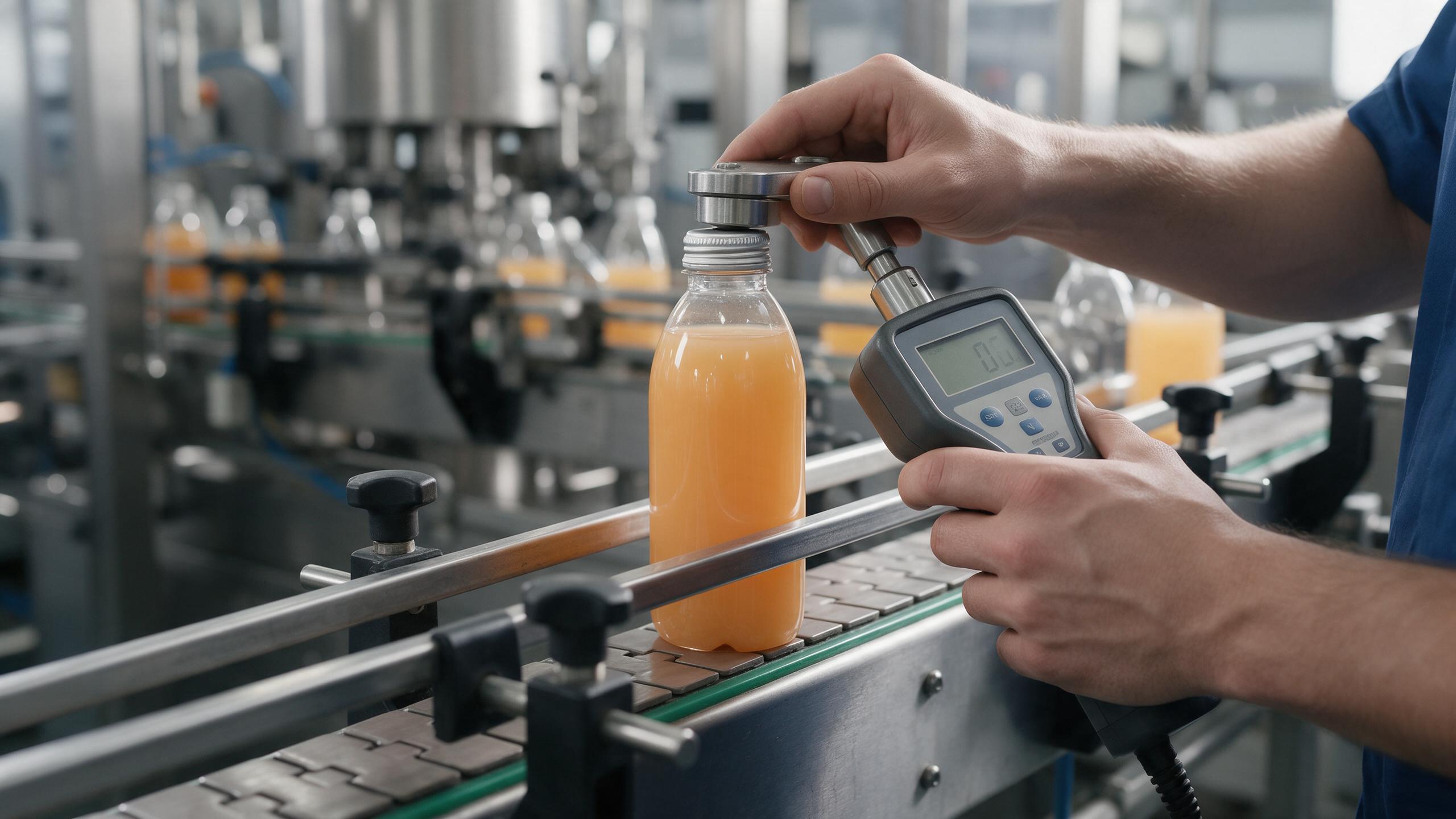
For a threaded closure, the capping head applies rotational force as it seats the cap. A controlled head limits or regulates that force according to its design. Mechanical clutches, magnetic clutches and servo-controlled systems are different approaches; their settings, feedback and verification capabilities depend on the specific equipment. Ask a supplier what is adjusted, what is measured and whether individual heads can be checked.
Application torque is the force associated with tightening. Removal torque is the force needed to open the cap later. They are related, but they are not the same measurement and should not be treated as interchangeable acceptance limits. Removal torque may change with time, temperature and the closure materials. Establish when and how each value will be measured before comparing results.
A juice bottle cap sealing machine is therefore not validated by a display value alone. The actual packages must also meet the agreed leak, closure appearance and opening criteria. A separate induction liner, if used, needs its own validated sealing process; cap torque does not by itself demonstrate that a foil seal is intact.
What goes wrong at either end of the range?
Too little tightening
Insufficient application can leave uneven contact between a closure and bottle finish. A bottle that looks acceptable on the conveyor may leak during handling or storage. Misaligned caps, worn capping components and inconsistent cap feed can also cause poor seating; raising the setpoint without checking them may hide the underlying fault.
Too much tightening
Excess force may deform the liner or closure, damage threads, or make the bottle difficult to open. In some combinations it can cause the cap to slip or strip rather than improve the seal. Tightness is not a substitute for a compatible cap and finish. Inspect the physical package as well as the torque reading.
For a juice bottle cap sealing machine, the workable range is the range validated for the exact closure system and process, not a universal number copied from another line. The closure supplier’s recommendations are a starting point; trials and agreed acceptance tests establish the production limits.
How to establish a usable torque window
- Define the package. Record bottle material and neck finish, closure and liner specification, supplier, lot and intended product. If a tamper-evident band is present, include its appearance and function in the inspection plan.
- Agree on the method. Identify the torque instrument, calibration status, units, sample handling, measurement direction, operator procedure and time between capping and opening. Record both the capper setting and the test result.
- Run representative trials. Test the actual bottle and closure at agreed line speeds and relevant operating temperatures. Include each capping head where applicable, as well as normal start-up and changeover conditions.
- Check more than torque. Use the package owner’s approved leak, seal integrity and opening tests alongside visual checks. The process authority should define any product-specific hygiene and shelf-life validation.
- Set action limits. Agree on sampling frequency, a response to out-of-range results, affected-product isolation and the conditions for restarting. Keep a record of adjustments and verification.
ASTM D2063/D2063M-24 describes methods for measuring removal torque of continuous-thread closures on matching containers under specified conditions. It is a useful reference when developing a test method, but its applicability and current edition should be checked for the project. It does not supply a universal capper setting or replace package-specific acceptance criteria.
Why juice filling conditions matter
A juice filling machine and its capper operate as a system. Bottle presentation, cap supply, fill conditions and conveyor transfer influence what reaches the capping head. If bottles wobble or caps arrive skewed, a stable torque setpoint alone will not fix the seating problem. Observe the transfer and cap placement during a trial, not just the final instrument reading.
Temperature deserves particular attention when a process uses hot filling. The bottle, closure and liner must be suitable for the validated thermal process; their properties and the measured opening torque can change as the package cools. Agree on the sample temperature and elapsed time for removal testing. Torque readings do not establish a safe heat process or prove commercial sterility: those require separate process design and validation by qualified personnel.
When a producer changes the bottle, closure supplier or liner, the earlier setting may no longer be appropriate. Keep the old specification for traceability, then re-evaluate the new combination before approving production. A juice bottle cap sealing machine that handles multiple formats also needs documented change parts and a check after each changeover.
Build monitoring around the real failure modes
Record results by time and, where possible, by capping head. A single average can conceal one head producing weak or difficult-to-open closures. Compare the distribution against agreed limits, investigate drift and examine samples for damaged threads, tilted caps or liner defects. If a result falls outside the plan, follow the plant’s hold and disposition procedure rather than adjusting the machine and releasing the affected bottles without review.
Maintenance matters too. Worn chuck inserts, contaminated contact surfaces, loose components or incorrect height adjustments can change cap handling. Follow the equipment manual and isolate machinery before inspection or servicing. After a repair, check performance on actual packages before returning to routine production.
On an integrated line, ask whether the juice bottle cap sealing machine provides head identification, alarms or production records, and whether those features are included in the proposed configuration. Automatic monitoring can support inspection, but it does not remove the need for a suitable test method and a documented response to defects.
Questions to ask before purchasing
- Which bottle finishes, closure types and liners will be used in the acceptance trial?
- How is the torque setting controlled and verified, and can individual heads be assessed?
- What change parts, operator adjustments and checks are required for another bottle or cap?
- What line speed, product temperature and sample conditions apply to the quoted test?
- Which leak, opening, appearance and optional liner-seal tests are included in acceptance?
- What documentation, calibration arrangements, spare parts and training are included in the offer?
Bring actual bottles and caps to the discussion and make the trial criteria part of the purchase specification. EQS Machinery’s site describes beverage filling equipment; configuration and support for a particular project should be confirmed with the supplier. With a documented torque window and package checks, a juice bottle cap sealing machine can be assessed on the performance of the finished package rather than on a setpoint alone.