 EN


What Really Sits Behind a Labeling Machine Price and What Do You Get?
A labeling machine price is useful only when you know what the quotation buys: an applicator, a working station, or a machine ready to join a beverage line. Two offers that look similar on paper can differ in container handling, change parts, controls, commissioning, and support. The smaller number may still be the right choice, but only after those differences are visible.
For a purchasing team, the decision starts with the bottle, the label, and the required output—not the headline figure. This guide separates equipment cost from project cost and gives you a practical way to compare offers for water, soft drink, and other bottled products.
What does a labeling machine price actually include?
Ask for an itemized scope. A basic labeling machine price may cover an application head, frame, and standard controls, while a line-ready package may also include a conveyor, bottle guides, an encoder, sensors, and safety guarding. None of these should be assumed from a photograph or the word “automatic.” A stand, installation kit, or integration work may appear as a separate line.
Labels and their backing material are usually recurring purchases rather than part of the machine itself. Check whether initial test labels, sample containers, format-specific parts, and a spare-parts set are included. A supplier should identify each item as included, optional, or supplied by the buyer. Make the same distinction for electrical drawings, operator instructions, training, and on-site assistance.
There is no single published labeling machine price that represents every configuration. As an illustration, Cleveland Equipment's online bottle-applicator listing showed semi-automatic units around US $1,700–$4,800 and automatic units around US $11,500–$13,995 when researched in November 2026. These are retailer examples, not installed project quotes or a universal market range. Specifications, availability, shipping, taxes, and service terms need checking with the seller.
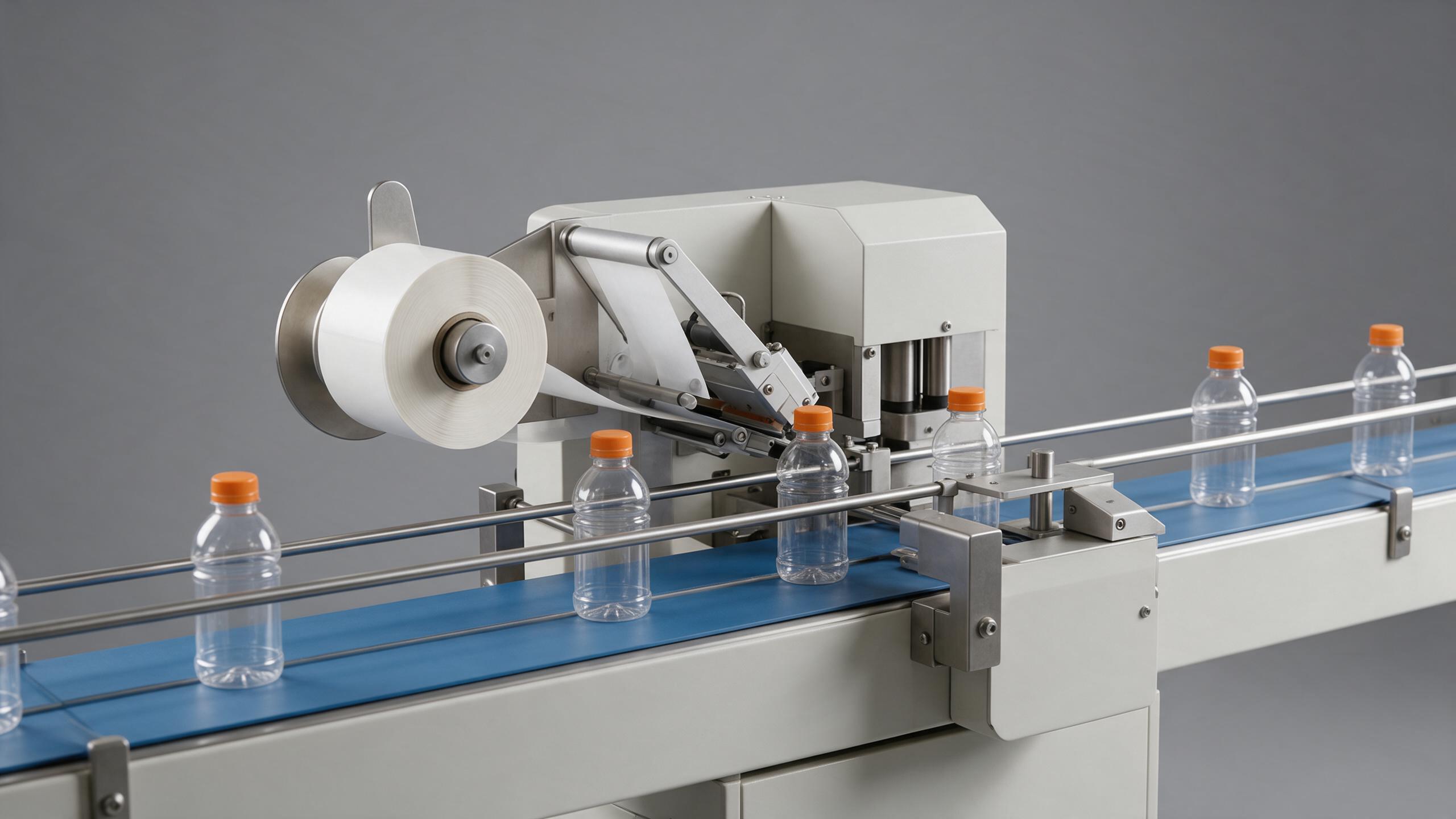
Why can one labeling machine cost more than another?
Application method and automation
A semi-automatic labeling machine generally relies on an operator to load or position a container. An inline system can feed and label bottles continuously, but it needs suitable handling and controls. Pressure-sensitive labels, wraparound labels, and shrink sleeves involve different materials and processes; compare complete systems using the label format you actually plan to run. A shrink-sleeve setup, for example, may require a separate shrinking stage, so do not compare only the applicator head.
Extra automation can reduce repetitive handling, yet it also brings interfaces, controls, and maintenance requirements. A small seasonal producer may prefer a simpler station if available staff and volumes support it. A higher-volume line may justify additional handling and inspection when the full line can make use of them.
Speed, bottle shape, and changeover
The stated speed is not necessarily the number of saleable bottles the line will deliver per hour. Ask whether the rate refers to labels or containers, and specify label count per bottle, container shape, label dimensions, and operating conditions. Interruptions for reel changes, upstream gaps, and downstream accumulation also affect production. A labeling machine price should be compared against the required sustained output, not just a peak number.
A round bottle with one wrap label can have different handling requirements from a contoured bottle or a container needing front and back labels. More formats may mean additional guides, rollers, settings, or format parts. Request a list for every planned container and ask what an operator changes, what tools are needed, and how changeover time will be tested. A machine that handles today's bottle is not automatically ready for next year's format.
Controls, inspection, and integration
A sensor can detect a container, while an encoder can synchronize application with motion; the exact arrangement depends on the design. Optional inspection or rejection can add cost, as can coding, additional applicator heads, and communication with surrounding equipment. Ask suppliers to state which functions are fitted and what happens to a missing or misplaced label. Do not assume a camera, reject device, or production-data connection is included.
For a beverage line, check conveyor height and direction, bottle spacing, available space, electrical supply, and any compressed-air needs. Decide who supplies the joining conveyor and who resolves a mismatch during installation. A standalone labeling machine price that excludes this work is not directly comparable with a fully integrated quotation.
From purchase price to operating cost
Build a common cost sheet for each offer. Start with the machine and mandatory options, then add freight, insurance, import charges where applicable, unloading, site preparation, installation, training, and acceptance tests. Keep currency, delivery terms, payment schedule, and quotation validity visible. A low equipment price can become less attractive once the same delivery boundary is applied to both offers.
Then estimate operating expenses for a defined period: label stock, backing waste, energy, labor, maintenance, and replacement parts. Use your own shift pattern and local rates. Separate scheduled work from possible downtime; neither a supplier's speed claim nor a generic payback promise tells you the cost of a stopped line at your plant.
For example, a buyer can compare two quotations by adding the annual difference in labor, consumables, and maintenance to the difference in upfront cost over an agreed planning period. This is a scenario, not a prediction. Test the result again with lower production volumes and more frequent format changes; the preferred offer may change when those assumptions change.
Put the labeling machine price on a comparable basis
Send each supplier the same brief: product and container drawings, bottle material and dimensions, label artwork and material, reel specifications, target output, existing line layout, utilities, and the formats planned for the first production period. Identify any wet or chilled bottles and ask the label supplier and machine supplier to confirm suitability together.
For every labeling machine price, request a written response to these questions:
- Which bottle and label combinations are included, and which need extra parts?
- What speed and placement tolerance are offered, for which samples and test conditions?
- Are conveyor sections, guarding, sensors, coding, inspection, and rejection included or optional?
- Who provides installation, operator training, manuals, and electrical or mechanical integration?
- What warranty applies, which wear parts are excluded, and how are spare parts supplied?
- What are the freight and delivery terms, and who handles local taxes, import clearance, and unloading?
Put any exclusions next to the corresponding line item rather than hiding them in a general note. If one supplier proposes an alternative label method, compare the complete process, materials, and operating assumptions before judging the difference.
What should happen before final acceptance?
Agree the test before ordering. Supply representative containers and production labels, define the test duration and target rate, and specify how label position, damaged labels, missed applications, and rejects will be counted. Clarify whether the test takes place at the supplier's facility, on site, or in both locations, and which party pays for samples and travel.
At handover, check that the delivered labeling machine matches the approved configuration and that the team receives the agreed drawings, instructions, training, and recommended spares. Verify safety arrangements against the site's requirements and applicable local rules; do not treat a quotation as proof of certification.
The useful labeling machine price is the one connected to a defined output, a documented scope, and a practical support plan. Bring those details to a packaging-line discussion with EQS Machinery, and confirm the available configuration and service terms for your project before ordering.