 EN
EN


When I help a buyer choose a bottle washer, I see one common mistake. They focus on the machine price first, but they ignore the bottle mix and the real output need.
I choose between a linear bottle washing machine and a high pressure bottle washing machine based on production capacity, bottle variety, and factory layout. Linear suits smaller plants with fewer bottle types, while high pressure suits larger plants with more bottle types and higher output.
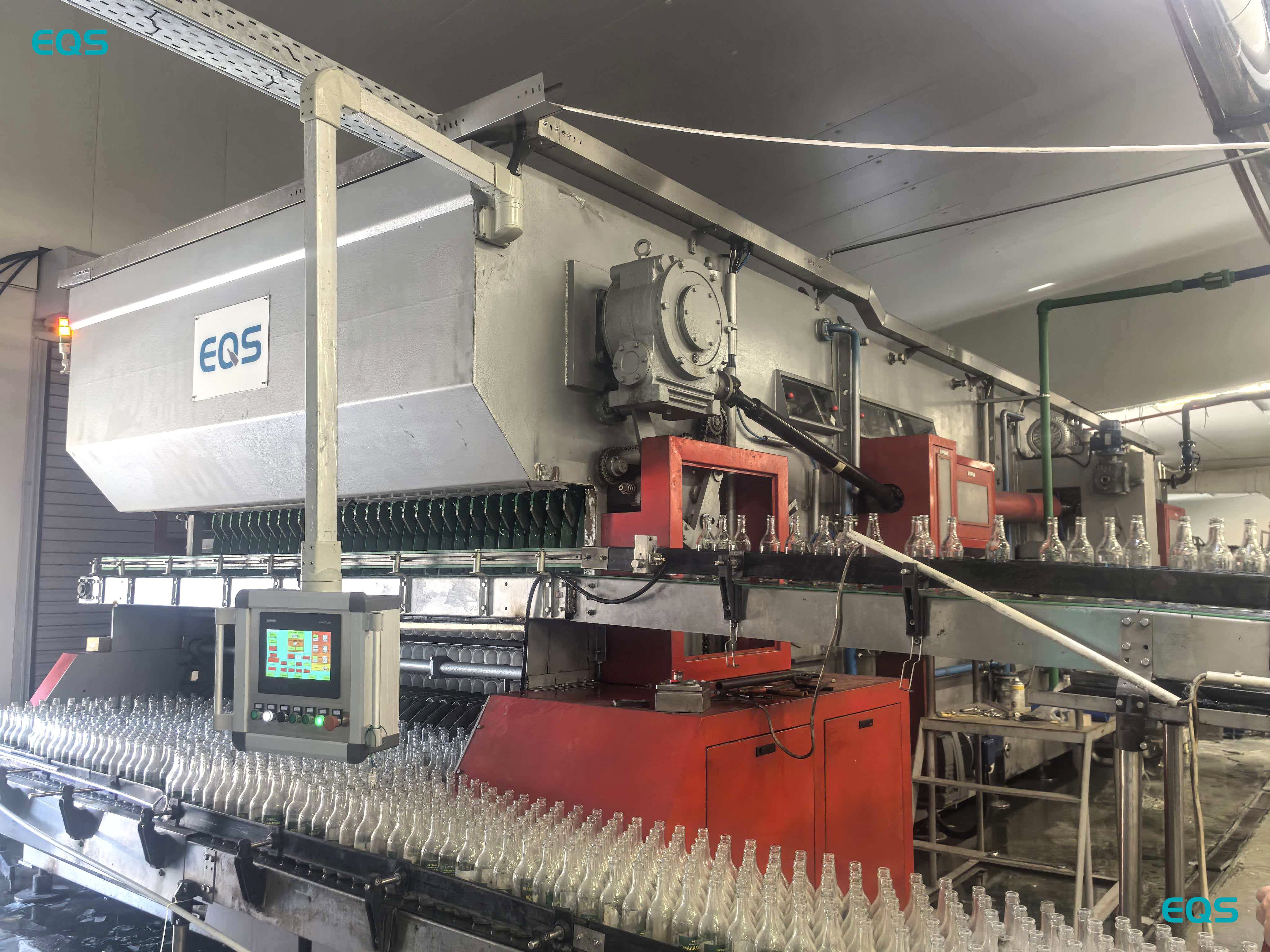
I think this choice matters because bottle washing affects the whole line. If the washing machine does not fit the factory, the filler waits, bottles get damaged, and production stops more often. A good choice starts with the real needs of the plant, not with the machine name.
I see a linear bottle washing machine as a simple and practical option for many smaller beverage factories. It works in a straight line and is easy to understand.
This type is often a good match for plants that do not run very large volumes every day. It gives enough capacity without adding too much complexity.
If the factory uses less than three types of bottles, a linear machine can handle the job well. It is easier to switch and manage.
A linear structure usually needs less space and less setup effort. That helps factories with limited floor area.
I like simple machines when the team is not large. Training is faster, and daily operation is clearer.
| Linear Machine Feature | Factory Benefit |
|---|---|
| Straight-line structure | Easier layout |
| Fewer bottle types | Better fit for simple product lines |
| Lower complexity | Easier operation |
| Smaller footprint | Space saving |
A high pressure bottle washing machine is built for stronger cleaning demand and bigger production needs. I usually think of it as the better choice for more demanding factories.
If the plant needs to wash many bottles per hour, this machine can support that demand better.
This type is often better when the factory uses a wide range of bottle shapes and sizes.
High pressure water can improve cleaning performance, especially when bottles need deeper washing action.
When production changes often, the stronger and more flexible system can help the line stay stable.
| High Pressure Feature | Factory Benefit |
|---|---|
| Strong washing force | Better cleaning |
| High capacity | Better for large output |
| Wide bottle compatibility | More flexibility |
| Complex line support | Better for diverse production |
I always start with output. Capacity tells me whether the machine should be simple or powerful.
If the factory has a lower daily demand and a steady product mix, a linear machine usually makes sense.
If the plant runs long shifts and needs high throughput, a high pressure machine is often the better fit.
The washer should not become the slowest part of the line. If it is too weak, the whole line loses efficiency.
I also ask the buyer if production will grow soon. If yes, it may be smarter to choose the stronger option now.
| Capacity Level | Better Option |
|---|---|
| Small output | Linear washer |
| Medium output | Linear or high pressure, based on bottle mix |
| Large output | High pressure washer |
| Fast growth plan | High pressure washer |
Bottle variety is one of the biggest factors in washer selection. I think many buyers underestimate it.
If the factory uses only one or two bottle shapes, the line stays simple. A linear machine is often enough.
Different bottles may need different guides, settings, and handling behavior. A high pressure machine is often more adaptable.
If the machine is not built for mixed bottles, every changeover becomes slower and more painful.
Some bottle shapes need more support during washing. High pressure systems can help in those cases.
| Bottle Variety Level | Suggested Machine |
|---|---|
| 1–2 bottle types | Linear |
| Up to 3 bottle types | Linear usually works well |
| Wide bottle mix | High pressure |
| Frequent changeovers | High pressure |
I like to compare the two machines in a simple way. That helps the buyer see the tradeoff clearly.
A linear machine is simple, compact, and easier to manage. It is a good choice when the factory is smaller and the product range is narrow. The main limit is that it may not be the best fit for very high output or many bottle types.
A high pressure machine gives stronger cleaning and better support for large, mixed production. The main tradeoff is that it can be more complex and may cost more at the start.
| Type | Strength | Main Limitation |
|---|---|---|
| Linear | Simple and compact | Less ideal for large and mixed production |
| High pressure | Strong and flexible | Higher complexity |
I do not ignore the plant layout. Space and line design can change the best option.
If the floor space is limited and the line must stay straight, linear equipment is often easier to place.
A larger plant can usually support a more complex arrangement. That gives more freedom for higher-output washing.
I always want the washer to fit the rest of the production flow. A bad layout creates extra handling and wasted time.
The team must be able to clean, inspect, and repair the machine without blocking the whole line.
| Layout Factor | Better Fit |
|---|---|
| Limited space | Linear |
| Large plant area | High pressure |
| Simple flow | Linear |
| Complex multi-bottle flow | High pressure |
I usually give the buyer a practical rule. I keep it simple and focus on the real production pattern.
If the plant has moderate output and less than three bottle types, I usually recommend a linear bottle washing machine.
If the plant has high capacity and many bottle types, I usually recommend a high pressure bottle washing machine.
If the budget is tight and the product range is simple, linear is often the better starting point.
If the factory expects more SKUs and more output later, high pressure may be the safer long-term choice.
| Factory Situation | Best Choice |
|---|---|
| Small plant | Linear |
| Medium plant with few bottle types | Linear |
| Large plant with many bottle types | High pressure |
| Growing factory | High pressure |
I think the supplier should help me make a clear and honest choice. I ask direct questions.
This question tells me whether the machine needs flexibility.
This tells me whether the washer can keep up with the line.
This tells me whether a linear layout is realistic.
This helps me avoid buying a machine that becomes too small too soon.
| Question | Why I Ask It |
|---|---|
| Bottle types | Checks flexibility need |
| Output target | Checks capacity need |
| Available space | Checks layout fit |
| Growth plan | Checks future fit |
I choose a linear bottle washing machine for smaller factories with fewer bottle types, and I choose a high pressure bottle washing machine for larger factories with more bottle types and higher output.
My name is Allen, and I'm an expert in filling machine technology at EQS, a leading liquid packaging solution provider based in China. If you're looking for top-quality equipment for your production line, feel free to reach out to me at [email protected]. We specialize in providing customizable solutions with cutting-edge technology.
Copyright © JIANGSU EQS MACHINERY CO.,LTD