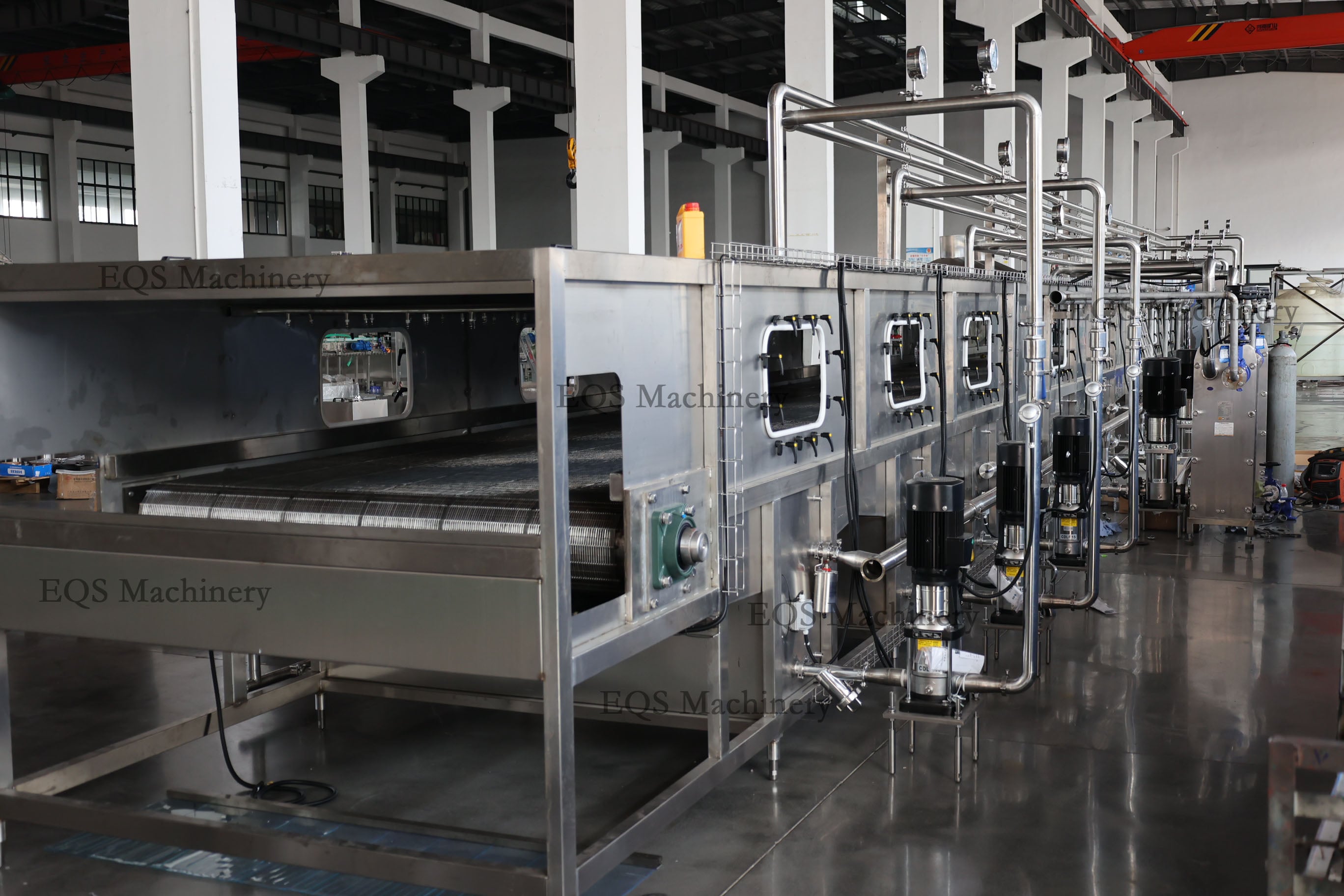
The Role of Precision Thermal Processing
Scaling up beverage or dairy production brings a major challenge: how to increase output without compromising food safety or product quality. For medium to large operations, traditional batch processing cannot keep up with high‑speed filling lines. That is where continuous tunnel pasteurization comes in. By treating sealed containers in a steady, controlled process, facilities can maintain high‑speed production while ensuring microbial stability.
Every container travels through distinct, independently controlled zones—pre‑heating, pasteurization holding, and cooling. This multi‑zone setup delivers precise Pasteurization Units (PUs), typically ranging from 5 to 30 PU for craft beverages, and adjusting up to 50 to 150 PU for delicate low‑acid dairy drinks. Because the system dynamically adjusts water spray intensity and belt speed, target lethality remains steady even when upstream filling speeds fluctuate.
Food safety regulations demand structured, documented proof of pathogen reduction. Modern tunnel systems feature continuous integrated monitoring that generates audit‑ready HACCP data. Moving past manual paperwork supports regulatory compliance and removes the logistical burdens of cold‑chain shipping, supporting wider distribution markets.
Mastering Cold Spots and Thermal Validation
The critical aspect of container pasteurization is guaranteeing uniform heat penetration. The slowest‑heating areas—often called cold spots—frequently occur near container closures or at the geometric center of thick, viscous liquids like flavored milks or protein drinks. For standard containers, the cold spot can lag behind the average liquid temperature during the holding phase.
To ensure consistency, validation studies use wireless temperature loggers placed at these target spots. Modern compact pasteurizers utilize thermal mapping and zone‑specific pressure controls to manage temperature variance across the load. If a temperature dip is detected at a cold spot, the system automatically adjusts residence time or zone setpoints until uniformity returns. This closed‑loop approach provides continuous quality control and satisfies preventive controls requirements.
Smart Automation and System Maintenance
Keeping a production line running smoothly requires reliable engineering. Modern human‑machine interfaces give operators a clear window into the entire process through a single touchscreen. Real‑time temperatures, line speeds, and accumulated PU totals are tracked constantly, allowing for adjustments during operation.
Beyond day‑to‑day controls, maintenance monitoring algorithms track equipment operational parameters to spot performance variations early. If a conveyor motor or spray nozzle experiences unusual resistance, the system triggers an alert before a failure occurs. This proactive approach helps reduce unexpected downtime and supports equipment lifespans, turning a heavy‑duty production line into a stable operational asset.
Space‑Saving Design and Flexible Growth
Floor space in processing plants is managed carefully. Compact tunnel pasteurizers deliver required throughput within an optimized footprint compared to legacy systems. Built‑in heat recovery loops capture thermal energy from the cooling zones to pre‑heat incoming rinse water, reducing utility consumption without sacrificing capacity.
Growth should be supported by flexible infrastructure. Modular tunnel pasteurization lets producers scale by starting with a core module and adding heating or cooling sections as capacity requirements change. Each new segment integrates into existing controls, minimizing plant disruption.
When beverage and dairy enterprises look to upgrade their thermal processing lines, equipment configurations are engineered to balance high throughput, regulatory compliance, and long‑term manufacturing reliability。
What is the primary purpose of continuous tunnel pasteurization in beverage or dairy production?
Continuous tunnel pasteurization allows medium to large operations to increase output and match high-speed filling lines without compromising food safety or product quality, maintaining microbial stability by treating sealed containers in a steady, controlled process.
How do pasteurization units (PUs) vary across different types of beverages?
The multi-zone setup delivers precise Pasteurization Units that typically range from 5 to 30 PU for craft beverages, while adjusting up to 50 to 150 PU for delicate low-acid dairy drinks.
What are cold spots, and how do modern pasteurizers handle them?
Cold spots are the slowest-heating areas—frequently near container closures or at the geometric center of thick, viscous liquids—where temperatures can lag during the holding phase. Modern compact pasteurizers use wireless temperature loggers, thermal mapping, and zone-specific pressure controls to manage temperature variance, automatically adjusting residence time or zone setpoints if a dip is detected.
How do modern tunnel pasteurization systems support regulatory compliance?
Modern systems feature continuous integrated monitoring that automatically generates audit-ready HACCP data, replacing manual paperwork to provide structured, documented proof of pathogen reduction and support wider distribution markets.
How does modular design allow producers to scale their thermal processing operations?
Modular tunnel pasteurization enables producers to start with a core module and add heating or cooling sections as capacity requirements change, with each new segment integrating smoothly into existing controls to minimize plant disruption.
 EN
EN