 EN
EN


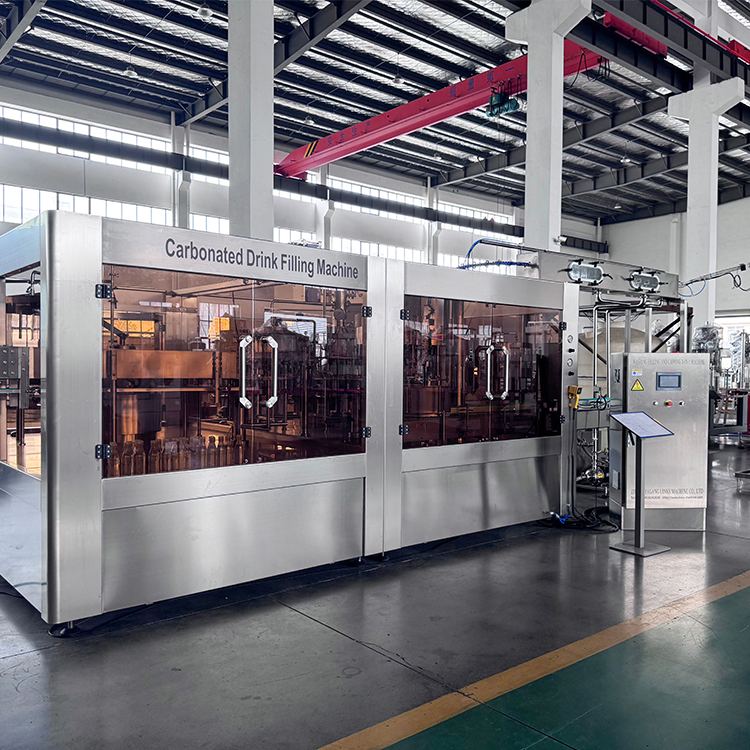
How Carbonated Filling Machines Preserve CO₂: Core Physics and Pressure Control
Carbonated filling machines preserve carbonation by integrating fundamental physics—especially Henry’s Law and thermodynamic equilibrium—with precision engineering. They operate within tightly controlled pressure and temperature environments to maintain dissolved CO₂ integrity from tank to sealed container.
Henry’s Law and Thermodynamic Principles Behind Isobaric Stability
Henry’s Law governs CO₂ solubility: gas concentration in liquid is directly proportional to its partial pressure above the liquid. To prevent CO₂ breakout during transfer, machines enforce isobaric conditions—matching pressure between the beverage tank and container before and during filling. This equilibrium is stabilized by precise refrigeration (1–4°C), as colder liquids hold significantly more dissolved CO₂. Real-time pressure adjustments enable modern systems to maintain carbonation within ±0.2 volumes of CO₂ across production runs.
Backpressure Regulation Strategies for Consistent CO₂ Solubility
Backpressure regulation is essential for high-speed, low-loss filling. Pneumatic regulators apply counter-pressure—typically 2–4 bar, exceeding the beverage’s saturation pressure—to offset transient pressure drops and suppress turbulence-induced degassing. This enables laminar flow and gentle product transfer. Integrated pressure transmitters and PID controllers adjust CO₂ injection dynamically, responding to differentials in milliseconds. The result is stable CO₂ solubility across thousands of cycles—without over-pressurizing or destabilizing the liquid.
Isobaric (Counter-Pressure) Filling: Valve Design and Foam Suppression
The isobaric (counter-pressure) method is the industry standard for carbonated beverages. It begins by pressurizing the empty container with filtered CO₂ to match tank pressure, establishing equilibrium before liquid entry. This prevents violent CO₂ release and foam formation. Two interdependent innovations—anti-foaming nozzle geometry and precision filling valves—make this process repeatable at scale.
Anti-Foaming Nozzle Geometry and Laminar Flow Optimization
Nozzle design directly influences flow behavior and foam generation. Anti-foaming nozzles feature polished stainless-steel interiors with smooth, gradual transitions in cross-section—eliminating sharp bends or abrupt diameter changes that induce turbulence and cavitation. This promotes laminar flow, where fluid moves in parallel, low-energy layers, minimizing the energy available for CO₂ nucleation. Coupled with a slow-start fill profile—ramping flow rate over the first few milliseconds—the nozzle reduces initial agitation. These optimizations lower underfill risk, improve fill accuracy, and sustain consistent carbonation.
Precision Filling Valves with Gas-Separation Seals
Precision filling valves go beyond flow control: they actively manage phase separation. Gas-separation seals isolate the CO₂ return path from the incoming liquid stream, preventing gas entrainment that causes microfoaming. Dual-stage gas handling further refines the process—first, slow pre-pressurization using filtered CO₂; second, controlled snift-gas venting after filling to depressurize without shock. Servo-controlled actuators time these steps to within microseconds. The outcome is reliable fill-volume accuracy, preserved CO₂ solubility, and elimination of foam-related downtime.
Submerged Bottom-Up Filling and Pre-Pressurization Techniques
Submerged bottom-up filling complements isobaric principles by minimizing kinetic energy at the point of liquid entry. The nozzle extends near or to the container base before dispensing, allowing liquid to rise gently and displace headspace air with minimal splashing or surface agitation. This is especially effective for tall, narrow containers where top-down filling would trigger excessive foaming. Pre-pressurization—introducing CO₂ or inert gas into the bottle prior to filling—ensures internal pressure matches the carbonated liquid’s saturation pressure before contact. Together, these techniques establish near-isobaric conditions throughout the fill sequence, reducing pressure differentials and physical disturbance that compromise bubble integrity from fill initiation through final sealing.
Real-Time Synchronization: Pressure, Fill, and Seal for Zero CO₂ Escape
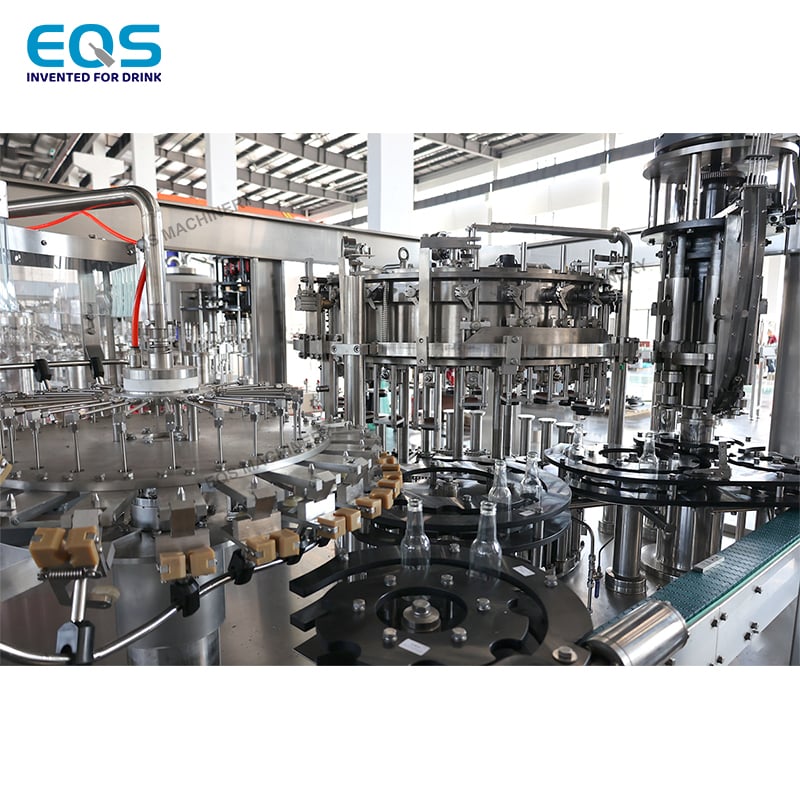
PID-Controlled Servo-Pneumatic Systems for Dynamic Pressure Matching
High-performance carbonated filling machines rely on PID-controlled servo-pneumatic systems to maintain pressure stability within ±0.1 bar of setpoint—even at speeds up to 600 bottles per minute. Dual gas reservoirs and closed-loop feedback compensate for line fluctuations in real time, holding dissolved CO₂ variance to ≤0.15 g/L. This dynamic matching preserves 98% of carbonation through the fill cycle, eliminating premature CO₂ breakout before sealing.
Microsecond-Level Fill-and-Seal Timing Coordination
Sealing must follow filling with extreme temporal precision to trap CO₂ before escape. A delay under 100 ms keeps carbonation loss below 1%; beyond 700 ms, losses exceed 8%, compromising sensory quality and shelf life. Top-tier machines integrate servo-driven multi-head cappers synchronized via programmable logic controllers (PLCs) at 10-millisecond resolution. This ensures every bottle is hermetically sealed before dissolved CO₂ can migrate to the headspace—achieving consistent carbonation retention at rates exceeding 400 units per minute.