 EN
EN


I have seen many buyers choose a filling method only by price. That choice often causes problems later.
Gravity filling is best for non-carbonated drinks like water, juice, and tea. Isobaric pressure filling is better for carbonated drinks like soda, beer, and sparkling beverages because it prevents foaming and CO₂ loss.
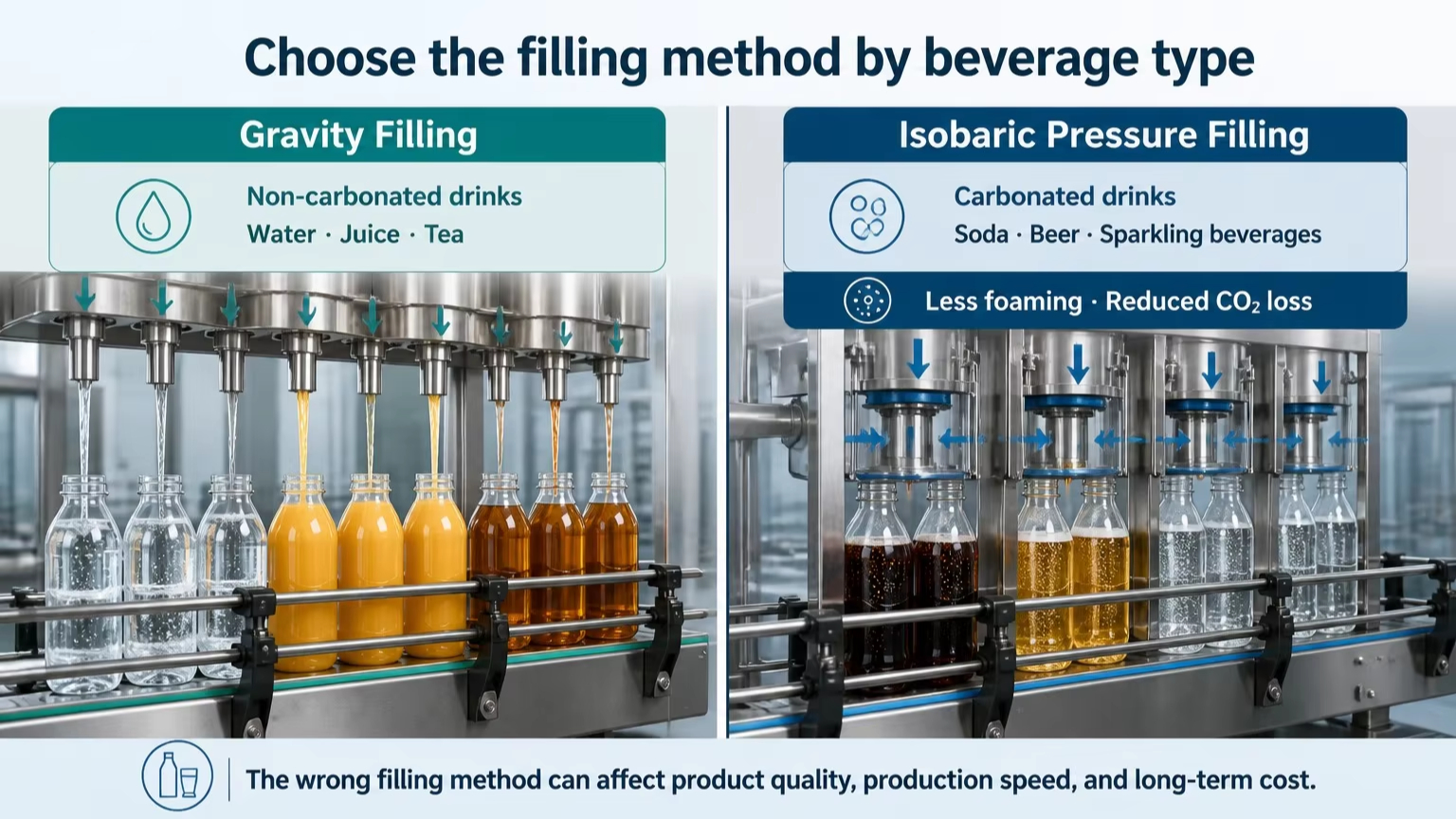
I know this question looks simple. But the wrong method can hurt product quality, production speed, and long-term cost. That is why I always compare the drink type first.
I often recommend gravity filling for buyers who produce still drinks. The process is simple and stable.
The product flows into the container with help from gravity.
CIP cleaning is simple and practical.
The equipment is usually cheaper and easier to maintain.
| Feature | Gravity Filling | Main Effect |
|---|---|---|
| Filling principle | Natural liquid flow | Simple process |
| Product type | Still beverages | Good match |
| Maintenance | Easy | Lower service burden |
| Cost | Lower investment | Better for budget |
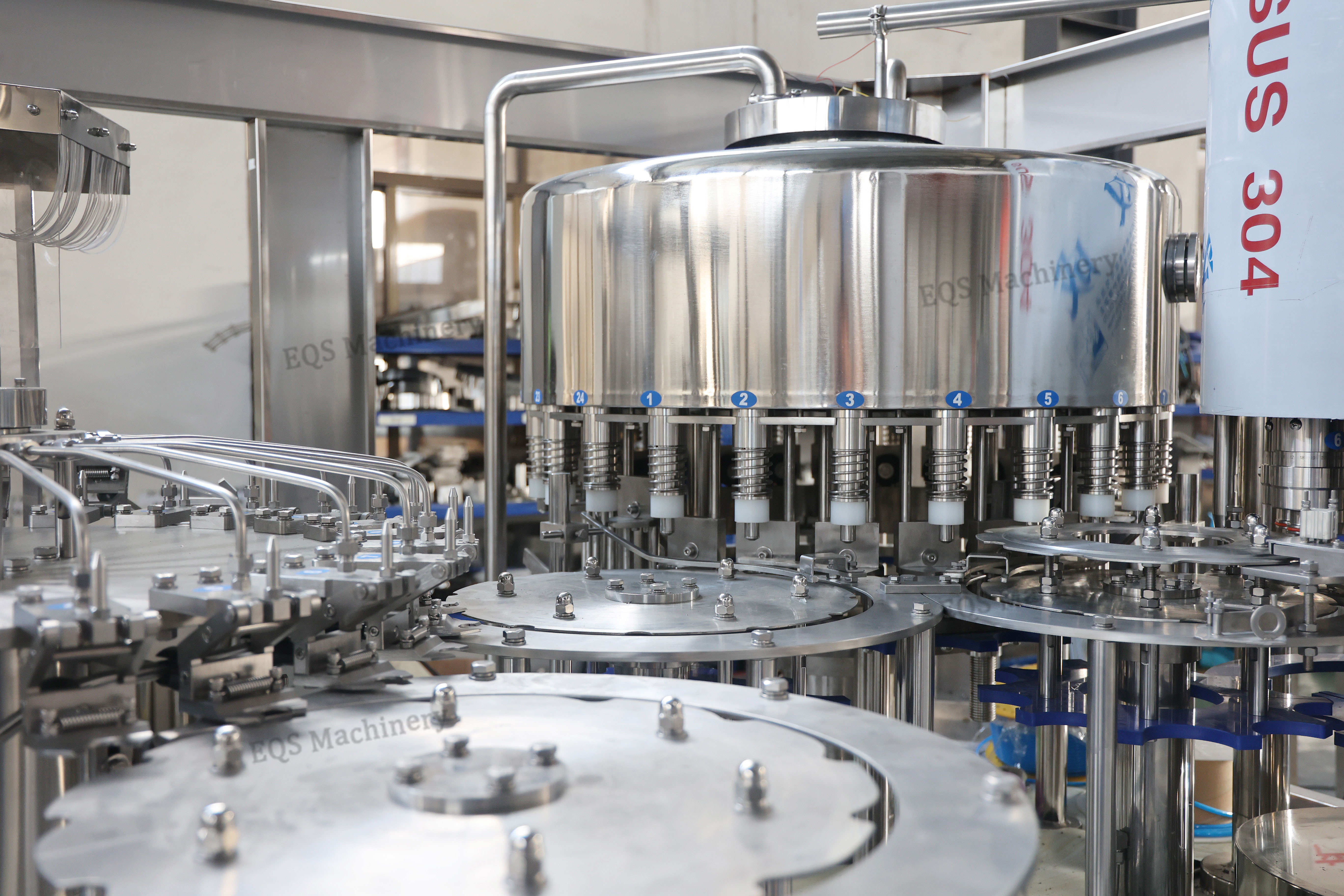
I use isobaric pressure filling when the drink contains gas. The pressure control is the key.
This helps protect the carbonation.
The product stays stable inside the bottle.
This method works well in fast production.
| Feature | Isobaric Pressure Filling | Main Effect |
|---|---|---|
| Filling principle | Pressure balance | Better carbonation control |
| Product type | Carbonated beverages | Correct match |
| Speed | High | Good for large output |
| Equipment cost | Higher | More investment needed |
I always match the filler to the product. That saves time and cost.
Water does not need pressure protection.
These drinks usually do not contain gas.
The process stays simple and efficient.
| Beverage Type | Gravity Filling Fit | Reason |
|---|---|---|
| Still water | Excellent | No CO₂ to protect |
| Juice | Good | Low foaming risk |
| Tea drinks | Good | Stable filling need |
| Soda | Not suitable | Loses gas |
| Beer | Not suitable | Causes degassing |
I use pressure filling when the drink needs gas retention. This method is made for that job.
Soda must keep its bubbles.
Beer needs stable pressure control.
Sparkling drinks must avoid foaming and loss of gas.
| Beverage Type | Isobaric Pressure Fit | Reason |
|---|---|---|
| Soda | Excellent | CO₂ retention |
| Beer | Excellent | Better foam control |
| Sparkling water | Excellent | Keeps carbonation |
| Juice | Not necessary | Extra cost without value |
I always explain cost in a full way. The first price is only one part.
It usually needs less investment and less maintenance.
It costs more, but it solves the real production problem.
A machine with more parts needs more technical care.
| Comparison Point | Gravity Filling | Isobaric Pressure Filling |
|---|---|---|
| Initial cost | Lower | Higher |
| Maintenance | Simple | More complex |
| Cleaning | Easy CIP | More system control |
| Best use | Still drinks | Carbonated drinks |
I often meet buyers who want one machine that can do everything. I understand that idea. But beverage production is very specific. A cheap machine that cannot protect carbonation will create bad products. A more expensive machine may look heavy at first, but it can protect the brand and reduce waste. I always look at the full business result, not only the purchase price. That is how I help buyers make a safer decision.
I never choose a filler by product type alone. I also check the process conditions.
Thicker drinks need more care during filling.
Temperature changes can affect flow and foam.
High-speed lines need stronger control.
Some markets require special vessel approval.
| Decision Factor | Why It Matters | Effect on Choice |
|---|---|---|
| Viscosity | Changes flow behavior | Affects filler design |
| Filling temperature | Affects foam and stability | Impacts performance |
| Line speed | Affects output target | Impacts machine type |
| Certification | Affects legal approval | Impacts final selection |
I always tell buyers to think about the next three years, not only today.
The most important drink should guide the machine choice.
A buyer may expand into other beverage types later.
A machine must fit the local market and support rules.
| Risk Area | Wrong Choice | Better Action |
|---|---|---|
| Product fit | Wrong filling principle | Match filler to drink |
| Future growth | No expansion plan | Choose flexible design |
| Compliance | Missing approval | Check certification early |
I keep my answer very simple.
It is low cost and easy to manage.
It keeps gas inside the product.
That is the safest way.
Gravity filling fits still beverages, while isobaric pressure filling fits carbonated products. I always choose by drink type, line speed, and compliance needs, not by price alone.
Q: What is the main difference between gravity and pressure filling?
A: Gravity filling relies on the liquid's own weight to fill the container, making it ideal for low-viscosity, non-carbonated liquids like water and juice. In contrast, pressure filling (isobaric) uses compressed gas to equalize pressure before filling, which is essential for carbonated beverages like beer and soda to prevent foaming and maintain CO2 levels.
Q: Which filling method is better for a 2000BPH production line?
A: For a 2000BPH capacity, the choice depends on the beverage type. Gravity fillers are more cost-effective for bottled water lines, while pressure fillers are necessary for carbonated drinks to ensure filling precision. EQS Pack provides customized full-line solutions that optimize these methods for specific production speeds.
Q: Can gravity filling machines handle carbonated drinks?
A: Generally, no. Using gravity filling for carbonated drinks leads to excessive foaming and loss of carbonation. For sparkling water or soda, an isobaric pressure filling system is required to maintain product quality and filling level consistency.
Copyright © JIANGSU EQS MACHINERY CO.,LTD